• HOME
  • NEWS
  • EXPLORE
    • CAREER
      • Companies
      • Jobs
    • EVENTS
    • iGEM
      • News
      • Team
    • PHOTOS
    • VIDEO
    • WIKI
  • BLOG
  • COMMUNITY
    • FACEBOOK
    • INSTAGRAM
    • TWITTER
Monday, August 10, 2026
BIOENGINEER.ORG
No Result
View All Result
  • Login
  • HOME
  • NEWS
  • EXPLORE
    • CAREER
      • Companies
      • Jobs
        • Lecturer
        • PhD Studentship
        • Postdoc
        • Research Assistant
    • EVENTS
    • iGEM
      • News
      • Team
    • PHOTOS
    • VIDEO
    • WIKI
  • BLOG
  • COMMUNITY
    • FACEBOOK
    • INSTAGRAM
    • TWITTER
  • HOME
  • NEWS
  • EXPLORE
    • CAREER
      • Companies
      • Jobs
        • Lecturer
        • PhD Studentship
        • Postdoc
        • Research Assistant
    • EVENTS
    • iGEM
      • News
      • Team
    • PHOTOS
    • VIDEO
    • WIKI
  • BLOG
  • COMMUNITY
    • FACEBOOK
    • INSTAGRAM
    • TWITTER
No Result
View All Result
Bioengineer.org
No Result
View All Result
Home NEWS Science News Biology

Portland State study shows ways to reduce extreme heat in city neighborhoods

Bioengineer by Bioengineer
July 8, 2019
in Biology
Reading Time: 3 mins read
0
IMAGE
Share on FacebookShare on TwitterShare on LinkedinShare on RedditShare on Telegram

IMAGE

Credit: Portland State University

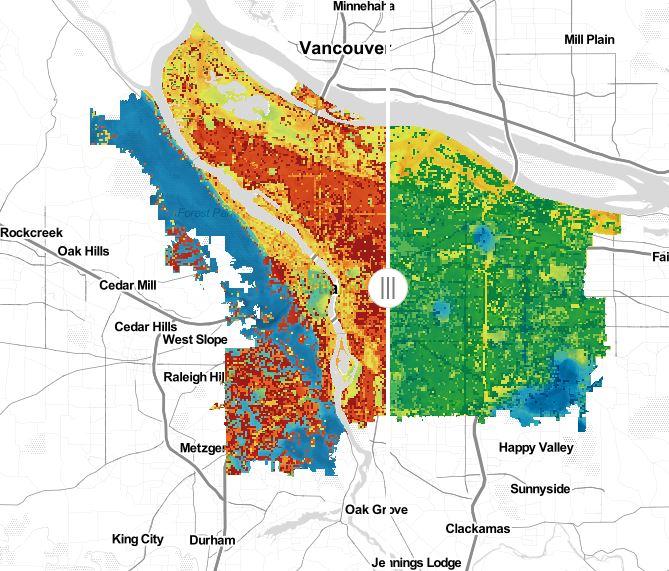
Portland State study demonstrates how plants, trees and reflective materials can reduce extreme heat in city neighborhoods

Planting more vegetation, using reflective materials on hard surfaces and installing green roofs on buildings can help cool potentially deadly urban heat islands — a phenomenon that exists in nearly all large cities — a new study from Portland State University shows. Those solutions, however, present a growing challenge to developers and planners as neighborhoods become increasingly dense and single-family homes give way to apartment buildings.

Led by Urban Studies and Planning Professor Vivek Shandas and published in the May 21 edition of the journal Atmosphere, the study used computer modeling to show the temperature differences that can be made in a variety of property types – from tree-filled neighborhoods to heavily-paved industrial areas — through planting trees and vegetation, installing green roofs and using materials on roofs and pavement that reflect heat.

The modeling showed that the biggest differences came from using reflective materials and planting trees. Shandas said green roofs provided localized cooling of the roofs themselves, especially when watered, but that they needed to be studied further before they could be considered as a broader solution for urban heat. He noted, however, that green roofs provide other environmental benefits such as retaining storm water, controlling pollution and providing a habitat for wildlife.

The study was done at the request of the City of Portland, and may be used by city officials as a guide in Portland’s planning and development. The work also includes interactive maps showing every land parcel in the city, their pollution index levels, percent of vegetation canopy and more.

“One of the biggest takeaways from this work is that in the places we live, work and play, the construction materials, colors, amount of roadways and greenery – decisions that are largely left to city planners – have an effect on the varying temperatures we experience in Portland,” Shandas said. “We have control over the design of our cityscapes. If summers are getting hotter, shouldn’t we be considering how different built designs impact local temperatures?”

The phenomenon of higher temperatures in areas with a lot of buildings and pavement is known as the urban heat island effect. Previous studies by Shandas and others show that urban heat islands are associated with higher pollution and negative health conditions, especially for the elderly, young children and people with lower incomes.

While testing solutions that reduce urban heat, the study also showed the effects of doing the opposite. For example, it showed that paving over places that previously had a lot of tree canopy could raise the temperature as much as 25 degrees Fahrenheit on a summer day. Nearby neighborhoods would experience a spillover effect.

“Nature-based solutions such as the ones described in the study – when applied effectively and used in combination – can reduce temperatures of even the hottest places,” Shandas said.

###

Media Contact
Vivek Shandas
[email protected]

Original Source

https://www.pdx.edu/news/portland-state-study-demonstrates-how-plants-trees-and-reflective-materials-can-reduce-extreme-heat

Related Journal Article

http://dx.doi.org/10.3390/atmos10050282

Tags: Climate ChangeEarth ScienceEnvironmental HealthGeographyPollution/RemediationPublic HealthTemperature-Dependent PhenomenaUrbanization
Share12Tweet8Share2ShareShareShare2

Related Posts

New Bypass Highway and Watercourse Restoration Shape Southern Damselfly Genetics and Recolonisation

New Bypass Highway and Watercourse Restoration Shape Southern Damselfly Genetics and Recolonisation

August 10, 2026
Antisense transcription uncovers disease-linked adaptations in the human gut microbiome

Antisense transcription uncovers disease-linked adaptations in the human gut microbiome

August 10, 2026

New Thai mountain dragon lizard named after House of the Dragon’s Syrax

August 10, 2026

How Dogs Evolved Worldwide to Mirror the Traits of Their Human Companions

August 10, 2026
Please login to join discussion

POPULAR NEWS

  • Sex Differences Shape Blood Metabolite Profiles in Familial Parkinson’s Disease

    29 shares
    Share 12 Tweet 7
  • Scientists Track Drug Self-Administration in Head-Fixed Mice

    29 shares
    Share 12 Tweet 7
  • Food systems miss targets, exposing urgent gaps before 2050

    29 shares
    Share 12 Tweet 7
  • Dolby Laboratories Acquires FAU’s Video Compression Technology Portfolio

    29 shares
    Share 12 Tweet 7

About

We bring you the latest biotechnology news from best research centers and universities around the world. Check our website.

Follow us

Recent News

Sex Differences Shape Blood Metabolite Profiles in Familial Parkinson’s Disease

Scientists Track Drug Self-Administration in Head-Fixed Mice

Food systems miss targets, exposing urgent gaps before 2050

Subscribe to Blog via Email

Success! An email was just sent to confirm your subscription. Please find the email now and click 'Confirm' to start subscribing.

Join 86 other subscribers
  • Contact Us

Bioengineer.org © Copyright 2023 All Rights Reserved.

Welcome Back!

Login to your account below

Forgotten Password?

Retrieve your password

Please enter your username or email address to reset your password.

Log In
No Result
View All Result
  • Homepages
    • Home Page 1
    • Home Page 2
  • News
  • National
  • Business
  • Health
  • Lifestyle
  • Science

Bioengineer.org © Copyright 2023 All Rights Reserved.