University of Louvain research in world premiere
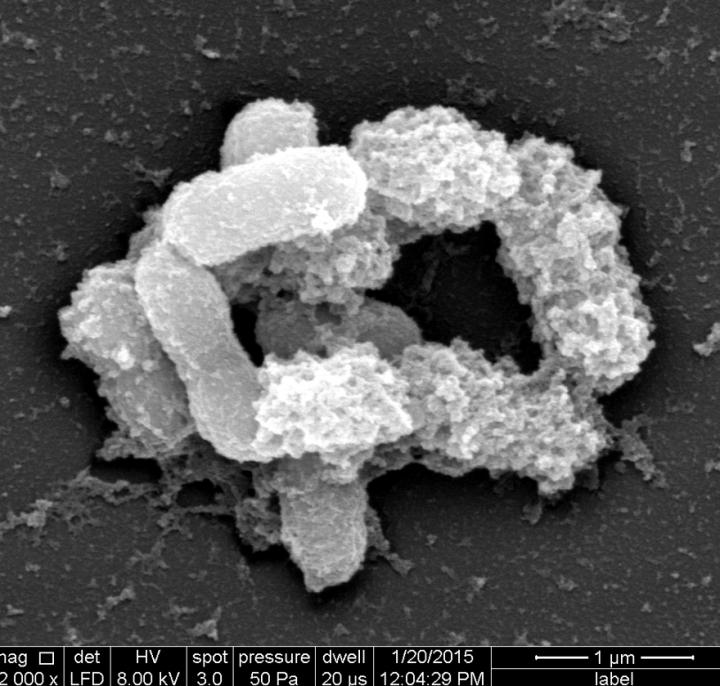
Credit: Patrice Cani, UCLouvain
In 2007, Patrice Cani (FNRS-WELBIO researcher) and his team at the Louvain Drug Research Institute of University of Louvain, in close collaboration with Willem de Vos, professor at UWageningen, discovered the beneficial effects of an intestinal bacteria, Akkermansia muciniphila (1), able to moderate the development of obesity and type 2 diabetes, in mice. In 2017, the team discovered (still in the mouse) that the use of a pasteurized form of Akkermansia leads to an even greater protection than the living bacterium regarding various cardiovascular disease risk factors such as insulin resistance, hypercholesterolemia, or the storage of fat in adipose tissue.
Following these discoveries, the UCLouvain team, in collaboration with the Cliniques universitaires Saint-Luc (2), developed a clinical study in order to administer the bacteria to humans. For this, it was necessary to develop the capacity to produce the bacterium in large quantity and to make sure that the tests would be without risk for the participants.
The UCLouvain researchers administered Akkermansia to overweight or obese volunteers, all displaying insulin resistance (pre-diabetes type 2) and metabolic syndrome, in other words, having several elevated risk factors for cardiovascular diseases. The volunteers were randomly divided into 3 groups (placebo, live bacteria and pasteurized bacteria) and were asked not to change their dietary habits or their physical activity. Akkermansia was provided as a nutritional supplement.
The primary goal of this UCLouvain study was to demonstrate the feasibility of daily ingesting Akkermansia for 3 months, without risk. Clara Depommier and Amandine Everard, UCLouvain researchers, observed excellent compliance (the supplements were easy to ingest) and tolerance (there were no side effects) in the groups taking live or pasteurized bacteria.
The conclusions are clear: the tests in humans confirm what had already been observed in mice. Ingestion of the (pasteurized) bacterium prevented the deterioration of the health status of the subjects (pre-diabetes, cardiovascular risks). Even better, the researchers observed a decrease in inflammation markers in the liver, a slight decrease in the body weight of the subjects (2.3 kg on average (3)) as well as a lowering of cholesterol levels. In contrast, the metabolic parameters (insulin resistance or hypercholesterolemia) in placebo subjects continued to deteriorate over time.
Who does it benefit? According to the WHO, one in three people die every day from cardiovascular disease worldwide. In Western countries, one in two people is overweight and has increased cardiovascular risks. This research of the UCLouvain would limit these risks and therefore potentially have an impact (limit the effects) on half of the population, if properly used.
In conclusion, this pilot study demonstrates the feasibility of administrating (pasteurized) Akkermansia bacteria to humans in the form of a food supplement and reports encouraging results on the effectiveness of the Akkermansia-based dietary supplements to reduce cardio-metabolic risk factors. These results pave the way for a large-scale study, to confirm/elaborate these first results, but also endorse the commercialization of the bacteria as food supplements, by 2021.
###
A generic email address has been created for the public who wants more information about the current clinical study: [email protected].
To carry out this research, Patrice Cani has benefited from several fundings, via the FNRS (Belgian Research National Funds), the EOS (EU Excellence of Science), the Funds Baillet-Latour, the WELBIO, the Bank Transatlantic Belgium, the Walloon Region (DGO6) and two European ERC grants (starting and proof of concept).
How to communicate about this research? It’s in the details.
- Food supplement or probiotic?
- CORRECT: food supplement = concentrated source of nutrients intended to correct nutritional deficiencies of a person’s regular diet
- INCORRECT: probiotic = living microorganism which, when consumed in adequate quantities, brings a health benefit to the human being. To be called probiotic, a product must have been the subject of many studies in humans. As of yet, no bacteria (or product) sold on the European market may be referred to as a probiotic.
- the bacteria Akkermansia is not a probiotic
- Limit or treat risk factors?
- CORRECT: Limit: “Limit the increase of risk factors” applies to food supplements
- Akkermansia limits cardiovascular risk factors
- INCORRECT: treat: treatments only apply to drugs
- the clinical tests were not carried out with drugs but with a food supplement
- CORRECT: Limit: “Limit the increase of risk factors” applies to food supplements
- Study or clinical trials?
- CORRECT: UCLouvain and the Cliniques universitaires Saint-Luc have conducted a clinical study with dietary supplements
- INCORRECT: clinical trials refer to the administration of a drug/treatment.
- Volunteer or patient?
- CORRECT: volunteer = person made a conscious decision to enroll in a clinical study
- INCORRECT: patient = person under treatment
- the UCLouvain researchers have not tested any treatment
(1)Bacteria naturally present in large quantities in healthy people
(2)Prof. Jean-Paul Thissen, Prof. Michel Hermans, Prof. Dominique Maiter, Dr. Audrey Loumaye
(3)These results are statistically considered non-significant. That said, according to the precise analysis of the different intestinal bacteria (in collaboration with the team of Prof. Raes of the KULeuven), the observed effects are independent of a general modification of the microbiota and therefore probably specific to the action of Akkermansia.
Media Contact
Sébastien Berg
[email protected]
Original Source
https:/
Related Journal Article
http://dx.