• HOME
  • NEWS
  • EXPLORE
    • CAREER
      • Companies
      • Jobs
    • EVENTS
    • iGEM
      • News
      • Team
    • PHOTOS
    • VIDEO
    • WIKI
  • BLOG
  • COMMUNITY
    • FACEBOOK
    • INSTAGRAM
    • TWITTER
Saturday, July 11, 2026
BIOENGINEER.ORG
No Result
View All Result
  • Login
  • HOME
  • NEWS
  • EXPLORE
    • CAREER
      • Companies
      • Jobs
        • Lecturer
        • PhD Studentship
        • Postdoc
        • Research Assistant
    • EVENTS
    • iGEM
      • News
      • Team
    • PHOTOS
    • VIDEO
    • WIKI
  • BLOG
  • COMMUNITY
    • FACEBOOK
    • INSTAGRAM
    • TWITTER
  • HOME
  • NEWS
  • EXPLORE
    • CAREER
      • Companies
      • Jobs
        • Lecturer
        • PhD Studentship
        • Postdoc
        • Research Assistant
    • EVENTS
    • iGEM
      • News
      • Team
    • PHOTOS
    • VIDEO
    • WIKI
  • BLOG
  • COMMUNITY
    • FACEBOOK
    • INSTAGRAM
    • TWITTER
No Result
View All Result
Bioengineer.org
No Result
View All Result
Home NEWS Science News Cancer

Discovery may help kick-start ageing immune system

Bioengineer by Bioengineer
June 25, 2019
in Cancer
Reading Time: 3 mins read
0
IMAGE
Share on FacebookShare on TwitterShare on LinkedinShare on RedditShare on Telegram

IMAGE

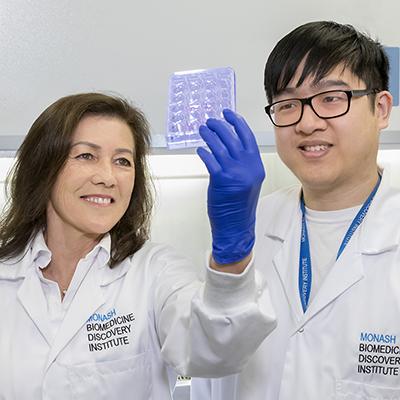
Credit: Monash University

The thymus is the powerhouse producing the immune system’s T cells, which combat infection in our body. Yet this vital organ is one of the first to diminish in function as we age, resulting in a gradual loss of T cell production and eventually increased susceptibility to infections and cancer in the elderly.

Monash Biomedicine Discovery Institute (BDI) researchers have for the first time identified factors affecting the cells in the thymus that set in motion this loss and the mechanisms behind this.

Their study, published in Cell Reports today, paves the way to develop targeted strategies for the recovery of T cells to help combat infections and cancers.

Associate Professor Ann Chidgey, senior author, said it had been known for some time that the thymus – a small organ located below the collarbone – degenerated from puberty onwards. However, the mechanisms underlying this were unclear.

“Our thymus is most productive soon after birth and produces a full repertoire of T cells, but then slowly begins to lose function. As we live longer, the diversity of our T cells diminishes and we become more susceptible to infections,” she said.

“It also becomes more difficult to recover our T cell immunity after damage from cancer treatments such as chemotherapy which destroy a lot of our immune cells.”

The study showed what was behind this degeneration; factors affecting the epithelial stem cells in the thymus.

“This study identifies BMP4 and Activin, as growth and differentiation factors important for the self-renewal and differentiation of thymic epithelial stem cells, and how a change in their production during ageing causes a loss of mature epithelial cells. This leads to a reduced capacity to support the production of T cells,” Associate Professor Chidgey said.

“This is the first time anyone has identified the basis for mature thymic epithelial cell loss and the molecules that are involved in the dysfunction of the thymic epithelial stem cells in ageing. By doing this we can now focus on how to reverse that and ‘switch on’ the thymus again, even just transiently, to replenish our T cell diversity,” she said.

“We believe these changes can be reversed and are beginning new investigations to see if we can develop a treatment focussed on thymic epithelial cell regeneration.”

###

Drs Ailin Lepletier and Michael Hun were joint first authors on the paper.

This research was supported by a National Health and Medical Research Council (NHMRC) grant.

Read the full paper in Cell Reports titled Interplay between Follistatin, Activin A, and BMP4 Signaling Regulates Postnatal Thymic Epithelial Progenitor Cell Differentiation during Aging.

About the Monash Biomedicine Discovery Institute

Committed to making the discoveries that will relieve the future burden of disease, the newly established Monash Biomedicine Discovery Institute at Monash University brings together more than 120 internationally-renowned research teams. Our researchers are supported by world-class technology and infrastructure, and partner with industry, clinicians and researchers internationally to enhance lives through discovery.

Media Contact
Grace Williams
[email protected]

Related Journal Article

http://dx.doi.org/10.1016/j.celrep.2019.05.045

Tags: BiologycancerCell BiologyMedicine/Health
Share12Tweet8Share2ShareShareShare2

Related Posts

UCSF Study Finds Rapid Rise in Breast Cancer Among Asian American Women

July 10, 2026

Radiation Therapy Clinic Closures May Widen US Cancer Care Disparities

July 10, 2026

New Nanotechnology Switch Halts Cancer Growth and Boosts Immune Attack

July 10, 2026

Advances and Challenges in Targeting BET Proteins in Solid Tumors

July 10, 2026
Please login to join discussion

POPULAR NEWS

  • Detection of EDCs in Breast Milk and Infant Urine Up to Six Months Highlights Early Exposure Risks

    77 shares
    Share 31 Tweet 19
  • New Drug Candidate Developed at McMaster Shows Potential for Treating Brain Cancer

    58 shares
    Share 23 Tweet 15
  • KTU Researchers Explore Ultrasound’s Role in Enhancing Blood Flow Beyond Diagnostics

    53 shares
    Share 21 Tweet 13
  • 高齢者の骨粗鬆症治療の持続性比較

    51 shares
    Share 20 Tweet 13

About

We bring you the latest biotechnology news from best research centers and universities around the world. Check our website.

Follow us

Recent News

Ultra-fine bubbles revolutionize future of inkjet printing technology

Polyunsaturated Fatty Acid Synthesis Influences Ferroptosis Sensitivity with Low Arachidonic Acid

Real-Time Pain and Activity Patterns in Older Adults with Chronic Pain

Subscribe to Blog via Email

Success! An email was just sent to confirm your subscription. Please find the email now and click 'Confirm' to start subscribing.

Join 84 other subscribers
  • Contact Us

Bioengineer.org © Copyright 2023 All Rights Reserved.

Welcome Back!

Login to your account below

Forgotten Password?

Retrieve your password

Please enter your username or email address to reset your password.

Log In
No Result
View All Result
  • Homepages
    • Home Page 1
    • Home Page 2
  • News
  • National
  • Business
  • Health
  • Lifestyle
  • Science

Bioengineer.org © Copyright 2023 All Rights Reserved.