• HOME
  • NEWS
  • EXPLORE
    • CAREER
      • Companies
      • Jobs
    • EVENTS
    • iGEM
      • News
      • Team
    • PHOTOS
    • VIDEO
    • WIKI
  • BLOG
  • COMMUNITY
    • FACEBOOK
    • INSTAGRAM
    • TWITTER
Sunday, August 23, 2026
BIOENGINEER.ORG
No Result
View All Result
  • Login
  • HOME
  • NEWS
  • EXPLORE
    • CAREER
      • Companies
      • Jobs
        • Lecturer
        • PhD Studentship
        • Postdoc
        • Research Assistant
    • EVENTS
    • iGEM
      • News
      • Team
    • PHOTOS
    • VIDEO
    • WIKI
  • BLOG
  • COMMUNITY
    • FACEBOOK
    • INSTAGRAM
    • TWITTER
  • HOME
  • NEWS
  • EXPLORE
    • CAREER
      • Companies
      • Jobs
        • Lecturer
        • PhD Studentship
        • Postdoc
        • Research Assistant
    • EVENTS
    • iGEM
      • News
      • Team
    • PHOTOS
    • VIDEO
    • WIKI
  • BLOG
  • COMMUNITY
    • FACEBOOK
    • INSTAGRAM
    • TWITTER
No Result
View All Result
Bioengineer.org
No Result
View All Result
Home NEWS Science News Chemistry

Vest helps athletes keep their cool

Bioengineer by Bioengineer
June 17, 2019
in Chemistry
Reading Time: 3 mins read
0
IMAGE
Share on FacebookShare on TwitterShare on LinkedinShare on RedditShare on Telegram

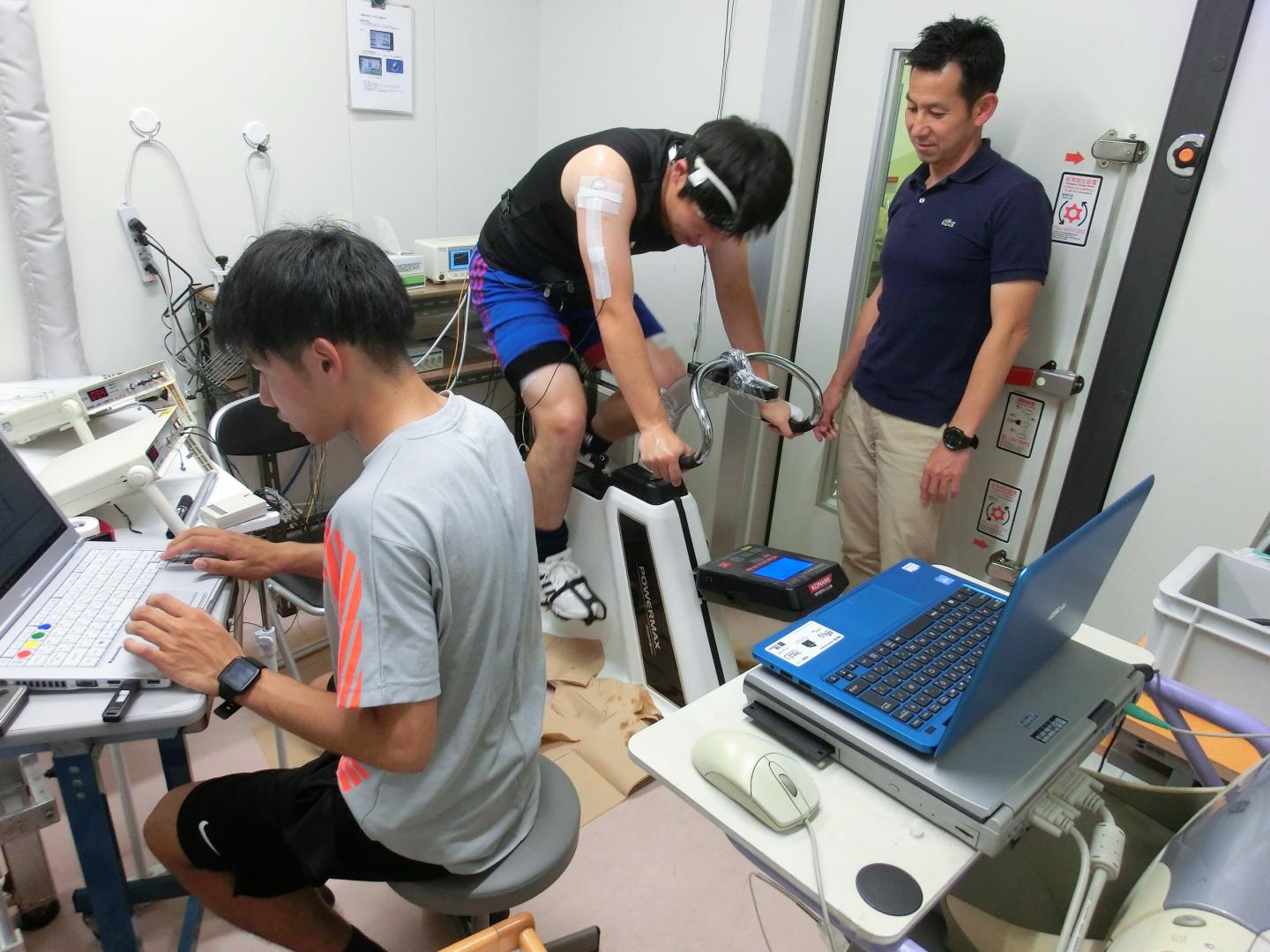
A new cooling vest for sports athletes may ensure everyone can compete safely in sweltering summer conditions such as the upcoming 2020 Summer Olympics, reports a new paper published in Frontiers in Physiology
IMAGE

Credit: Hiroshima University

Strategies to cope with body heat in sports is a pressing issue. The Tokyo Olympics will be held in the hot and muggy Japanese summer where the ambient temperature is expected to be above 33°C. Athletes have to worry about performing under pressure of the high-stakes competition but also now have to deal with a very hot and humid climate. The 2022 FIFA World Cup in Qatar will also have high temperatures and athletes must use cooling strategies during the competition. Professor Hiroshi Hasegawa of the Graduate School of Integrated Arts and Sciences, Hiroshima University says that this is an increasing problem for athletes due to both competition timing and increased temperatures due to global warming.

Illness due to heat can have serious consequences outlines Hasegawa:

“Because our body temperature is usually around 37°C, if your body temperature increases over 40°C that is a very big problem.”

Dehydration, decreased performance and decreased brain function are the dangers faced when our core body temperature climbs too high.

To help combat this, researchers from Hiroshima University collaborated with a Japanese sportswear company Mizuno to test a new type of cooling vest. The cooling vest is filled with ice packs and features a collar that can also cool the neck. The aim of the vest is to cool the athletes’ upper-body skin which can decrease heart rate and temperature of their neck and skin.

Hasegawa recruited athletes from the Hiroshima University football team to test the vest. Participants exercised for 30 minutes followed by 15 minutes of rest, with and without the cooling vest, then exercised for a final 30 minutes in a format similar to a soccer match. The athletes who wore the vest at half-time showed increased performance in the second half. They also said that they felt more comfortable in the second half, an important factor as comfort and relaxation during half time is important to avoid stress during a game.

This research is not just applicable to athletes but to people that exercise in hot conditions. If you don’t have access to a cooling vest Hasegawa suggests a combination of external and internal cooling:

“Normally to avoid the heat illness it’s better not to do any exercise. But if you have to exercise in the heat it’s better not to drink water, it’s better to drink sports drink because they contain electrolytes and some energy… Cooling your body is very important, especially the upper body.” says Hasegawa.

In the future, Hasegawa would like to test this technology with people with disabilities who might find it more difficult to regulate body temperature.

###

Since its foundation in 1949, Hiroshima University has strived to become one of the most prominent and comprehensive universities in Japan for the promotion and development of scholarship and education. Consisting of 12 schools and 11 graduate schools, ranging from International Development and Cooperation to Integrated Arts and Sciences, the university has grown into one of the most distinguished research universities in Japan. English website: https://www.hiroshima-u.ac.jp/en

Media Contact
Norifumi Miyokawa
[email protected]

Related Journal Article

http://dx.doi.org/10.3389/fphys.2019.00711

Tags: Chemistry/Physics/Materials SciencesMaterialsMedicine/HealthSports/RecreationTechnology/Engineering/Computer Science
Share13Tweet8Share2ShareShareShare2

Related Posts

Scientists uncover design rules for high-performance thermoelectric materials

Scientists uncover design rules for high-performance thermoelectric materials

August 22, 2026
Bringing Optical Fibre Materials to Photonic Chips

Bringing Optical Fibre Materials to Photonic Chips

August 22, 2026

Nanoscience and Liquid Crystals Unite in Functional Hybrids With Transformative Applications

August 22, 2026

Designing Better Biomedical Hydrogels Through Molecular Building Blocks and Hierarchical Structures

August 22, 2026
Please login to join discussion

POPULAR NEWS

  • Dual-oxygen pancreatic cancer organoids mirror basal-classical diversity, spatial transcriptomics confirms

    29 shares
    Share 12 Tweet 7
  • Tirzepatide Versus GLP-1 Agonists for Stroke Risk in Atrial Fibrillation and Diabetes

    29 shares
    Share 12 Tweet 7
  • Real-world study examines psychotic complications of subcutaneous foslevodopa/foscarbidopa infusions in 198 patients

    29 shares
    Share 12 Tweet 7
  • Blood-flow signals from liver vessels direct region-specific liver function through Wnt pathways

    29 shares
    Share 12 Tweet 7

About

We bring you the latest biotechnology news from best research centers and universities around the world. Check our website.

Follow us

Recent News

Dual-oxygen pancreatic cancer organoids mirror basal-classical diversity, spatial transcriptomics confirms

Tirzepatide Versus GLP-1 Agonists for Stroke Risk in Atrial Fibrillation and Diabetes

Real-world study examines psychotic complications of subcutaneous foslevodopa/foscarbidopa infusions in 198 patients

Subscribe to Blog via Email

Enter your email address to subscribe to this blog and receive notifications of new posts by email.

Join 85 other subscribers
  • Contact Us

Bioengineer.org © Copyright 2023 All Rights Reserved.

Welcome Back!

Login to your account below

Forgotten Password?

Retrieve your password

Please enter your username or email address to reset your password.

Log In
No Result
View All Result
  • Homepages
    • Home Page 1
    • Home Page 2
  • News
  • National
  • Business
  • Health
  • Lifestyle
  • Science

Bioengineer.org © Copyright 2023 All Rights Reserved.