• HOME
  • NEWS
  • EXPLORE
    • CAREER
      • Companies
      • Jobs
    • EVENTS
    • iGEM
      • News
      • Team
    • PHOTOS
    • VIDEO
    • WIKI
  • BLOG
  • COMMUNITY
    • FACEBOOK
    • INSTAGRAM
    • TWITTER
Thursday, June 25, 2026
BIOENGINEER.ORG
No Result
View All Result
  • Login
  • HOME
  • NEWS
  • EXPLORE
    • CAREER
      • Companies
      • Jobs
        • Lecturer
        • PhD Studentship
        • Postdoc
        • Research Assistant
    • EVENTS
    • iGEM
      • News
      • Team
    • PHOTOS
    • VIDEO
    • WIKI
  • BLOG
  • COMMUNITY
    • FACEBOOK
    • INSTAGRAM
    • TWITTER
  • HOME
  • NEWS
  • EXPLORE
    • CAREER
      • Companies
      • Jobs
        • Lecturer
        • PhD Studentship
        • Postdoc
        • Research Assistant
    • EVENTS
    • iGEM
      • News
      • Team
    • PHOTOS
    • VIDEO
    • WIKI
  • BLOG
  • COMMUNITY
    • FACEBOOK
    • INSTAGRAM
    • TWITTER
No Result
View All Result
Bioengineer.org
No Result
View All Result
Home NEWS Science News Biology

Snack peppers find acceptance with reduced seed count

Bioengineer by Bioengineer
June 14, 2019
in Biology
Reading Time: 3 mins read
0
IMAGE
Share on FacebookShare on TwitterShare on LinkedinShare on RedditShare on Telegram

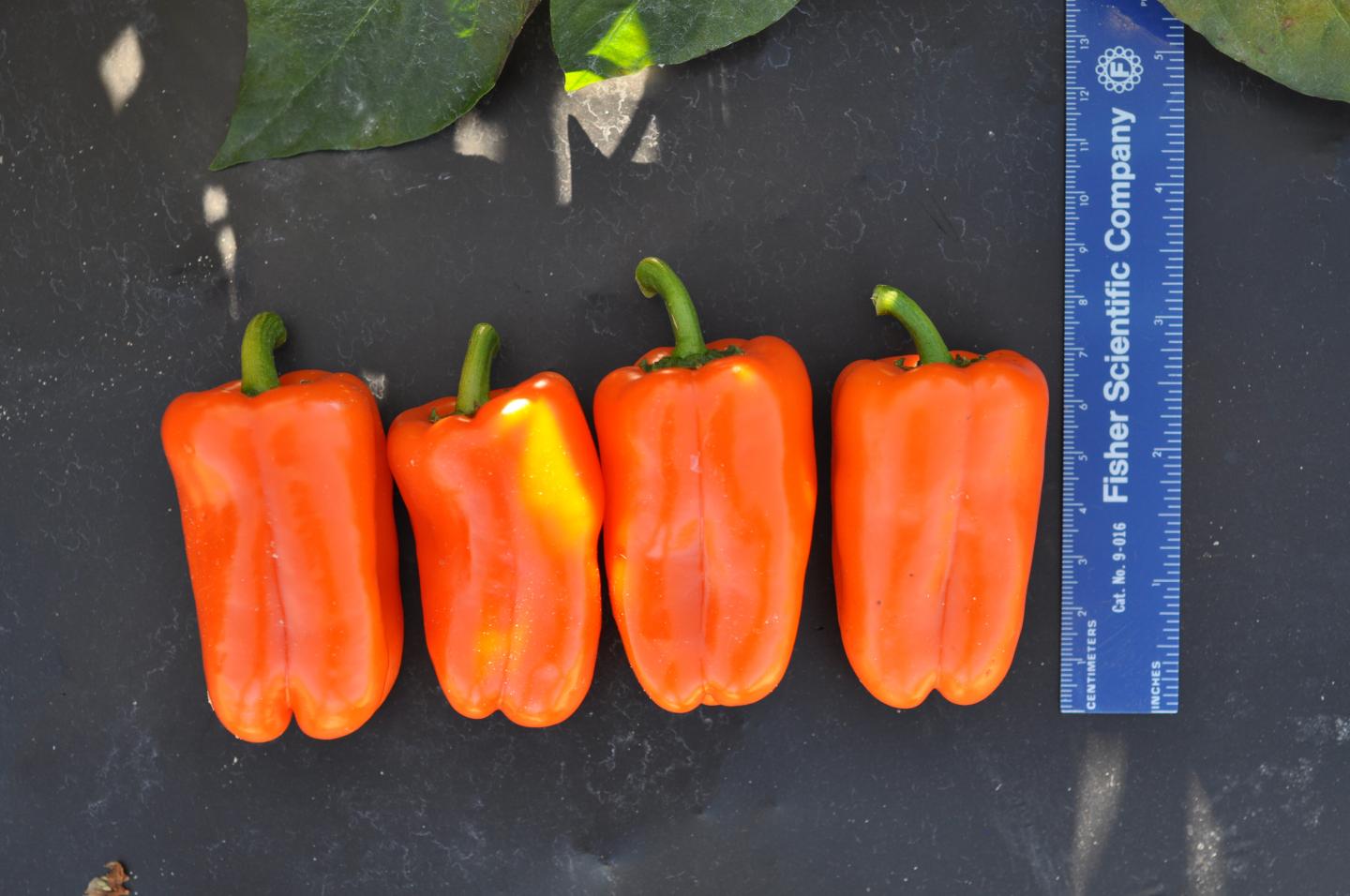
Study investigates the desirability for, and practicality of, producing snack peppers, both sweet and hot, with low seed count
IMAGE

Credit: John Stommel

John Stommel of the Agricultural Research Service of the US Department of Agriculture (USDA-ARS) has investigated the desirability for, and practicality of, producing snack peppers, both sweet and hot, with low seed count.

His findings are in the article, “Reduced Seed Count Improves Versatility and Propagation of Small-fruited Peppers (Capsicum annuum L.) for Specialty Markets,” published in HortScience.

Small/miniature sweet and hot peppers, such as snack peppers, are a rapidly growing class of specialty peppers. As with grapes and watermelons and certain other fruits, low seed count is an important attribute for consumer acceptance of small-fruited specialty peppers. But, this attribute is understandably counterproductive in terms of maintaining a strong continuous yield.

Environmental stress conditions, including high or low temperature, humidity, high or low light intensity, heavy rain or drought, and even strong wind, negatively affect the quality of fruit and growth. These conditions can also induce fruit to be seedless or with significantly reduced seed.

This is known as parthenocarpy, the development of a fruit without prior fertilization. In parthenocarpy, the ovary is stimulated even without pollination and thus fruit development begins without fertilization. Some of this occurs naturally, as with bananas, pineapples, and persimmons, to name but a few. Other examples are a result of thoughtful intervention.

Induction of parthenocarpy is a common agricultural practice for some horticultural crops. Selective breeding for parthenocarpy has demonstrated the utility of seedlessness for improved yield and quality in selected environments.

Small sweet peppers are popular among consumers because of their versatility, snackability, vibrant colors, and nutrition attributes. Mature peppers comprise the majority of the snack pepper market segment due to enhanced sweetness and the aroma of ripe fruit.

Although characteristically pungent, no-heat habanero cultivars within the snack market class provide unique fruity and floral attributes of the habanero without fruit pungency.

Seasonal field production is supplemented by year-round greenhouse production. Although field production of traditional pepper commodities is in decline in parts of the country, other segments, including snack peppers, are expanding greenhouse acreage for high-value pepper production.

A relatively small number of commercial snack pepper cultivars have been developed, many of which lack uniformity and quality attributes such as low seed count, which enhances culinary convenience for product end users.

True breeding pepper lines selected for reduced fruit seed count exhibited significantly reduced seed count relative to breeding lines with seed set typical for pepper.

###

The complete article is available in the ASHS HortScience journal: https://journals.ashs.org/hortsci/view/journals/hortsci/54/4/article-p652.xml. DOI: https://doi.org/10.21273/HORTSCI13602-18. Or you may contact John Stommel of the US Department of Agriculture, Agricultural Research Service at [email protected], or call him at (301) 504-5583.

Founded in 1903, the American Society for Horticulture Science (ASHS) is the largest organization dedicated to advancing all facets of horticulture research, education, and application. More information at ashs.org.

Media Contact
Michael Neff
[email protected]

Related Journal Article

http://dx.doi.org/10.21273/HORTSCI13602-18

Tags: Agricultural Production/EconomicsAgricultureFood/Food SciencePlant Sciences
Share12Tweet8Share2ShareShareShare2

Related Posts

Natural Hallucinogens: Evolution’s Ecological Tools, Not Mere Chemical Byproducts

June 25, 2026

This Famous Butterfly Revealed: Three Distinct Species Hidden in One

June 25, 2026

Scientists Attack Soybean Cyst Nematode by Starving Its Food Source

June 25, 2026

Decoding the Secret Code of a Crucial Immune Sensor

June 24, 2026
Please login to join discussion

POPULAR NEWS

  • Saying Goodbye to PGY-6: Pediatric Fellowship Realities

    103 shares
    Share 41 Tweet 26
  • Multi-Hospital Study Reveals Long Covid Burden Is Twice as High as Current Estimates

    92 shares
    Share 36 Tweet 23
  • Detection of EDCs in Breast Milk and Infant Urine Up to Six Months Highlights Early Exposure Risks

    77 shares
    Share 31 Tweet 19
  • New Drug Candidate Developed at McMaster Shows Potential for Treating Brain Cancer

    58 shares
    Share 23 Tweet 15

About

We bring you the latest biotechnology news from best research centers and universities around the world. Check our website.

Follow us

Recent News

Tracking Lanthanide-Labeled Microplastics in Plants

POSTECH Researchers Slash Cost of Reconstituted Cell-Free Systems by 95%

AI and Physics Collaborate to Design Advanced Hydrogen Storage Materials

Subscribe to Blog via Email

Success! An email was just sent to confirm your subscription. Please find the email now and click 'Confirm' to start subscribing.

Join 82 other subscribers
  • Contact Us

Bioengineer.org © Copyright 2023 All Rights Reserved.

Welcome Back!

Login to your account below

Forgotten Password?

Retrieve your password

Please enter your username or email address to reset your password.

Log In
No Result
View All Result
  • Homepages
    • Home Page 1
    • Home Page 2
  • News
  • National
  • Business
  • Health
  • Lifestyle
  • Science

Bioengineer.org © Copyright 2023 All Rights Reserved.