• HOME
  • NEWS
  • EXPLORE
    • CAREER
      • Companies
      • Jobs
    • EVENTS
    • iGEM
      • News
      • Team
    • PHOTOS
    • VIDEO
    • WIKI
  • BLOG
  • COMMUNITY
    • FACEBOOK
    • INSTAGRAM
    • TWITTER
Thursday, March 26, 2026
BIOENGINEER.ORG
No Result
View All Result
  • Login
  • HOME
  • NEWS
  • EXPLORE
    • CAREER
      • Companies
      • Jobs
        • Lecturer
        • PhD Studentship
        • Postdoc
        • Research Assistant
    • EVENTS
    • iGEM
      • News
      • Team
    • PHOTOS
    • VIDEO
    • WIKI
  • BLOG
  • COMMUNITY
    • FACEBOOK
    • INSTAGRAM
    • TWITTER
  • HOME
  • NEWS
  • EXPLORE
    • CAREER
      • Companies
      • Jobs
        • Lecturer
        • PhD Studentship
        • Postdoc
        • Research Assistant
    • EVENTS
    • iGEM
      • News
      • Team
    • PHOTOS
    • VIDEO
    • WIKI
  • BLOG
  • COMMUNITY
    • FACEBOOK
    • INSTAGRAM
    • TWITTER
No Result
View All Result
Bioengineer.org
No Result
View All Result
Home NEWS Science News Chemistry

Hubble sets sights on an explosive galaxy

Bioengineer by Bioengineer
June 14, 2019
in Chemistry
Reading Time: 2 mins read
0
IMAGE
Share on FacebookShare on TwitterShare on LinkedinShare on RedditShare on Telegram

IMAGE

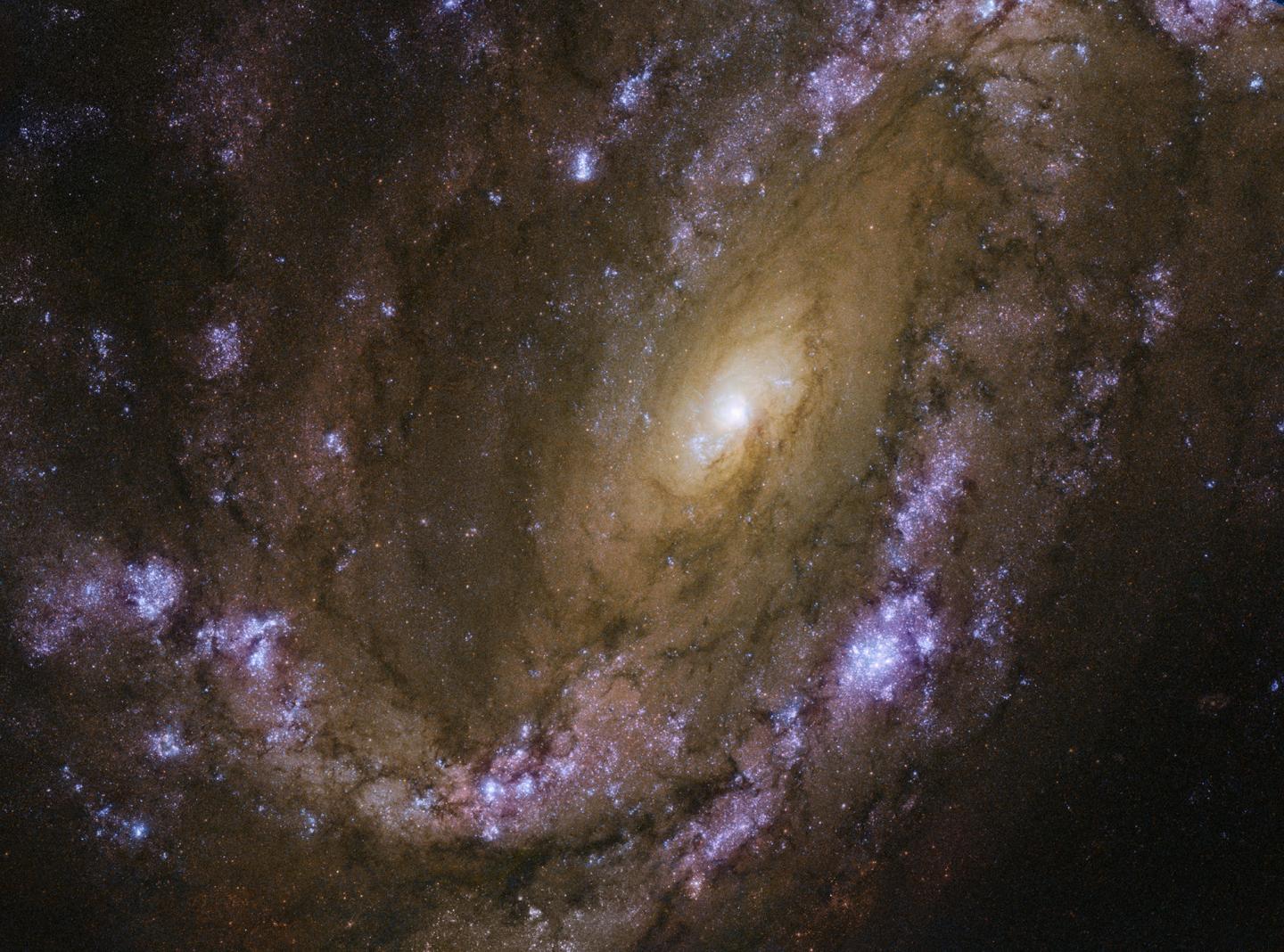
Credit: ESA/Hubble & NASA, D. Crenshaw and O. Fox

When massive stars die at the end of their short lives, they light up the cosmos with bright, explosive bursts of light and material known as supernovae. A supernova event is incredibly energetic and intensely luminous — so much so that it forms what looks like an especially bright new star that slowly fades away over time.

These exploding stars glow so incredibly brightly when they first form that they can be spotted from afar using telescopes such as the NASA/ESA Hubble Space Telescope. The subject of this image, a spiral galaxy named NGC 4051 — about 45 million light-years from Earth — has hosted multiple supernovae in past years. The first was spotted in 1983 (SN 1983I), the second in 2003 (SN 2003ie), and the most recent in 2010 (SN 2010br). These explosive events were seen scattered throughout the center and spiral arms of NGC 4051.

SN 1983I and SN 2010br were both categorized as Type Ic supernovae. This type of supernova is produced by the core collapse of a massive star that has lost its outer layer of hydrogen and helium, either via winds or by mass transfer to a companion star. Because of this, Type Ic — and also Type Ib — supernovae are sometimes referred to as stripped core-collapse supernovae.

NGC 4501 sits in the southern part of a cluster of galaxies known as the Ursa Major I Cluster. This cluster is especially rich in spirals such as NGC 4051, and is a subset of the larger Virgo Supercluster, which also houses the Milky Way.

###

Media Contact
Claire Andreoli
[email protected]

Original Source

http://www.nasa.gov/image-feature/goddard/2019/hubble-sets-sights-on-an-explosive-galaxy

Tags: AstronomyAstrophysicsSatellite Missions/ShuttlesSpace/Planetary ScienceStars/The Sun
Share12Tweet8Share2ShareShareShare2

Related Posts

blank

Physicists Identify Electronic Drivers Behind Flat Band Quantum Materials

March 21, 2026
Würzburg Chemistry Professor Claudia Höbartner Receives Prestigious Honor

Würzburg Chemistry Professor Claudia Höbartner Receives Prestigious Honor

March 20, 2026

Scientists Reveal How Magnets Control Metamaterial Behavior

March 20, 2026

Gallium-Based Liquid Metals: Pioneering Cybernetic Bridges for Human-Machine Integration

March 20, 2026
Please login to join discussion

POPULAR NEWS

  • blank

    Revolutionary AI Model Enhances Precision in Detecting Food Contamination

    96 shares
    Share 38 Tweet 24
  • Imagine a Social Media Feed That Challenges Your Views Instead of Reinforcing Them

    1003 shares
    Share 397 Tweet 248
  • Uncovering Functions of Cavernous Malformation Proteins in Organoids

    54 shares
    Share 22 Tweet 14
  • Promising Outcomes from First Clinical Trials of Gene Regulation in Epilepsy

    51 shares
    Share 20 Tweet 13

About

We bring you the latest biotechnology news from best research centers and universities around the world. Check our website.

Follow us

Recent News

In-Sensor Cryptography Links Physical Process to Digital Identity

Can Psychosocial Factors Influence Cancer Risk?

Depression Factors in Elderly: Pre vs. Post-COVID Analysis

Subscribe to Blog via Email

Success! An email was just sent to confirm your subscription. Please find the email now and click 'Confirm' to start subscribing.

Join 78 other subscribers
  • Contact Us

Bioengineer.org © Copyright 2023 All Rights Reserved.

Welcome Back!

Login to your account below

Forgotten Password?

Retrieve your password

Please enter your username or email address to reset your password.

Log In
No Result
View All Result
  • Homepages
    • Home Page 1
    • Home Page 2
  • News
  • National
  • Business
  • Health
  • Lifestyle
  • Science

Bioengineer.org © Copyright 2023 All Rights Reserved.