• HOME
  • NEWS
  • EXPLORE
    • CAREER
      • Companies
      • Jobs
    • EVENTS
    • iGEM
      • News
      • Team
    • PHOTOS
    • VIDEO
    • WIKI
  • BLOG
  • COMMUNITY
    • FACEBOOK
    • INSTAGRAM
    • TWITTER
Friday, December 12, 2025
BIOENGINEER.ORG
No Result
View All Result
  • Login
  • HOME
  • NEWS
  • EXPLORE
    • CAREER
      • Companies
      • Jobs
        • Lecturer
        • PhD Studentship
        • Postdoc
        • Research Assistant
    • EVENTS
    • iGEM
      • News
      • Team
    • PHOTOS
    • VIDEO
    • WIKI
  • BLOG
  • COMMUNITY
    • FACEBOOK
    • INSTAGRAM
    • TWITTER
  • HOME
  • NEWS
  • EXPLORE
    • CAREER
      • Companies
      • Jobs
        • Lecturer
        • PhD Studentship
        • Postdoc
        • Research Assistant
    • EVENTS
    • iGEM
      • News
      • Team
    • PHOTOS
    • VIDEO
    • WIKI
  • BLOG
  • COMMUNITY
    • FACEBOOK
    • INSTAGRAM
    • TWITTER
No Result
View All Result
Bioengineer.org
No Result
View All Result
Home NEWS Science News Biology

Scientists investigate climate and vegetation drivers of terrestrial carbon fluxes

Bioengineer by Bioengineer
June 14, 2019
in Biology
Reading Time: 2 mins read
0
IMAGE
Share on FacebookShare on TwitterShare on LinkedinShare on RedditShare on Telegram

IMAGE

Credit: Shutao Chen

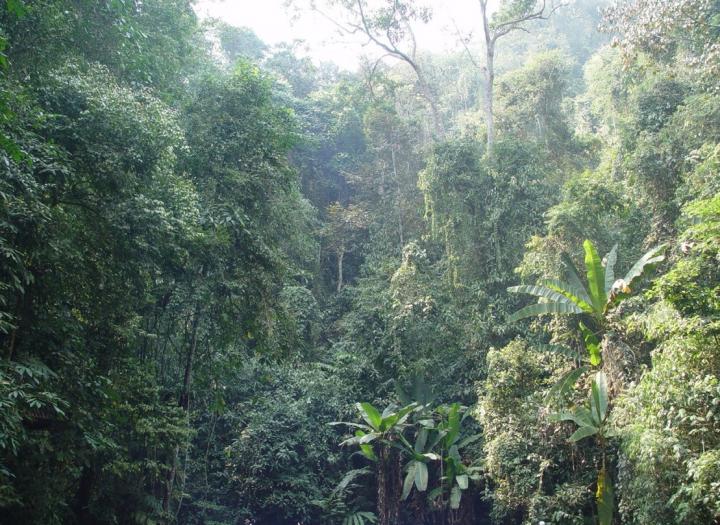
A better understanding of terrestrial flux dynamics will come from elucidating the integrated effects of climate and vegetation constraints on gross primary productivity (GPP), ecosystem respiration (ER), and net ecosystem productivity (NEP), according to Dr. Shutao Chen, Associate professor at Nanjing University of Information Science and Technology.

Dr. Chen and his team–a group of researchers from the Jiangsu Key Laboratory of Agricultural Meteorology/School of Applied Meteorology of Nanjing University of Information Science and Technology, College of Resources and Environmental Sciences of Nanjing Agricultural University and Climate Center of Anhui Weather Bureau, China–have had their findings published in Advances of Atmospheric Sciences and the study is featured on the cover of July issue of the journal.

“The terrestrial carbon cycle plays an important role in global climate change, but the vegetation and environmental drivers of carbon fluxes are poorly understood. Many more data on carbon cycling and vegetation characteristics in various biomes (e.g., forest, grassland, wetland) make it possible to investigate the vegetation drivers of terrestrial carbon fluxes,” says Dr. Chen.

“We established a global dataset with 1194 available data across site-years including GPP, ER, NEP, and relevant environmental factors to investigate the variability in GPP, ER and NEP, as well as their covariability with climate and vegetation drivers. The results indicated that both GPP and ER increased exponentially with the increase in MAT [mean annual temperature] for all biomes. Besides MAT, AP [annual precipitation] had a strong correlation with GPP (or ER) for non-wetland biomes. Maximum LAI [leaf area index] was an important factor determining carbon fluxes for all biomes. The variations in both GPP and ER were also associated with variations in vegetation characteristics,” states Dr. Chen.

“The model including MAT, AP and LAI explained 53% of the annual GPP variations and 48% of the annual ER variations across all biomes. The model based on MAT and LAI explained 91% of the annual GPP variations and 93% of the annual ER variations for the wetland sites. The effects of LAI on GPP, ER or NEP highlighted that canopy-level measurement is critical for accurately estimating ecosystem-atmosphere exchange of carbon dioxide.”

“This synthesis study highlights that the responses of ecosystem-atmosphere exchange of CO2 to climate and vegetation variations are complex, which poses great challenges to models seeking to represent terrestrial ecosystem responses to climatic variation,” he adds.

###

Media Contact
Zheng Lin
[email protected]

Original Source

https://link.springer.com/article/10.1007/s00376-019-8194-y

Related Journal Article

http://dx.doi.org/10.1007/s00376-019-8194-y

Tags: Atmospheric ScienceBiochemistryBiodiversityClimate ChangeForestryGeographyPlant Sciences
Share12Tweet7Share2ShareShareShare1

Related Posts

Unraveling circRNA Regulation in Bovine Fat Development

Unraveling circRNA Regulation in Bovine Fat Development

December 12, 2025
Decoding Bat Echolocation with Time-Varying Autoregressive Signals

Decoding Bat Echolocation with Time-Varying Autoregressive Signals

December 12, 2025

Lactic Acid Fermented Rice Germ Boosts Skin Health

December 12, 2025

Do Genomic Patterns Enhance Livestock Reproductive Fitness?

December 12, 2025
Please login to join discussion

POPULAR NEWS

  • New Research Unveils the Pathway for CEOs to Achieve Social Media Stardom

    New Research Unveils the Pathway for CEOs to Achieve Social Media Stardom

    205 shares
    Share 82 Tweet 51
  • Scientists Uncover Chameleon’s Telephone-Cord-Like Optic Nerves, A Feature Missed by Aristotle and Newton

    121 shares
    Share 48 Tweet 30
  • Neurological Impacts of COVID and MIS-C in Children

    108 shares
    Share 43 Tweet 27
  • Nurses’ Views on Online Learning: Effects on Performance

    69 shares
    Share 28 Tweet 17

About

We bring you the latest biotechnology news from best research centers and universities around the world. Check our website.

Follow us

Recent News

Hyperglycemia Worsens Osteoarthritis by Altering Macrophages

Tryptophan Build-Up Triggers p53-Driven Cell Death

Knowledge Translation Platforms: Brokers, Intermediaries, or Beyond?

Subscribe to Blog via Email

Enter your email address to subscribe to this blog and receive notifications of new posts by email.

Join 69 other subscribers
  • Contact Us

Bioengineer.org © Copyright 2023 All Rights Reserved.

Welcome Back!

Login to your account below

Forgotten Password?

Retrieve your password

Please enter your username or email address to reset your password.

Log In
No Result
View All Result
  • Homepages
    • Home Page 1
    • Home Page 2
  • News
  • National
  • Business
  • Health
  • Lifestyle
  • Science

Bioengineer.org © Copyright 2023 All Rights Reserved.