Research led by FutureNeuro at RCSI could improve the lives of people with epilepsy
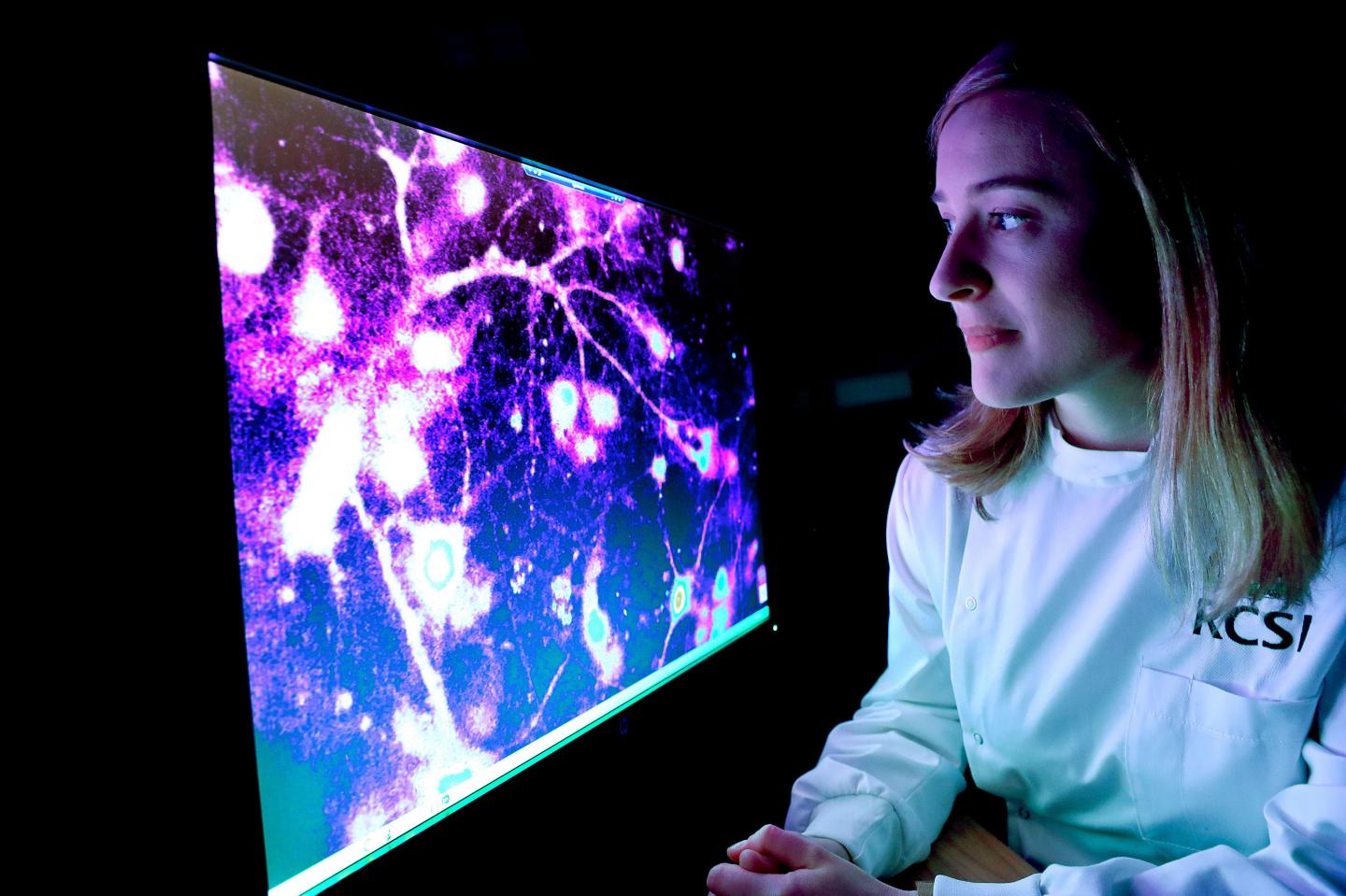
Credit: Maxwell Photography
Monday, 10 June 2019 – A new study has found a pattern of molecules that appear in the blood before a seizure happens. This discovery may lead to the development of an early warning system, which would enable people with epilepsy to know when they are at risk of having a seizure.
Researchers at FutureNeuro, the SFI Research Centre for Chronic and Rare Neurological Diseases, hosted at RCSI (Royal College of Surgeons in Ireland) led the study, which is published in the current edition of the Journal of Clinical Investigation (JCI).
FutureNeuro and RCSI researchers have discovered molecules in the blood that are higher in people with epilepsy before a seizure happens. These molecules are fragments of transfer RNAs (tRNAs), a chemical closely related to DNA that performs an important role in building proteins within the cell. When cells are stressed, tRNAs are cut into fragments. Higher levels of the fragments in the blood could reflect that brain cells are under stress in the build up to a seizure event.
Using blood samples from people with epilepsy at the Epilepsy Monitoring Unit in Beaumont Hospital, Dublin and in a similar specialist centre in Marburg, Germany, the group found that fragment levels of three tRNAs “spike” in the blood many hours before a seizure.
“People with epilepsy often report that one of the most difficult aspects of living with the disease is never knowing when a seizure will occur,” said Dr Marion Hogg, FutureNeuro investigator, Honorary Lecturer at RCSI, and the study’s lead author.
“The results of this study are very promising. We hope that our tRNA research will be a key first step toward developing an early warning system.”
Approximately 40,000 people in Ireland have epilepsy and one third of those do not respond to current treatments, meaning they continue to experience seizures. The World Health Organisation estimates that more than 50 million people worldwide have epilepsy.
“New technologies to remove the unpredictability of uncontrolled seizures for people with epilepsy are a very real possibility,” said Professor David Henshall, Director of FutureNeuro and Professor of Molecular Physiology and Neuroscience at RCSI who was a co-author on the paper.
“Building on this research we in FutureNeuro hope to develop a test prototype, similar to a blood sugar monitor that can potentially predict when a seizure might occur.”
###
Funders of the research included Science Foundation Ireland (SFI), the European Regional Development Fund, FutureNeuro industry partners and the European Union’s ‘Seventh Framework’ Programme FP7 (EpimiRNA).
A video of the researchers explaining their work can be viewed here: https:/
About FutureNeuro
FutureNeuro, which is funded by Science Foundation Ireland, aims to deliver advances in understanding disease initiation and progress. With this understanding, and through industry partnerships, new technologies and solutions for the treatment, diagnosis and monitoring of chronic and rare neurological diseases will be developed.
About RCSI
RCSI is ranked among the top 250 (top 2%) of universities worldwide in the Times Higher Education World University Rankings (2019) and its research is ranked first in Ireland for citations. It is an international not-for-profit health sciences institution, with its headquarters in Dublin, focused on education and research to drive improvements in human health worldwide. RCSI has been awarded Athena Swan Bronze accreditation for positive gender practice in higher education.
Media Contact
Michael Sullivan
[email protected]
Related Journal Article
http://dx.