• HOME
  • NEWS
  • EXPLORE
    • CAREER
      • Companies
      • Jobs
    • EVENTS
    • iGEM
      • News
      • Team
    • PHOTOS
    • VIDEO
    • WIKI
  • BLOG
  • COMMUNITY
    • FACEBOOK
    • INSTAGRAM
    • TWITTER
Saturday, February 7, 2026
BIOENGINEER.ORG
No Result
View All Result
  • Login
  • HOME
  • NEWS
  • EXPLORE
    • CAREER
      • Companies
      • Jobs
        • Lecturer
        • PhD Studentship
        • Postdoc
        • Research Assistant
    • EVENTS
    • iGEM
      • News
      • Team
    • PHOTOS
    • VIDEO
    • WIKI
  • BLOG
  • COMMUNITY
    • FACEBOOK
    • INSTAGRAM
    • TWITTER
  • HOME
  • NEWS
  • EXPLORE
    • CAREER
      • Companies
      • Jobs
        • Lecturer
        • PhD Studentship
        • Postdoc
        • Research Assistant
    • EVENTS
    • iGEM
      • News
      • Team
    • PHOTOS
    • VIDEO
    • WIKI
  • BLOG
  • COMMUNITY
    • FACEBOOK
    • INSTAGRAM
    • TWITTER
No Result
View All Result
Bioengineer.org
No Result
View All Result
Home NEWS Science News Biology

New research shows how habitat loss can destabilise ecosystems

Bioengineer by Bioengineer
May 31, 2019
in Biology
Reading Time: 3 mins read
0
IMAGE
Share on FacebookShare on TwitterShare on LinkedinShare on RedditShare on Telegram

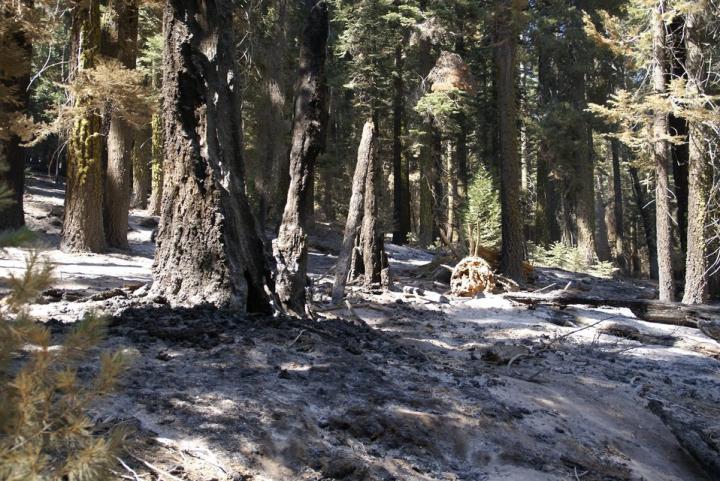
Whole plant and animal communities can be put at risk by different types of habitat loss
IMAGE

Credit: Louis Haynes

An international study has revealed new evidence to help understand the consequences of habitat loss on natural communities.

The research, co-authored by Swansea University’s Dr Miguel Lurgi, shows the specific ways in which human activities destroy habitat is a key factor to understanding the effects of such destruction on the stability and functioning of biological communities.

The paper, published in scientific journal Nature Communications, asks whether putting the focus solely on species diversity may overlook other facets of the way biological communities respond to habitat destruction.

Daniel Montoya, researcher at the Theoretical and Experimental Ecology Station in Moulis, France, also a co-author, said: “Ecologists and practitioners tend to assess the impact of human activities on biodiversity by measuring the extinction rates of species.

“However, biodiversity comprises elements other than single species, such as the interactions between species and their stability over time and space.

“These additional, and sometimes overlooked, properties are key to the functioning of ecosystems. They are the missed component of biodiversity loss that accompanies or precede species extinctions.”

This study found that the specific ways in which habitat is lost is important to the response of biodiversity.

Dr Montoya added: “Natural habitats can be destroyed randomly or in a clustered way – for example, by the construction of a road or the creation of new urban areas, respectively. The spatial configuration of this loss differentially constrains the mobility of individual animals, which further impacts biodiversity and the stability of populations in the remaining fragments of intact habitat.”

The researchers say a logical question now emerges – how is habitat destroyed in real landscapes around the world?

“It depends on the spatial scale we are looking at. Yet, we explored several scenarios of habitat loss and our results suggest that community responses are approximately gradual and predictable based on degree of spatial autocorrelation of the lost habitat,” said Dr Lurgi.

This study relates to recent research exploring changes in local diversity following global change, currently under a subject of heated debate.

“We suggest that, irrespective of a positive, negative or neutral change in local diversity, spatial patterns of habitat loss largely influence the structure and dynamics of biodiversity in very different, contrasting ways.”

Dr Lurgi, a lecturer at Swansea’s Department of Biosciences, previously worked at the renowned CNRS in France and became involved in the paper as part of his own research focusing on the disassembly dynamics of ecological networks.

The authors hope their findings will be used to help inform environmental science and policy making in the future. They would like to see aspects of community structure and stability as well as the spatial configuration of habitat loss incorporated into conservation planning.

Dr Lurgi added: “I think it is important to develop theory and models to help us understand these effects and allow us to come up with better ways to tackle habitat loss and other sources of anthropogenic change to better conserve biodiversity.”

###

Media Contact
Kathy Thomas
[email protected]

Original Source

http://www.swansea.ac.uk/press-office/latest-research/newresearchshowshowhabitatlosscandestabiliseecosystems.php

Related Journal Article

http://dx.doi.org/10.1038/s41467-019-10370-2

Tags: BiodiversityClimate ChangeEarth ScienceGeographyGeology/SoilPlant SciencesTemperature-Dependent Phenomena
Share12Tweet8Share2ShareShareShare2

Related Posts

New Study Uncovers Mechanism Behind Burn Pit Particulate Matter–Induced Lung Inflammation

New Study Uncovers Mechanism Behind Burn Pit Particulate Matter–Induced Lung Inflammation

February 6, 2026

DeepBlastoid: Advancing Automated and Efficient Evaluation of Human Blastoids with Deep Learning

February 6, 2026

Navigating the Gut: The Role of Formic Acid in the Microbiome

February 6, 2026

AI-Enhanced Optical Coherence Photoacoustic Microscopy Revolutionizes 3D Cancer Model Imaging

February 6, 2026
Please login to join discussion

POPULAR NEWS

  • Robotic Ureteral Reconstruction: A Novel Approach

    Robotic Ureteral Reconstruction: A Novel Approach

    82 shares
    Share 33 Tweet 21
  • Digital Privacy: Health Data Control in Incarceration

    63 shares
    Share 25 Tweet 16
  • Study Reveals Lipid Accumulation in ME/CFS Cells

    57 shares
    Share 23 Tweet 14
  • Breakthrough in RNA Research Accelerates Medical Innovations Timeline

    53 shares
    Share 21 Tweet 13

About

We bring you the latest biotechnology news from best research centers and universities around the world. Check our website.

Follow us

Recent News

Neg-Entropy: The Key Therapeutic Target for Chronic Diseases

Multidisciplinary Evidence-Based Guidelines for Therapeutic Drug Monitoring of Biologics in Inflammatory Bowel Disease

Early Tuberculosis Treatment Lowers Sepsis Mortality in People with HIV

Subscribe to Blog via Email

Enter your email address to subscribe to this blog and receive notifications of new posts by email.

Join 73 other subscribers
  • Contact Us

Bioengineer.org © Copyright 2023 All Rights Reserved.

Welcome Back!

Login to your account below

Forgotten Password?

Retrieve your password

Please enter your username or email address to reset your password.

Log In
No Result
View All Result
  • Homepages
    • Home Page 1
    • Home Page 2
  • News
  • National
  • Business
  • Health
  • Lifestyle
  • Science

Bioengineer.org © Copyright 2023 All Rights Reserved.