• HOME
  • NEWS
  • EXPLORE
    • CAREER
      • Companies
      • Jobs
    • EVENTS
    • iGEM
      • News
      • Team
    • PHOTOS
    • VIDEO
    • WIKI
  • BLOG
  • COMMUNITY
    • FACEBOOK
    • INSTAGRAM
    • TWITTER
Thursday, March 26, 2026
BIOENGINEER.ORG
No Result
View All Result
  • Login
  • HOME
  • NEWS
  • EXPLORE
    • CAREER
      • Companies
      • Jobs
        • Lecturer
        • PhD Studentship
        • Postdoc
        • Research Assistant
    • EVENTS
    • iGEM
      • News
      • Team
    • PHOTOS
    • VIDEO
    • WIKI
  • BLOG
  • COMMUNITY
    • FACEBOOK
    • INSTAGRAM
    • TWITTER
  • HOME
  • NEWS
  • EXPLORE
    • CAREER
      • Companies
      • Jobs
        • Lecturer
        • PhD Studentship
        • Postdoc
        • Research Assistant
    • EVENTS
    • iGEM
      • News
      • Team
    • PHOTOS
    • VIDEO
    • WIKI
  • BLOG
  • COMMUNITY
    • FACEBOOK
    • INSTAGRAM
    • TWITTER
No Result
View All Result
Bioengineer.org
No Result
View All Result
Home NEWS Science News Biology

Studying the evolution of oceans — grant

Bioengineer by Bioengineer
May 28, 2019
in Biology
Reading Time: 2 mins read
0
IMAGE
Share on FacebookShare on TwitterShare on LinkedinShare on RedditShare on Telegram

IMAGE

Credit: Virginia Tech

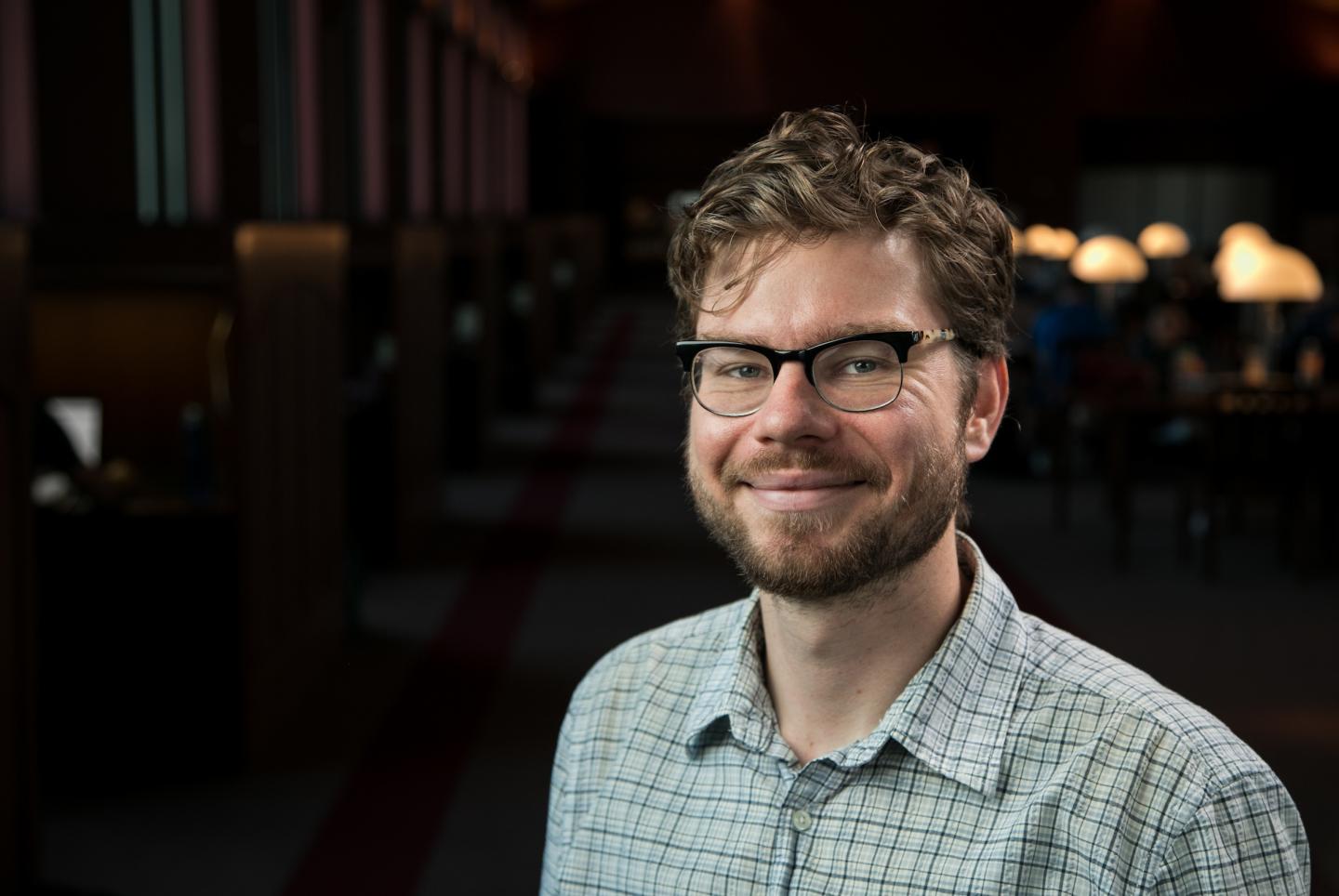
Frank O. Aylward, an assistant professor with the Department of Biological Sciences in the Virginia Tech College of Science, has been awarded a Simons Early Career Investigator in Marine Microbial Ecology and Evolution Award.

The three-year, $540,000 grant will help Aylward to understand evolutionary trends in prokaryotes and the roles they play in carbon and nitrogen cycling, and other biogeochemical processes that are vital to the Earth’s climate. The work, focused on computational genomics, will look at how these microbes have evolved in the ocean during the course of billions of years, and how they may change again.

“By understanding how microbes have evolved to live in the ocean, we can begin to predict how they might respond to future changes in climate and ocean acidification,” Aylward said. “Many microbial groups live in the nutrient depleted waters of the oceanic gyres of the globe, and these environments are expanding due to climate change. We want to learn what these microbes do and how they evolved into that environment, since they will be more abundant in the future.”

The Simons Foundation division of Life Sciences seeks to advance research on fundamental questions in biology, currently focuses on origins of life, microbial oceanography, microbial ecology and evolution, and support of early career scientists, according to the group’s website.

Aylward is also an affiliate faculty member of the systems biology program, part of the Academy of Integrated Science within the College of Science, and a member of the Global Change Center at Virginia Tech, part of the Fralin Life Sciences Institute. He researches microbial ecology and diversity, and genomics and metagenomics, including how microbial communities are shaped and function.

Aylward previously won a 2018 Alfred P. Sloan Research Fellow in Ocean Science worth $65,000, to fund personnel in his lab and to purchase a server for computational genomic research.

He earned a bachelor’s degree in in biochemistry from the University of Arizona in 2008 and a doctoral degree in microbiology from the University of Wisconsin-Madison in 2013, with postdoctoral research work following at The Massachusetts Institute of Technology and University of Hawaii at Mānoa.

###

Media Contact
Steven Mackay
[email protected]

Original Source

https://vtnews.vt.edu/articles/2019/05/science-frank_aylward_simons_award_climatechange.html

Tags: BiodiversityClimate ChangeEarth ScienceEcology/EnvironmentEvolutionHydrology/Water ResourcesOceanographyTemperature-Dependent Phenomena
Share12Tweet8Share2ShareShareShare2

Related Posts

How to sway group opinions: Encourage opponents to stay undecided

How to sway group opinions: Encourage opponents to stay undecided

March 23, 2026
Deep Learning Model Maps How Individual Cells Shape Disease Outcomes

Deep Learning Model Maps How Individual Cells Shape Disease Outcomes

March 20, 2026

Removing only 15 female sharks annually could endanger the entire population, scientists warn

March 20, 2026

Scientists Urge Fragrance Industry to Transition from Sustainability Talk to Active Funding of Plant Conservation

March 20, 2026
Please login to join discussion

POPULAR NEWS

  • blank

    Revolutionary AI Model Enhances Precision in Detecting Food Contamination

    96 shares
    Share 38 Tweet 24
  • Imagine a Social Media Feed That Challenges Your Views Instead of Reinforcing Them

    1003 shares
    Share 397 Tweet 248
  • Uncovering Functions of Cavernous Malformation Proteins in Organoids

    54 shares
    Share 22 Tweet 14
  • Promising Outcomes from First Clinical Trials of Gene Regulation in Epilepsy

    51 shares
    Share 20 Tweet 13

About

We bring you the latest biotechnology news from best research centers and universities around the world. Check our website.

Follow us

Recent News

In-Sensor Cryptography Links Physical Process to Digital Identity

Can Psychosocial Factors Influence Cancer Risk?

Depression Factors in Elderly: Pre vs. Post-COVID Analysis

Subscribe to Blog via Email

Success! An email was just sent to confirm your subscription. Please find the email now and click 'Confirm' to start subscribing.

Join 78 other subscribers
  • Contact Us

Bioengineer.org © Copyright 2023 All Rights Reserved.

Welcome Back!

Login to your account below

Forgotten Password?

Retrieve your password

Please enter your username or email address to reset your password.

Log In
No Result
View All Result
  • Homepages
    • Home Page 1
    • Home Page 2
  • News
  • National
  • Business
  • Health
  • Lifestyle
  • Science

Bioengineer.org © Copyright 2023 All Rights Reserved.