• HOME
  • NEWS
  • EXPLORE
    • CAREER
      • Companies
      • Jobs
    • EVENTS
    • iGEM
      • News
      • Team
    • PHOTOS
    • VIDEO
    • WIKI
  • BLOG
  • COMMUNITY
    • FACEBOOK
    • INSTAGRAM
    • TWITTER
Monday, January 12, 2026
BIOENGINEER.ORG
No Result
View All Result
  • Login
  • HOME
  • NEWS
  • EXPLORE
    • CAREER
      • Companies
      • Jobs
        • Lecturer
        • PhD Studentship
        • Postdoc
        • Research Assistant
    • EVENTS
    • iGEM
      • News
      • Team
    • PHOTOS
    • VIDEO
    • WIKI
  • BLOG
  • COMMUNITY
    • FACEBOOK
    • INSTAGRAM
    • TWITTER
  • HOME
  • NEWS
  • EXPLORE
    • CAREER
      • Companies
      • Jobs
        • Lecturer
        • PhD Studentship
        • Postdoc
        • Research Assistant
    • EVENTS
    • iGEM
      • News
      • Team
    • PHOTOS
    • VIDEO
    • WIKI
  • BLOG
  • COMMUNITY
    • FACEBOOK
    • INSTAGRAM
    • TWITTER
No Result
View All Result
Bioengineer.org
No Result
View All Result
Home NEWS Science News Biology

Opposite pathways in forest recovery

Bioengineer by Bioengineer
May 19, 2019
in Biology
Reading Time: 2 mins read
0
IMAGE
Share on FacebookShare on TwitterShare on LinkedinShare on RedditShare on Telegram

International research team including University of Göttingen analyses tree regrowth across Latin America
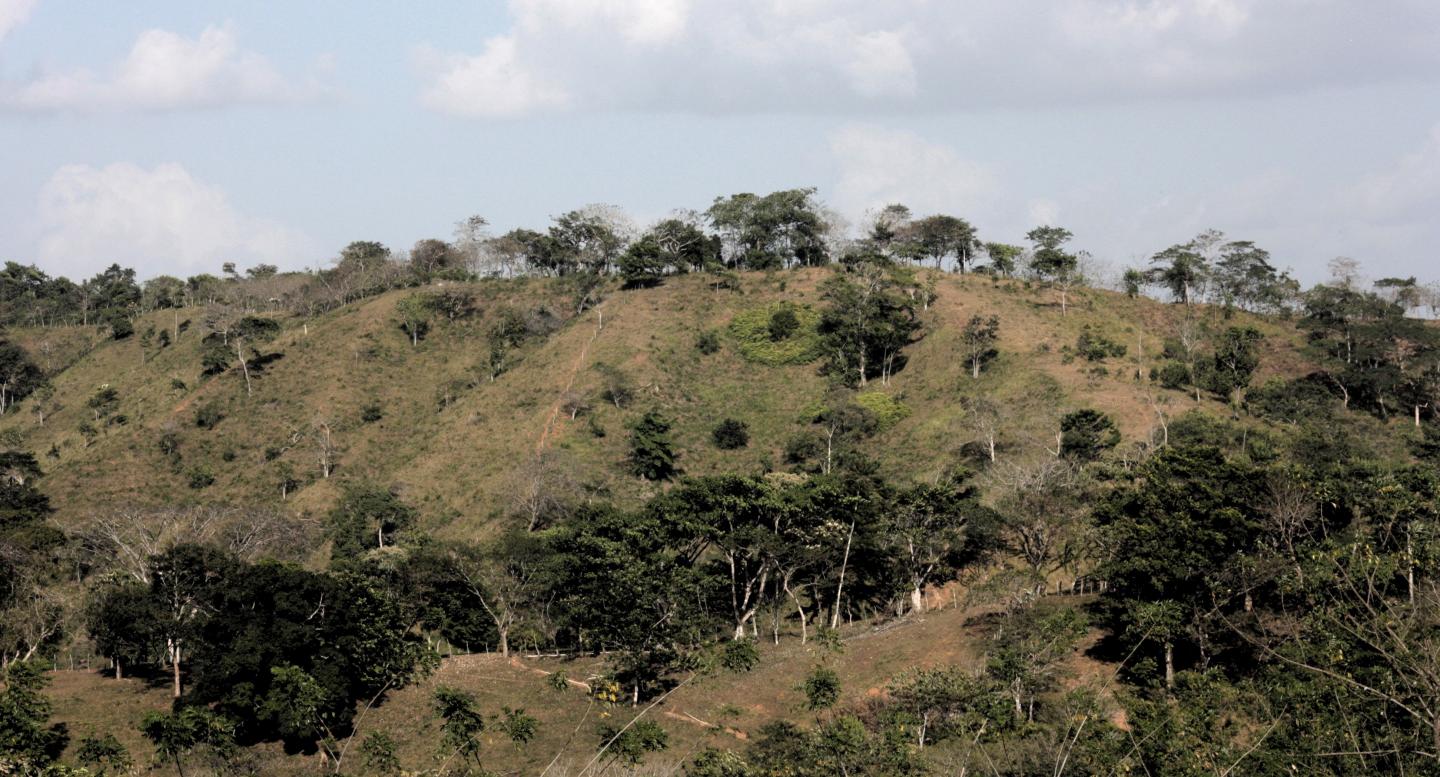
IMAGE

Credit: Dylan Craven

Tropical forests are being deforested at an alarming rate to make way for agriculture and pastureland; the good news is that they can regrow naturally when the fields are abandoned. An international research team including participation from the University of Göttingen has found that regenerating wet and dry forests actually show opposite pathways. This implies a fundamental change in our understanding of how tropical forests change over time, with consequences for forest restoration, biodiversity, and ecology. Their results were published in Nature Ecology and Evolution.

Eighty-five researchers from 16 different countries collected original data from 50 sites, 1,400 plots and more than 16,000 trees in tropical forests across Latin America. The scientists tracked the recovery of tropical forests to understand how the regrowing process works.

They found that tree species that produce expensive and durable wood can persist for a very long time, especially under adverse climatic conditions but this strategy comes at the expense of a reduced and slow growth. Early in regeneration, light and water resources are in abundant supply, which leads to the dominance of “fast” pioneer species with soft wood. Whereas late in succession, the availability of resources declines, leading to the dominance of “slow” late-successional species with hard wood. This information is crucial to improving initiatives to restore forests and to select the best species for planting. “Our study shows how tropical forests regenerate on cattle pastures and agricultural fields,” says Dr Dylan Craven from Göttingen University, who measured wood density in central Panama. “It is extraordinarily variable, mostly due to differences in climate. Understanding how tropical forests regenerate in different contexts will be essential for developing effective native species reforestation programmes and conservation areas for biodiversity and climate mitigation across Latin America. Hopefully similar studies from the African and Asian tropics will be forthcoming, and will strengthen similar programmes with a data-driven approach.”

###

Original Publication: Lourens Poorter et al. Wet and dry tropical forests show opposite successional pathways in wood density but converge over time. Nature Ecology and Evolution. DOI: http://dx.doi.org/10.1038/s41559-019-0882-6

Contact:

Dr Dylan Craven

University of Göttingen

Department of Biodiversity, Macroecology and Biogeography

Büsgenweg 1 – 37077 Göttingen

Phone: +49-(0)551-3910443

Email: [email protected]

http://www.uni-goettingen.de/en/585428.html

Media Contact
Melissa Sollich
[email protected]

Original Source

https://www.uni-goettingen.de/en/3240.html?id=5450

Related Journal Article

http://dx.doi.org/10.1038/s41559-019-0882-6

Tags: AgricultureBiodiversityEcology/EnvironmentForestryPlant Sciences
Share12Tweet8Share2ShareShareShare2

Related Posts

blank

Gene Expression and Growth in Sunit Lambs Analyzed

January 12, 2026
Next-Gen Gluten-Free Noodles: Hydrocolloids & Bioactives

Next-Gen Gluten-Free Noodles: Hydrocolloids & Bioactives

January 12, 2026

GhZAT11 Boosts Wound Healing via Sugar Transport

January 12, 2026

OsDof1 Boosts Rice Lodging Resistance via Auxin Suppression

January 12, 2026
Please login to join discussion

POPULAR NEWS

  • Enhancing Spiritual Care Education in Nursing Programs

    154 shares
    Share 62 Tweet 39
  • PTSD, Depression, Anxiety in Childhood Cancer Survivors, Parents

    146 shares
    Share 58 Tweet 37
  • Robotic Ureteral Reconstruction: A Novel Approach

    71 shares
    Share 28 Tweet 18
  • Study Reveals Lipid Accumulation in ME/CFS Cells

    51 shares
    Share 20 Tweet 13

About

We bring you the latest biotechnology news from best research centers and universities around the world. Check our website.

Follow us

Recent News

Gene Expression and Growth in Sunit Lambs Analyzed

Reactive Viscoelastic Model for Annulus Fibrosus Damage

Digital Twin Enables Explainable Production Anomaly Detection

Subscribe to Blog via Email

Enter your email address to subscribe to this blog and receive notifications of new posts by email.

Join 71 other subscribers
  • Contact Us

Bioengineer.org © Copyright 2023 All Rights Reserved.

Welcome Back!

Login to your account below

Forgotten Password?

Retrieve your password

Please enter your username or email address to reset your password.

Log In
No Result
View All Result
  • Homepages
    • Home Page 1
    • Home Page 2
  • News
  • National
  • Business
  • Health
  • Lifestyle
  • Science

Bioengineer.org © Copyright 2023 All Rights Reserved.