Study by Merck, Regenstrief, IU School of Medicine, UNC could help clinicians prevent strokes and heart attacks
Credit: Regenstrief Institute
A new study shows more aggressive treatment may be needed for a large number of patients taking statin medications, and that treatment could help reduce cases of cardiovascular disease, the leading cause of death in the U.S.
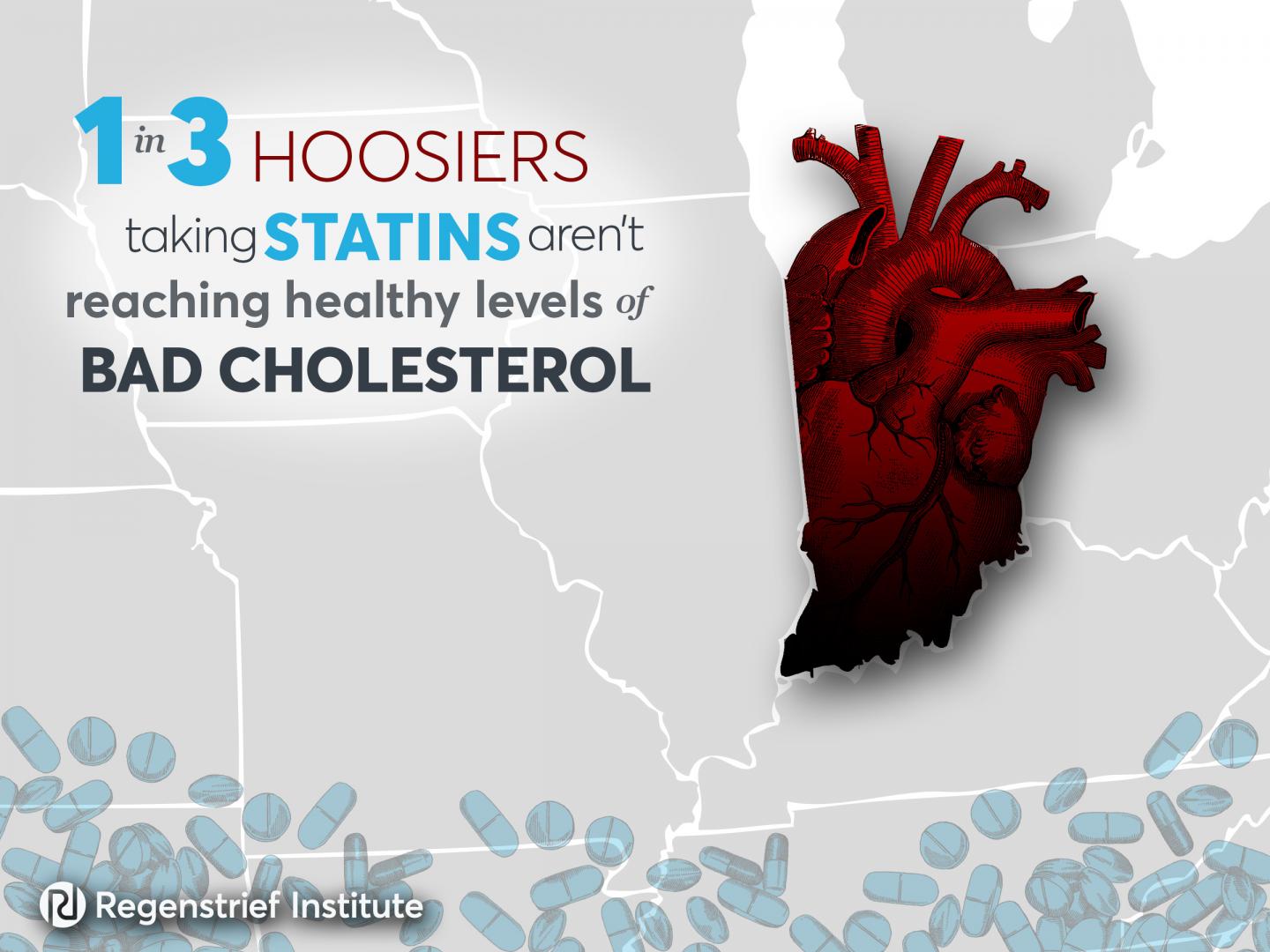
High levels of low-density lipoprotein cholesterol (LDL-C), sometimes called “bad” cholesterol, are associated with cardiovascular disease. The new research finds a third of people in Indiana are not reaching a safe level of LDL-C while taking statin medications.
The collaboration by researchers at Merck, known as MSD outside the United States and Canada, Regenstrief Institute, Indiana University School of Medicine and the University of North Carolina at Chapel Hill looked at electronic health records in the state of Indiana and found that about a third of people taking statins did not reach a therapeutic level of LDL-C. The researchers say these patients seem to be at an increased risk for cardiovascular disease events like heart attack and stroke and may represent an important and potentially preventable burden on health care costs.
Principal investigator and cardiologist from the University of North Carolina Ross Simpson, Jr., M.D., PhD, says this study adds to the body of evidence that many people are not getting adequate treatment for high cholesterol. “This provides an opportunity for improving care, whether it’s with higher doses, more aggressive treatments or new therapies.”
The study set out to determine how many patients on statins achieved the therapeutic threshold of LDL-C, estimate the number of potentially avoidable cardiovascular disease events if that threshold were reached, and forecast potential health care cost savings.
The team examined electronic health records from the Indiana Network for Patient Care for 86,000 patients who started taking statins. They found 33.7% of those people did not reach therapeutic levels of LDL-C (
“Statins are first-line therapy in patients with hyperlipidemia because they clearly prevent cardiovascular events,” said Robert Boggs, PhD, director of outcomes research, Center for Observational and Real-world Evidence (CORE) at Merck. “This study demonstrates not only the value of helping patients adhere to their statin therapy but, in some cases, the need for additional treatments to get their LDL-Cholesterol down to reasonable thresholds.”
Researchers estimated that reducing the LDL-C levels of the subgroup who were above the threshold could avoid 1,173 cardiovascular disease events. If those patients were given the necessary treatments to lower their bad cholesterol levels to the recommended threshold, the reduced risk would save about $1,455 per person.
This study is fairly unique because researchers were able to analyze the records of patients from the entire state of Indiana. Therefore, the results are more representative of the state’s population and may have greater public health implications than studies conducted with, for instance, patients of a single health system.
“The presence of the health information exchange in Indiana was a crucial factor in being able to do this study,” said Titus Schleyer, DMD, PhD, the first author on the paper and a research scientist at Regenstrief Institute. “The Indiana Network for Patient Care allows us to gather health data from large numbers of people on an ongoing basis. While that information is a byproduct of going to the doctor, it is tremendously useful for research.”
This study provides evidence to health insurance agencies and physicians that there are opportunities to improve care and reduce the cost of treating cardiovascular events with more aggressive therapy for bad cholesterol. Dr. Schleyer hopes information from studies like these could eventually be used to identify populations at risk and help prevent negative outcomes.
“Quantifying unmet need in statin-treated hyperlipidemia patients and the potential benefit of further LDL-C reduction through an EHR-based, retrospective cohort study” was published in the May issue of the Journal of Managed Care & Specialty Pharmacy.
###
In addition to his appointment as a Regenstrief Institute investigator, Dr. Schleyer is a faculty member of Indiana University School of Medicine. The study team also included Siu Hui, PhD, Jane Wang, PhD, Zuoyi Zhang, PhD, and Jarod Baker, M.S., from Regenstrief Institute.
Dr. Simpson is a professor of medicine at UNC School of Medicine.
In addition to Robert Boggs, PhD, Monica Chase, PhD, MPH, associate director of outcomes research at Merck, took part in the study.
Funding support for this study was provided by Merck.
Media Contact
Cindy Fox Aisen
[email protected]