• HOME
  • NEWS
  • EXPLORE
    • CAREER
      • Companies
      • Jobs
    • EVENTS
    • iGEM
      • News
      • Team
    • PHOTOS
    • VIDEO
    • WIKI
  • BLOG
  • COMMUNITY
    • FACEBOOK
    • INSTAGRAM
    • TWITTER
Wednesday, January 14, 2026
BIOENGINEER.ORG
No Result
View All Result
  • Login
  • HOME
  • NEWS
  • EXPLORE
    • CAREER
      • Companies
      • Jobs
        • Lecturer
        • PhD Studentship
        • Postdoc
        • Research Assistant
    • EVENTS
    • iGEM
      • News
      • Team
    • PHOTOS
    • VIDEO
    • WIKI
  • BLOG
  • COMMUNITY
    • FACEBOOK
    • INSTAGRAM
    • TWITTER
  • HOME
  • NEWS
  • EXPLORE
    • CAREER
      • Companies
      • Jobs
        • Lecturer
        • PhD Studentship
        • Postdoc
        • Research Assistant
    • EVENTS
    • iGEM
      • News
      • Team
    • PHOTOS
    • VIDEO
    • WIKI
  • BLOG
  • COMMUNITY
    • FACEBOOK
    • INSTAGRAM
    • TWITTER
No Result
View All Result
Bioengineer.org
No Result
View All Result
Home NEWS Science News Biology

Invasive beavers: Bad for the climate

Bioengineer by Bioengineer
May 2, 2019
in Biology
Reading Time: 1 min read
0
IMAGE
Share on FacebookShare on TwitterShare on LinkedinShare on RedditShare on Telegram

IMAGE

Credit: Cristian Samper/WCS

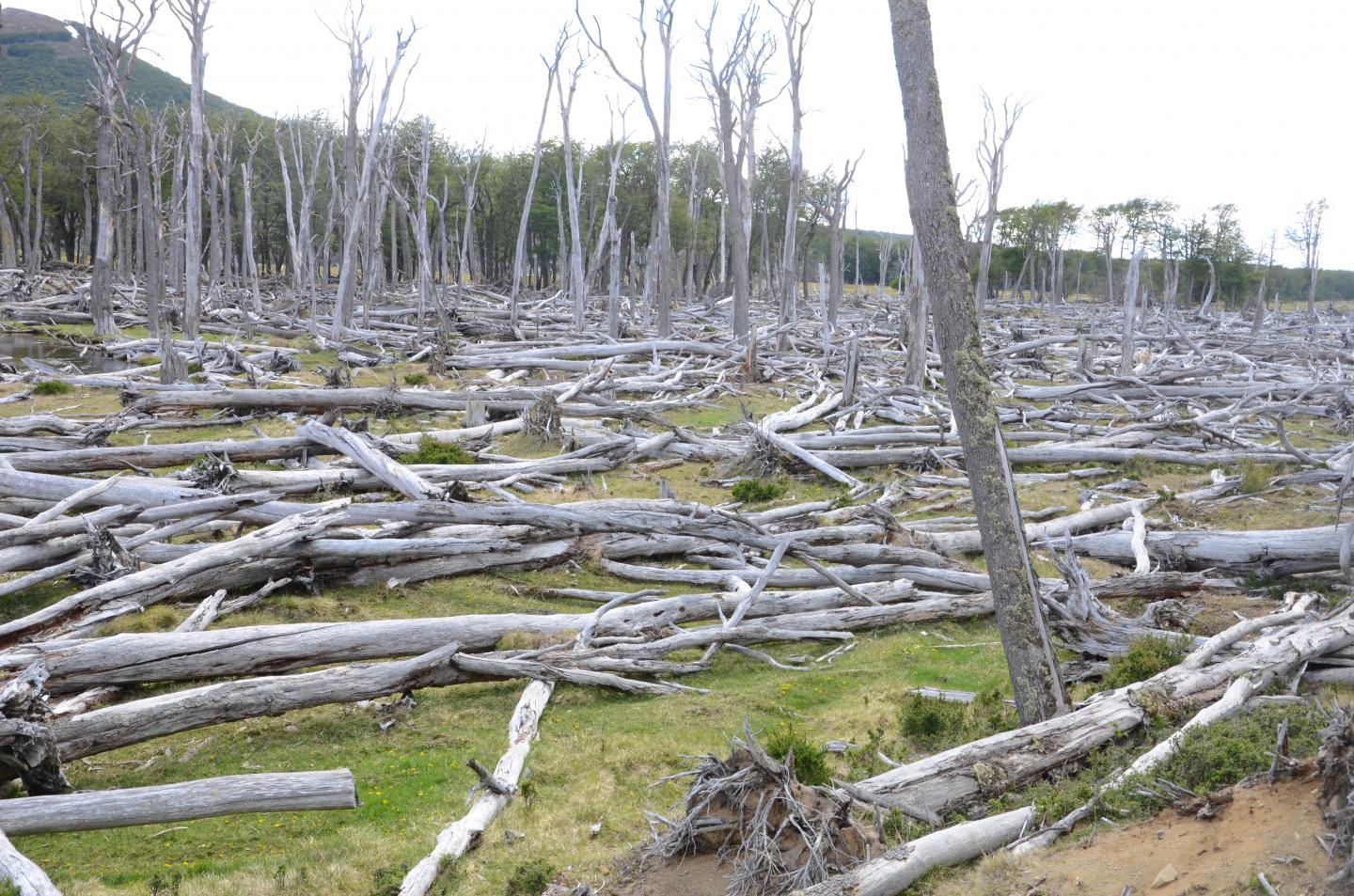
Scientists documented the effects of invasive North American beavers (Castor canadensis) on carbon sequestration of a riparian forest in Tierra del Fuego.

Scientists estimated that 1.177 (+/- 0.103) megatonnes of carbon would be lost if all of the predicted 18,384 hectares (70 square miles) of habitat (14 percent of the total forested area) were colonized by beavers.

These results document the impacts of invasive mammals on large terrestrial carbon sinks and highlight the need for understanding the magnitude of such effects across both landscape- and regional-scales.

###

Media Contact
Stephen Sautner
[email protected]

Original Source

https://newsroom.wcs.org/WCS-3-Sentence-Science.aspx

Related Journal Article

http://dx.doi.org/10.1007/s10584-019-02377-x

Tags: BiodiversityBiologyClimate ChangeEcology/EnvironmentZoology/Veterinary Science
Share13Tweet8Share2ShareShareShare2

Related Posts

blank

Selective Tryptophan Detection in Milk via Enzyme Sensor

January 14, 2026
Structural and Functional Differences in Citrus PRR and R Genes

Structural and Functional Differences in Citrus PRR and R Genes

January 14, 2026

Gut Microbiota l-Theanine Boosts Amino Acid Breakdown

January 14, 2026

Accelerated Donkey Breed Classification via SNP Insights

January 14, 2026
Please login to join discussion

POPULAR NEWS

  • Enhancing Spiritual Care Education in Nursing Programs

    155 shares
    Share 62 Tweet 39
  • PTSD, Depression, Anxiety in Childhood Cancer Survivors, Parents

    147 shares
    Share 59 Tweet 37
  • Robotic Ureteral Reconstruction: A Novel Approach

    74 shares
    Share 30 Tweet 19
  • Study Reveals Lipid Accumulation in ME/CFS Cells

    53 shares
    Share 21 Tweet 13

About

We bring you the latest biotechnology news from best research centers and universities around the world. Check our website.

Follow us

Recent News

Multi-Omics Reveal Personalized Prognosis in Thyroid Cancer

SOHLH2-RAD54L Axis Drives Radioresistance in Lung Cancer

First Direct Detection of Migdal Effect

Subscribe to Blog via Email

Enter your email address to subscribe to this blog and receive notifications of new posts by email.

Join 71 other subscribers
  • Contact Us

Bioengineer.org © Copyright 2023 All Rights Reserved.

Welcome Back!

Login to your account below

Forgotten Password?

Retrieve your password

Please enter your username or email address to reset your password.

Log In
No Result
View All Result
  • Homepages
    • Home Page 1
    • Home Page 2
  • News
  • National
  • Business
  • Health
  • Lifestyle
  • Science

Bioengineer.org © Copyright 2023 All Rights Reserved.