• HOME
  • NEWS
  • EXPLORE
    • CAREER
      • Companies
      • Jobs
    • EVENTS
    • iGEM
      • News
      • Team
    • PHOTOS
    • VIDEO
    • WIKI
  • BLOG
  • COMMUNITY
    • FACEBOOK
    • INSTAGRAM
    • TWITTER
Wednesday, May 13, 2026
BIOENGINEER.ORG
No Result
View All Result
  • Login
  • HOME
  • NEWS
  • EXPLORE
    • CAREER
      • Companies
      • Jobs
        • Lecturer
        • PhD Studentship
        • Postdoc
        • Research Assistant
    • EVENTS
    • iGEM
      • News
      • Team
    • PHOTOS
    • VIDEO
    • WIKI
  • BLOG
  • COMMUNITY
    • FACEBOOK
    • INSTAGRAM
    • TWITTER
  • HOME
  • NEWS
  • EXPLORE
    • CAREER
      • Companies
      • Jobs
        • Lecturer
        • PhD Studentship
        • Postdoc
        • Research Assistant
    • EVENTS
    • iGEM
      • News
      • Team
    • PHOTOS
    • VIDEO
    • WIKI
  • BLOG
  • COMMUNITY
    • FACEBOOK
    • INSTAGRAM
    • TWITTER
No Result
View All Result
Bioengineer.org
No Result
View All Result
Home NEWS Science News Science

New report examines the safety of using dispersants in oil spill clean ups

Bioengineer by Bioengineer
April 15, 2019
in Science
Reading Time: 2 mins read
0
Share on FacebookShare on TwitterShare on LinkedinShare on RedditShare on Telegram

A multi-disciplinary team of scientists has issued a series of findings and recommendations on the safety of using dispersal agents in oil spill clean-up efforts in a report published this month by the National Academies of Science, Engineering, and Medicine.

By measuring the level of a leading dispersal agent, dioctyl sodium sulfosuccinate, in sea life following the 2010 Deepwater Horizon spill in the Gulf of Mexico, the team was able to establish how long the chemical lingers and what health effects it has on various organisms. The scientists found the risks associated with using DOSS were minimal, the team found that in areas where oil concentrations in water were more than 100 milligrams per liter did increase the toxicity, though they noted oil concentrations are typically much lower than that in most spills.

Terry Hazen, the University of Tennessee-Oak Ridge National Laboratory Governor’s Chair for Environmental Biotechnology, who is known for his work on the Deepwater Horizon oil spill recovery efforts, co-authored the report.

“One of the biggest concerns in cleanup efforts is the effect the spill has on people’s health and livelihood,” Terry Hazen, University of Tennessee faculty a University of Tennessee said. “It’s not just that oil itself is harmful and potentially even flammable, but you have to be careful what kind of chemicals you expose crews to while trying to clean or contain the oil.”

The researchers also discovered that the testing methodology used after spills is typically so varied that it is hard to draw broad conclusions when comparing different spills.

To combat this, the team recommends the creation of some form of standardized testing that would enable data to be correlated from one spill to the next.

###

The work was sponsored by several government agencies, including the US Environmental Protection Agency, the Bureau of Ocean Energy Management, and the Gulf of Mexico Research Initiative, among others, and can be read online.

CONTACT

David Goddard (865-974-0683, [email protected])

Megan Boehnke (865-974-3242, [email protected])

Media Contact
David Goddard
[email protected]
http://dx.doi.org/10.17226/25161

Tags: Biomedical/Environmental/Chemical EngineeringTechnology/Engineering/Computer Science
Share12Tweet8Share2ShareShareShare2

Related Posts

Five or more hours of smartphone usage per day may increase obesity

July 25, 2019
IMAGE

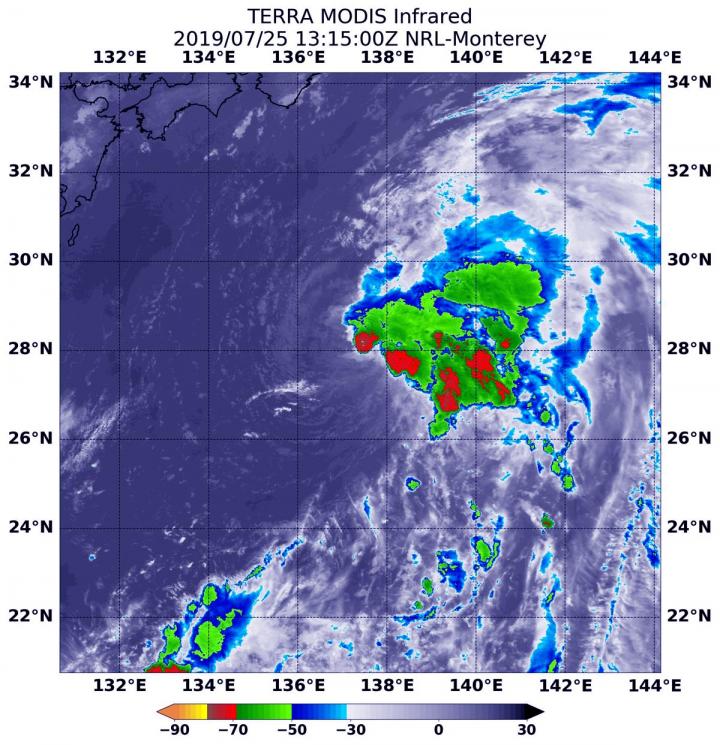
NASA’s terra satellite finds tropical storm 07W’s strength on the side

July 25, 2019

NASA finds one burst of energy in weakening Depression Dalila

July 25, 2019

Researcher’s innovative flood mapping helps water and emergency management officials

July 25, 2019
Please login to join discussion

POPULAR NEWS

  • Research Indicates Potential Connection Between Prenatal Medication Exposure and Elevated Autism Risk

    842 shares
    Share 337 Tweet 211
  • New Study Reveals Plants Can Detect the Sound of Rain

    728 shares
    Share 290 Tweet 182
  • Salmonella Haem Blocks Macrophages, Boosts Infection

    62 shares
    Share 25 Tweet 16
  • Breastmilk Balances E. coli and Beneficial Bacteria in Infant Gut Microbiomes

    57 shares
    Share 23 Tweet 14

About

We bring you the latest biotechnology news from best research centers and universities around the world. Check our website.

Follow us

Recent News

Vortex-Induced Triboelectric Nanogenerator Enables Efficient Multidirectional Wind Energy Harvesting in Low Wind and High Humidity Conditions

KAIST Breaks New Ground in Autonomous Driving by Enabling Nighttime Puddle Detection

Comparing Sequential Transarterial Chemoembolization After Stereotactic Body Radiation Therapy to Radiation Alone in Treating Recurrent Hepatocellular Carcinoma

Subscribe to Blog via Email

Enter your email address to subscribe to this blog and receive notifications of new posts by email.

Join 82 other subscribers
  • Contact Us

Bioengineer.org © Copyright 2023 All Rights Reserved.

Welcome Back!

Login to your account below

Forgotten Password?

Retrieve your password

Please enter your username or email address to reset your password.

Log In
No Result
View All Result
  • Homepages
    • Home Page 1
    • Home Page 2
  • News
  • National
  • Business
  • Health
  • Lifestyle
  • Science

Bioengineer.org © Copyright 2023 All Rights Reserved.