• HOME
  • NEWS
  • EXPLORE
    • CAREER
      • Companies
      • Jobs
    • EVENTS
    • iGEM
      • News
      • Team
    • PHOTOS
    • VIDEO
    • WIKI
  • BLOG
  • COMMUNITY
    • FACEBOOK
    • INSTAGRAM
    • TWITTER
Thursday, December 4, 2025
BIOENGINEER.ORG
No Result
View All Result
  • Login
  • HOME
  • NEWS
  • EXPLORE
    • CAREER
      • Companies
      • Jobs
        • Lecturer
        • PhD Studentship
        • Postdoc
        • Research Assistant
    • EVENTS
    • iGEM
      • News
      • Team
    • PHOTOS
    • VIDEO
    • WIKI
  • BLOG
  • COMMUNITY
    • FACEBOOK
    • INSTAGRAM
    • TWITTER
  • HOME
  • NEWS
  • EXPLORE
    • CAREER
      • Companies
      • Jobs
        • Lecturer
        • PhD Studentship
        • Postdoc
        • Research Assistant
    • EVENTS
    • iGEM
      • News
      • Team
    • PHOTOS
    • VIDEO
    • WIKI
  • BLOG
  • COMMUNITY
    • FACEBOOK
    • INSTAGRAM
    • TWITTER
No Result
View All Result
Bioengineer.org
No Result
View All Result
Home NEWS Science News Health

New study advances treatment options for PTSD

Bioengineer by Bioengineer
April 11, 2019
in Health
Reading Time: 2 mins read
0
IMAGE
Share on FacebookShare on TwitterShare on LinkedinShare on RedditShare on Telegram

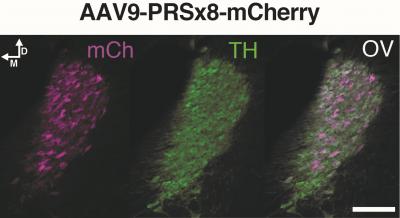
New research from Texas A&M neuroscientist Dr. Stephen Maren found that stress increases the activity of fear-promoting regions of the prefrontal cortex, while at the same time reducing activity in neighboring fear-reducing regions
IMAGE

Credit: Stephen Maren/Texas A&M University

Dr. Stephen Maren, University Distinguished Professor in the Department of Psychological & Brain Sciences, recently published significant research on the psychological and neural basis of Post-Traumatic Stress Disorder (PTSD).

Published in Proceedings of the National Academy of Sciences of the United States of America (PNAS), one of the most-cited scientific journals in the world, the study looked at the areas of the brain that regulate emotion, including ceasing fear once danger has passed. Other factors, such as stress, can cause extinguished emotions of fear to relapse, which poses an issue for those with PTSD.

“Fear relapse represents a significant problem for individuals suffering from stress- and trauma-related disorders such as posttraumatic stress disorder,” according to the study.

Maren’s study examined the neurons in the brain that cause fear relapse, and the influence of stress on these fear-reducing regions of the brain. The data reveals new insight into the pathophysiology of PTSD, and may be able to help predict and prevent fear relapse with treatments that reduce the effects of stress on the brain.

“The work shows that stress increases the activity of fear-promoting regions of the prefrontal cortex, while at the same time reducing activity in neighboring fear-reducing regions,” Maren said. “This shift in brain activity could be mimicked by increasing the activity of neurons that release the fight-or-flight neurotransmitter, norepinephrine. This finding paves the way for new treatments that reduce fear and its relapse after therapy.”

###

Dr. Stephen Maren is a world-renowned neuroscientist who joined the Department of Psychological and Brain Sciences at Texas A&M University in 2012. Maren’s research focuses on the neural systems for emotion, learning, and memory as well as contextual regulation of memory encoding and retrieval, and fear, anxiety, and PTSD. Maren is also a member of the Brain & Behavior Research Foundation’s Scientific Council.

Media Contact
Alix Poth
[email protected]

Original Source

https://today.tamu.edu/2019/04/10/new-study-advances-treatment-options-for-ptsd/

Related Journal Article

http://dx.doi.org/10.1073/pnas.1814278116

Tags: Medicine/HealthneurobiologyPublic HealthTrauma/Injury
Share12Tweet8Share2ShareShareShare2

Related Posts

Metformin-Alogliptin Combo vs. Monotherapy in Diabetes

December 3, 2025

Botanical Extracts’ Antibacterial Activity Boosted by Enhancers

December 3, 2025

Global Guidelines for Shared Decision-Making in Valvular Heart Disease

December 3, 2025

Hidradenitis Suppurativa Remission Achieved Using Bacteriophage Therapy

December 3, 2025
Please login to join discussion

POPULAR NEWS

  • New Research Unveils the Pathway for CEOs to Achieve Social Media Stardom

    New Research Unveils the Pathway for CEOs to Achieve Social Media Stardom

    204 shares
    Share 82 Tweet 51
  • Scientists Uncover Chameleon’s Telephone-Cord-Like Optic Nerves, A Feature Missed by Aristotle and Newton

    120 shares
    Share 48 Tweet 30
  • Neurological Impacts of COVID and MIS-C in Children

    107 shares
    Share 43 Tweet 27
  • MoCK2 Kinase Shapes Mitochondrial Dynamics in Rice Fungal Pathogen

    68 shares
    Share 27 Tweet 17

About

BIOENGINEER.ORG

We bring you the latest biotechnology news from best research centers and universities around the world. Check our website.

Follow us

Recent News

Boosting Cancer Immunotherapy by Targeting DNA Repair

Evaluating eGFR Equations in Chinese Children

Metformin-Alogliptin Combo vs. Monotherapy in Diabetes

Subscribe to Blog via Email

Enter your email address to subscribe to this blog and receive notifications of new posts by email.

Join 69 other subscribers
  • Contact Us

Bioengineer.org © Copyright 2023 All Rights Reserved.

Welcome Back!

Login to your account below

Forgotten Password?

Retrieve your password

Please enter your username or email address to reset your password.

Log In
No Result
View All Result
  • Homepages
    • Home Page 1
    • Home Page 2
  • News
  • National
  • Business
  • Health
  • Lifestyle
  • Science

Bioengineer.org © Copyright 2023 All Rights Reserved.