• HOME
  • NEWS
  • EXPLORE
    • CAREER
      • Companies
      • Jobs
    • EVENTS
    • iGEM
      • News
      • Team
    • PHOTOS
    • VIDEO
    • WIKI
  • BLOG
  • COMMUNITY
    • FACEBOOK
    • INSTAGRAM
    • TWITTER
Thursday, June 25, 2026
BIOENGINEER.ORG
No Result
View All Result
  • Login
  • HOME
  • NEWS
  • EXPLORE
    • CAREER
      • Companies
      • Jobs
        • Lecturer
        • PhD Studentship
        • Postdoc
        • Research Assistant
    • EVENTS
    • iGEM
      • News
      • Team
    • PHOTOS
    • VIDEO
    • WIKI
  • BLOG
  • COMMUNITY
    • FACEBOOK
    • INSTAGRAM
    • TWITTER
  • HOME
  • NEWS
  • EXPLORE
    • CAREER
      • Companies
      • Jobs
        • Lecturer
        • PhD Studentship
        • Postdoc
        • Research Assistant
    • EVENTS
    • iGEM
      • News
      • Team
    • PHOTOS
    • VIDEO
    • WIKI
  • BLOG
  • COMMUNITY
    • FACEBOOK
    • INSTAGRAM
    • TWITTER
No Result
View All Result
Bioengineer.org
No Result
View All Result
Home NEWS Science News Health

New study advances treatment options for PTSD

Bioengineer by Bioengineer
April 11, 2019
in Health
Reading Time: 2 mins read
0
IMAGE
Share on FacebookShare on TwitterShare on LinkedinShare on RedditShare on Telegram

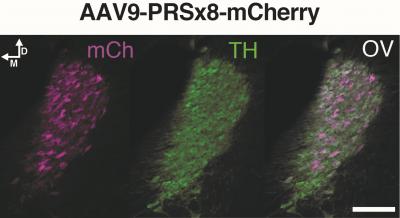
New research from Texas A&M neuroscientist Dr. Stephen Maren found that stress increases the activity of fear-promoting regions of the prefrontal cortex, while at the same time reducing activity in neighboring fear-reducing regions
IMAGE

Credit: Stephen Maren/Texas A&M University

Dr. Stephen Maren, University Distinguished Professor in the Department of Psychological & Brain Sciences, recently published significant research on the psychological and neural basis of Post-Traumatic Stress Disorder (PTSD).

Published in Proceedings of the National Academy of Sciences of the United States of America (PNAS), one of the most-cited scientific journals in the world, the study looked at the areas of the brain that regulate emotion, including ceasing fear once danger has passed. Other factors, such as stress, can cause extinguished emotions of fear to relapse, which poses an issue for those with PTSD.

“Fear relapse represents a significant problem for individuals suffering from stress- and trauma-related disorders such as posttraumatic stress disorder,” according to the study.

Maren’s study examined the neurons in the brain that cause fear relapse, and the influence of stress on these fear-reducing regions of the brain. The data reveals new insight into the pathophysiology of PTSD, and may be able to help predict and prevent fear relapse with treatments that reduce the effects of stress on the brain.

“The work shows that stress increases the activity of fear-promoting regions of the prefrontal cortex, while at the same time reducing activity in neighboring fear-reducing regions,” Maren said. “This shift in brain activity could be mimicked by increasing the activity of neurons that release the fight-or-flight neurotransmitter, norepinephrine. This finding paves the way for new treatments that reduce fear and its relapse after therapy.”

###

Dr. Stephen Maren is a world-renowned neuroscientist who joined the Department of Psychological and Brain Sciences at Texas A&M University in 2012. Maren’s research focuses on the neural systems for emotion, learning, and memory as well as contextual regulation of memory encoding and retrieval, and fear, anxiety, and PTSD. Maren is also a member of the Brain & Behavior Research Foundation’s Scientific Council.

Media Contact
Alix Poth
[email protected]

Original Source

https://today.tamu.edu/2019/04/10/new-study-advances-treatment-options-for-ptsd/

Related Journal Article

http://dx.doi.org/10.1073/pnas.1814278116

Tags: Medicine/HealthneurobiologyPublic HealthTrauma/Injury
Share12Tweet8Share2ShareShareShare2

Related Posts

Tracking Lanthanide-Labeled Microplastics in Plants

June 25, 2026

Neural Design Enables Zero-Shot Drug-Binding Proteins

June 25, 2026

Genomic Insights into Human Skin Fungi Diversity

June 25, 2026

Chiral Laser Gyroscopes Surpass Lock-In Limit

June 25, 2026
Please login to join discussion

POPULAR NEWS

  • Saying Goodbye to PGY-6: Pediatric Fellowship Realities

    103 shares
    Share 41 Tweet 26
  • Multi-Hospital Study Reveals Long Covid Burden Is Twice as High as Current Estimates

    92 shares
    Share 36 Tweet 23
  • Detection of EDCs in Breast Milk and Infant Urine Up to Six Months Highlights Early Exposure Risks

    77 shares
    Share 31 Tweet 19
  • New Drug Candidate Developed at McMaster Shows Potential for Treating Brain Cancer

    58 shares
    Share 23 Tweet 15

About

We bring you the latest biotechnology news from best research centers and universities around the world. Check our website.

Follow us

Recent News

Tracking Lanthanide-Labeled Microplastics in Plants

POSTECH Researchers Slash Cost of Reconstituted Cell-Free Systems by 95%

AI and Physics Collaborate to Design Advanced Hydrogen Storage Materials

Subscribe to Blog via Email

Success! An email was just sent to confirm your subscription. Please find the email now and click 'Confirm' to start subscribing.

Join 82 other subscribers
  • Contact Us

Bioengineer.org © Copyright 2023 All Rights Reserved.

Welcome Back!

Login to your account below

Forgotten Password?

Retrieve your password

Please enter your username or email address to reset your password.

Log In
No Result
View All Result
  • Homepages
    • Home Page 1
    • Home Page 2
  • News
  • National
  • Business
  • Health
  • Lifestyle
  • Science

Bioengineer.org © Copyright 2023 All Rights Reserved.