

• HOME
  • NEWS
  • EXPLORE
    • CAREER
      • Companies
      • Jobs
    • EVENTS
    • iGEM
      • News
      • Team
    • PHOTOS
    • VIDEO
    • WIKI
  • BLOG
  • COMMUNITY
    • FACEBOOK
    • INSTAGRAM
    • TWITTER
Wednesday, May 13, 2026
BIOENGINEER.ORG
No Result
View All Result
  • Login
  • HOME
  • NEWS
  • EXPLORE
    • CAREER
      • Companies
      • Jobs
        • Lecturer
        • PhD Studentship
        • Postdoc
        • Research Assistant
    • EVENTS
    • iGEM
      • News
      • Team
    • PHOTOS
    • VIDEO
    • WIKI
  • BLOG
  • COMMUNITY
    • FACEBOOK
    • INSTAGRAM
    • TWITTER
  • HOME
  • NEWS
  • EXPLORE
    • CAREER
      • Companies
      • Jobs
        • Lecturer
        • PhD Studentship
        • Postdoc
        • Research Assistant
    • EVENTS
    • iGEM
      • News
      • Team
    • PHOTOS
    • VIDEO
    • WIKI
  • BLOG
  • COMMUNITY
    • FACEBOOK
    • INSTAGRAM
    • TWITTER
No Result
View All Result
Bioengineer.org
No Result
View All Result
Home NEWS Science News Biology

New wasps named after biscuits and Doctor Who aliens

Bioengineer by Bioengineer
April 9, 2019
in Biology
Reading Time: 2 mins read
0
IMAGE
Share on FacebookShare on TwitterShare on LinkedinShare on RedditShare on Telegram

IMAGE

Credit: Dr Erinn Fagan-Jeffries

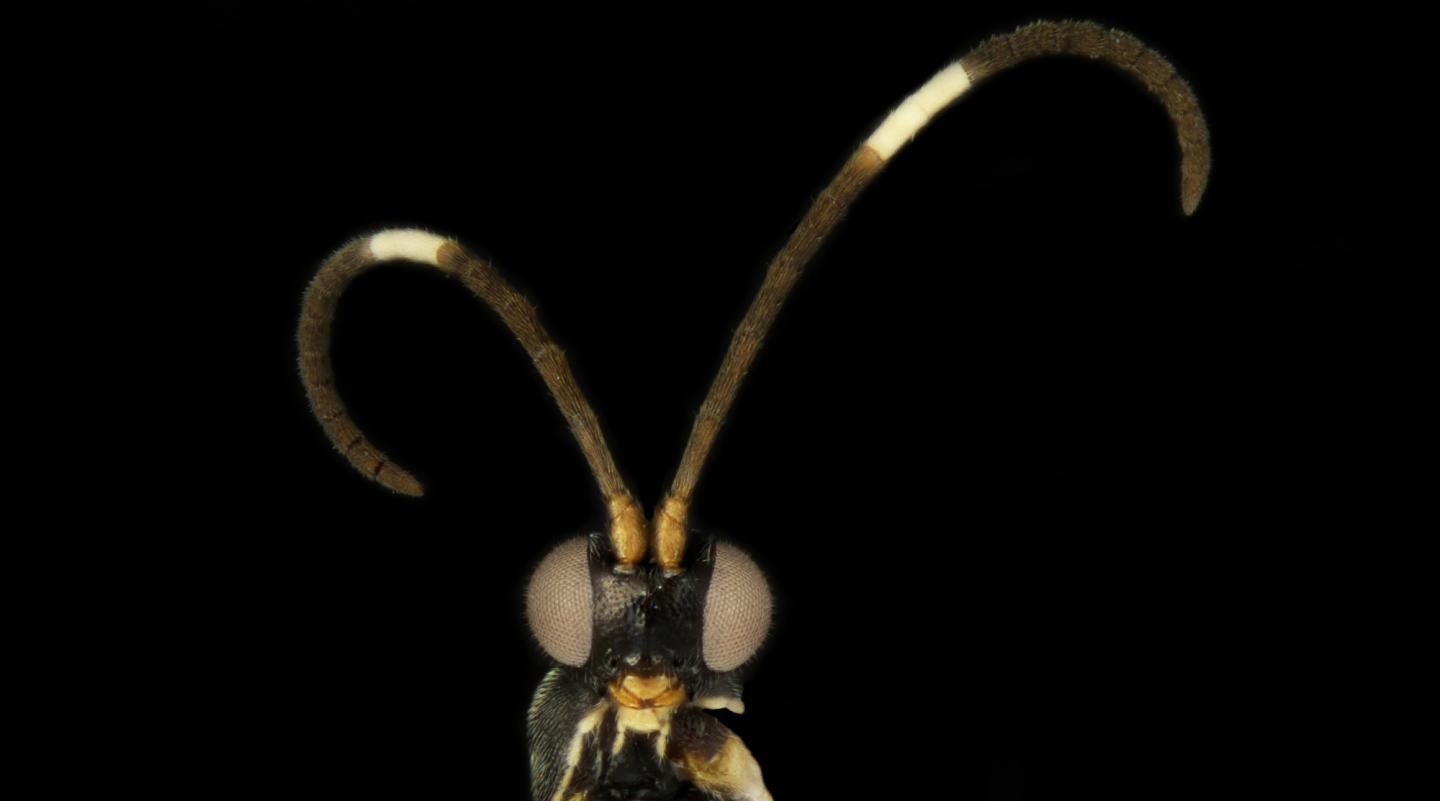
University of Adelaide researchers were inspired by everything from chocolate biscuits and Doctor Who aliens when choosing names for 10 new species of wasps.

“I named one wasp Sathon oreo as the antennae are dark brown with a thick white stripe in the middle… like an Oreo chocolate biscuit,” says Dr Erinn Fagan-Jeffries from the University of Adelaide’s School of Biological Sciences.

While the new species Choeras zygon is named for the Zygon race of aliens in Doctor Who.

“Zygon aliens consume their host whilst inhabiting them, a trait particularly relevant to parasitic wasps,” says Dr Fagan-Jeffries.

These wasps inject their eggs into live caterpillars, and the baby wasps slowly eat the caterpillar from the inside out. As gruesome as it sounds, they are very important in ecosystems for regulating native caterpillar populations.

One of the new wasps, Choeras bushblitz, takes its name from the Bush Blitz species discovery program, a unique multi-million dollar partnership between the Australian Government, BHP and Earthwatch Australia to document plants and animals across Australia.

“Less than 10% of this group of wasps have scientific names, which is why programs like Bush Blitz are so vital. We have discovered over 1,660 new species since 2010, and 17 of those are wasps,” says Jo Harding Bush Blitz Manager.

Taxonomy, the scientific discipline of describing new species, is vital for understanding and documenting the living things around us. “Until taxonomists name and formally describe a species, it is difficult for other researchers, such as those working in conservation, or biological control, to do anything with it,” says Ms Harding.

Inspirational taxonomists and entomologists that helped Dr Fagan-Jeffries collect vital specimens for this research, as well as those who feature prominently throughout her career, were also honoured with species named after them.

“I always loved insects in school, and I had a lot of incredible support from entomologists, back then and also during my PhD, who fuelled my passion for following a scientific career path,” Dr Fagan-Jeffries says. “Naming species after those people is just a tiny way of saying thank you.”

Species named after researchers include Dolichogenidea brabyi, Dolichogenidea garytaylori, Dolichogenidea forrestae and Dolichogenidea kelleri, after entomologists Michael Braby, Gary Taylor, Jan Forrest and Michael Keller.

###

The ten new species of parasitic wasp have been published open access in Zootaxa, and the study was supported by the Australian Biological Resources Study and Bush Blitz.

Media Contact
Dr Erinn Fagan-Jeffries
[email protected]

Original Source

https://www.adelaide.edu.au/news/news106162.html

Related Journal Article

http://dx.doi.org/10.11646/zootaxa.4560.3.1

Tags: BiologyZoology/Veterinary Science
Share13Tweet7Share2ShareShareShare1

Related Posts

NAD(P)H Dehydrogenase Diversity Drives Clofazimine Resistance — Biology

NAD(P)H Dehydrogenase Diversity Drives Clofazimine Resistance

May 13, 2026
Rhein Alleviates Intestinal Damage in Severe Acute Pancreatitis by Modulating Macrophage Activation via PPARγ — Biology

Rhein Alleviates Intestinal Damage in Severe Acute Pancreatitis by Modulating Macrophage Activation via PPARγ

May 13, 2026

Using Real-Time Brain Signals to Forecast and Prevent Attention Lapses in Children

May 13, 2026

Cutting-Edge Genomic Techniques Reveal Unexpected Cellular Changes in the Aging Brain

May 12, 2026
Please login to join discussion

POPULAR NEWS

  • Research Indicates Potential Connection Between Prenatal Medication Exposure and Elevated Autism Risk

    842 shares
    Share 337 Tweet 211
  • New Study Reveals Plants Can Detect the Sound of Rain

    728 shares
    Share 290 Tweet 182
  • Salmonella Haem Blocks Macrophages, Boosts Infection

    62 shares
    Share 25 Tweet 16
  • Breastmilk Balances E. coli and Beneficial Bacteria in Infant Gut Microbiomes

    57 shares
    Share 23 Tweet 14

About

We bring you the latest biotechnology news from best research centers and universities around the world. Check our website.

Follow us

Recent News

Bacterial Lipopeptides Block IL-33 Release, Easing Dermatitis

Choline’s Crucial Impact on Brain Development

MICU Proteins Drive Calcium-Based Mitochondrial Energy Control

Subscribe to Blog via Email

Enter your email address to subscribe to this blog and receive notifications of new posts by email.

Join 82 other subscribers
  • Contact Us

Bioengineer.org © Copyright 2023 All Rights Reserved.

Welcome Back!

Login to your account below

Forgotten Password?

Retrieve your password

Please enter your username or email address to reset your password.

Log In
No Result
View All Result
  • Homepages
    • Home Page 1
    • Home Page 2
  • News
  • National
  • Business
  • Health
  • Lifestyle
  • Science

Bioengineer.org © Copyright 2023 All Rights Reserved.

