• HOME
  • NEWS
  • EXPLORE
    • CAREER
      • Companies
      • Jobs
    • EVENTS
    • iGEM
      • News
      • Team
    • PHOTOS
    • VIDEO
    • WIKI
  • BLOG
  • COMMUNITY
    • FACEBOOK
    • INSTAGRAM
    • TWITTER
Saturday, February 7, 2026
BIOENGINEER.ORG
No Result
View All Result
  • Login
  • HOME
  • NEWS
  • EXPLORE
    • CAREER
      • Companies
      • Jobs
        • Lecturer
        • PhD Studentship
        • Postdoc
        • Research Assistant
    • EVENTS
    • iGEM
      • News
      • Team
    • PHOTOS
    • VIDEO
    • WIKI
  • BLOG
  • COMMUNITY
    • FACEBOOK
    • INSTAGRAM
    • TWITTER
  • HOME
  • NEWS
  • EXPLORE
    • CAREER
      • Companies
      • Jobs
        • Lecturer
        • PhD Studentship
        • Postdoc
        • Research Assistant
    • EVENTS
    • iGEM
      • News
      • Team
    • PHOTOS
    • VIDEO
    • WIKI
  • BLOG
  • COMMUNITY
    • FACEBOOK
    • INSTAGRAM
    • TWITTER
No Result
View All Result
Bioengineer.org
No Result
View All Result
Home NEWS Science News Health

Rejuvenation of aging cells helps to cure osteoarthritis through gene therapy

Bioengineer by Bioengineer
March 27, 2019
in Health
Reading Time: 2 mins read
0
IMAGE
Share on FacebookShare on TwitterShare on LinkedinShare on RedditShare on Telegram

IMAGE

Credit: IOZ

Aging is a risk factor for the development of osteoarthritis (OA), a chronic disease characterized by degeneration of articular cartilage leading to pain and physical disability. Senescent mesenchymal stem cells (hMSCs) are found in cartilage tissues isolated from patients suffering from osteoarthritis. Notably, senescent MSCs have been regarded as an important therapeutic target for geroprotection against tissue degeneration.

Recently, in a study published in Cell Reports, scientists found that a protein factor, CBX4, could help to cure osteoarthritis in mice, after four years of work.

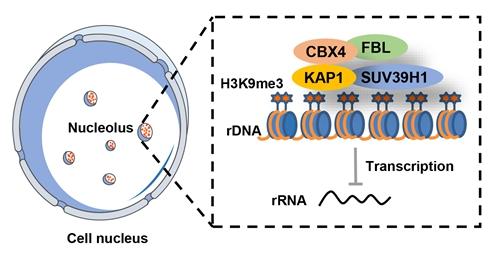
These scientists, from the Institute of Zoology of the Chinese Academy of Sciences (CAS), Peking University and the Institute of Biophysics of CAS, found that CBX4 safeguarded hMSCs against cellular senescence through the regulation of nucleolar architecture and function.

Importantly, CBX4 overexpression attenuated the development of osteoarthritis in mice, suggesting a target for therapeutic interventions against aging-associated disorders.

CBX4, a component of polycomb repressive complex 1 (PRC1), plays an important role in the regulation of cell identity and organ development through gene silencing.

CBX4 protein was downregulated in aged hMSCs whereas CBX4 knockout in hMSCs resulted in destabilized nucleolar heterochromatin, enhanced ribosome biogenesis, increased protein translation, and accelerated cellular senescence.

CBX4 maintained nucleolar homeostasis by recruiting nucleolar protein fibrillarin and heterochromatin protein KRAB-associated protein 1 (KAP1) at nucleolar rDNA, limiting the excessive expression of rRNAs.

Importantly, overexpression of CBX4 alleviated physiological hMSC aging and attenuated the development of osteoarthritis in mice.

These findings not only highlight that CBX4-mediated nucleolar homeostasis is a key gatekeeper for hMSC aging. They also open an avenue for preventing aging-associated stem cell exhaustion and, hopefully, treating age-related disorders in the future.

Taken together, the researchers revealed a new mechanism for the nucleolar protein CBX4 in maintaining hMSC homeostasis.

These findings prove the feasibility of using gene therapy strategies to rejuvenate senescent cells and treat osteoarthritis, providing a promising option for future geriatrics and regenerative medicine.

###

Media Contact
QU Jing
[email protected]

Original Source

http://english.cas.cn/newsroom/research_news/201903/t20190326_207223.shtml

Related Journal Article

http://dx.doi.org/10.1016/j.celrep.2019.02.088

Tags: AgingBiologyGene TherapyGenesMedicine/Health
Share12Tweet8Share2ShareShareShare2

Related Posts

Digital Health Perspectives from Baltic Sea Experts

February 7, 2026

Exploring Decision-Making in Dementia Caregivers’ Mobility

February 7, 2026

Succinate Receptor 1 Limits Blood Cell Formation, Leukemia

February 7, 2026

Palmitoylation of Tfr1 Drives Platelet Ferroptosis and Exacerbates Liver Damage in Heat Stroke

February 7, 2026
Please login to join discussion

POPULAR NEWS

  • Robotic Ureteral Reconstruction: A Novel Approach

    Robotic Ureteral Reconstruction: A Novel Approach

    82 shares
    Share 33 Tweet 21
  • Digital Privacy: Health Data Control in Incarceration

    63 shares
    Share 25 Tweet 16
  • Study Reveals Lipid Accumulation in ME/CFS Cells

    57 shares
    Share 23 Tweet 14
  • Breakthrough in RNA Research Accelerates Medical Innovations Timeline

    53 shares
    Share 21 Tweet 13

About

We bring you the latest biotechnology news from best research centers and universities around the world. Check our website.

Follow us

Recent News

Digital Health Perspectives from Baltic Sea Experts

Florida Cane Toad: Complex Spread and Selective Evolution

Exploring Decision-Making in Dementia Caregivers’ Mobility

Subscribe to Blog via Email

Enter your email address to subscribe to this blog and receive notifications of new posts by email.

Join 73 other subscribers
  • Contact Us

Bioengineer.org © Copyright 2023 All Rights Reserved.

Welcome Back!

Login to your account below

Forgotten Password?

Retrieve your password

Please enter your username or email address to reset your password.

Log In
No Result
View All Result
  • Homepages
    • Home Page 1
    • Home Page 2
  • News
  • National
  • Business
  • Health
  • Lifestyle
  • Science

Bioengineer.org © Copyright 2023 All Rights Reserved.