• HOME
  • NEWS
  • EXPLORE
    • CAREER
      • Companies
      • Jobs
    • EVENTS
    • iGEM
      • News
      • Team
    • PHOTOS
    • VIDEO
    • WIKI
  • BLOG
  • COMMUNITY
    • FACEBOOK
    • INSTAGRAM
    • TWITTER
Tuesday, January 13, 2026
BIOENGINEER.ORG
No Result
View All Result
  • Login
  • HOME
  • NEWS
  • EXPLORE
    • CAREER
      • Companies
      • Jobs
        • Lecturer
        • PhD Studentship
        • Postdoc
        • Research Assistant
    • EVENTS
    • iGEM
      • News
      • Team
    • PHOTOS
    • VIDEO
    • WIKI
  • BLOG
  • COMMUNITY
    • FACEBOOK
    • INSTAGRAM
    • TWITTER
  • HOME
  • NEWS
  • EXPLORE
    • CAREER
      • Companies
      • Jobs
        • Lecturer
        • PhD Studentship
        • Postdoc
        • Research Assistant
    • EVENTS
    • iGEM
      • News
      • Team
    • PHOTOS
    • VIDEO
    • WIKI
  • BLOG
  • COMMUNITY
    • FACEBOOK
    • INSTAGRAM
    • TWITTER
No Result
View All Result
Bioengineer.org
No Result
View All Result
Home NEWS Science News Science

Smartphone test spots poisoned water risk to millions of lives

Bioengineer by Bioengineer
March 26, 2019
in Science
Reading Time: 2 mins read
0
Share on FacebookShare on TwitterShare on LinkedinShare on RedditShare on Telegram

Credit: Marie-Anne Robertson

A smartphone device could help millions of people avoid drinking water contaminated by arsenic.

Researchers have developed a biosensor that attaches to a phone and uses bacteria to detect unsafe arsenic levels.

The device, developed at the University of Edinburgh, generates easy-to-interpret patterns, similar to volume-bars, which display the level of contamination.

Researchers believe there is an urgent need to provide simple, affordable, on-site solutions for contaminated water sources.

In resource-limited countries, there is a lack of sufficiently skilled personnel and healthcare facilities to test water for contamination.

Researchers say new devices could replace existing tests, which are difficult to use, need specialist laboratory equipment and can produce toxic chemicals.

The contamination of water by heavy metals is a worldwide health issue. UNICEF reports that arsenic contaminated drinking water is consumed by more than 140 million people worldwide.

Researchers tested the arsenic sensors using environment samples from affected wells in Bangladesh, which suffers from some of the world’s highest levels of arsenic-contaminated ground water.

An estimated 20 million people in Bangladesh – mostly rural poor – drink contaminated water.

Long-term exposure to unsafe levels of arsenic leads to skin lesions and cancers and is linked to 20 per cent of all deaths in the worst-affected regions.

Researchers developed the biosensor by manipulating the genetic code of the bacteria Escherichia coli. They added genetic components to act as amplifiers when arsenic is detected.

Water samples were fed into a plastic device containing bacteria suspended in a gel. This produced fluorescent proteins that were visible in the presence of arsenic.

Researchers believe that the approach could be used to detect other environmental toxins, diagnose diseases and locate landmines.

###

The study published in Nature Chemical Biology, was funded by BBSRC, Leverhulme Trust and Wellcome.

Lead researcher Dr Baojun Wang, of the University of Edinburgh’s School of Biological Sciences, said: “We tested our sensors with samples from wells in a village in Bangladesh. The arsenic levels reported by the sensors was consistent with lab-based standard tests, demonstrating the device’s potential as a simple low-cost-use monitoring tool.”

Media Contact
Andrew Moffat
[email protected]

Original Source

https://www.ed.ac.uk/news/2019/smartphone-test-spots-poisoned-water-risk

Related Journal Article

http://dx.doi.org/10.1038/s41589-019-0244-3

Tags: Biomedical/Environmental/Chemical EngineeringEcology/EnvironmentEnvironmental HealthHydrology/Water ResourcesMarine/Freshwater BiologyMedicine/HealthPollution/RemediationPublic HealthToxicology
Share12Tweet8Share2ShareShareShare2

Related Posts

Five or more hours of smartphone usage per day may increase obesity

July 25, 2019
IMAGE

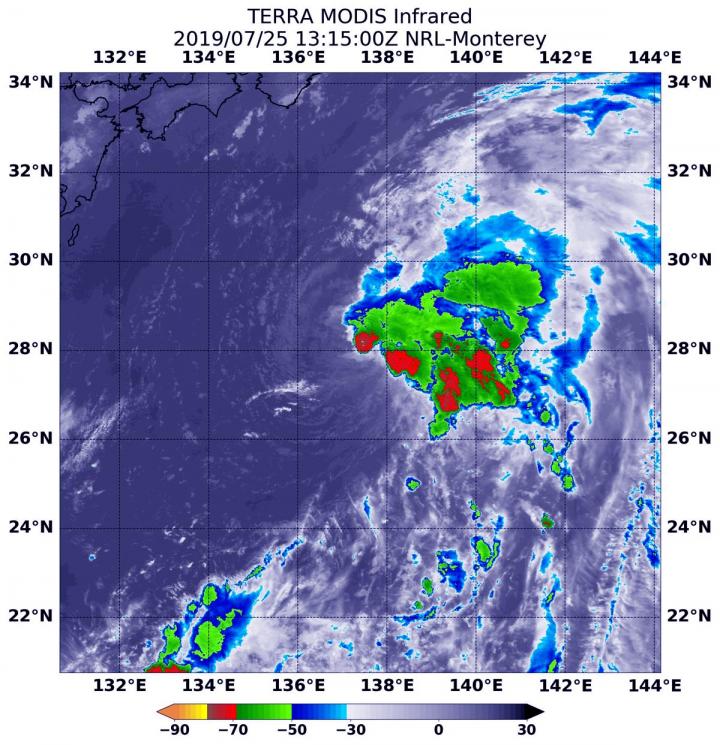
NASA’s terra satellite finds tropical storm 07W’s strength on the side

July 25, 2019

NASA finds one burst of energy in weakening Depression Dalila

July 25, 2019

Researcher’s innovative flood mapping helps water and emergency management officials

July 25, 2019
Please login to join discussion

POPULAR NEWS

  • Enhancing Spiritual Care Education in Nursing Programs

    154 shares
    Share 62 Tweet 39
  • PTSD, Depression, Anxiety in Childhood Cancer Survivors, Parents

    146 shares
    Share 58 Tweet 37
  • Robotic Ureteral Reconstruction: A Novel Approach

    72 shares
    Share 29 Tweet 18
  • Study Reveals Lipid Accumulation in ME/CFS Cells

    51 shares
    Share 20 Tweet 13

About

We bring you the latest biotechnology news from best research centers and universities around the world. Check our website.

Follow us

Recent News

IL-6 in Cancer Cachexia: Mechanisms and Treatments

Evaluating OPEN AOS for Elderly Emergency Care

Enhancing Family Engagement in Saudi ICU Nursing

Subscribe to Blog via Email

Enter your email address to subscribe to this blog and receive notifications of new posts by email.

Join 71 other subscribers
  • Contact Us

Bioengineer.org © Copyright 2023 All Rights Reserved.

Welcome Back!

Login to your account below

Forgotten Password?

Retrieve your password

Please enter your username or email address to reset your password.

Log In
No Result
View All Result
  • Homepages
    • Home Page 1
    • Home Page 2
  • News
  • National
  • Business
  • Health
  • Lifestyle
  • Science

Bioengineer.org © Copyright 2023 All Rights Reserved.