• HOME
  • NEWS
  • EXPLORE
    • CAREER
      • Companies
      • Jobs
    • EVENTS
    • iGEM
      • News
      • Team
    • PHOTOS
    • VIDEO
    • WIKI
  • BLOG
  • COMMUNITY
    • FACEBOOK
    • INSTAGRAM
    • TWITTER
Monday, July 6, 2026
BIOENGINEER.ORG
No Result
View All Result
  • Login
  • HOME
  • NEWS
  • EXPLORE
    • CAREER
      • Companies
      • Jobs
        • Lecturer
        • PhD Studentship
        • Postdoc
        • Research Assistant
    • EVENTS
    • iGEM
      • News
      • Team
    • PHOTOS
    • VIDEO
    • WIKI
  • BLOG
  • COMMUNITY
    • FACEBOOK
    • INSTAGRAM
    • TWITTER
  • HOME
  • NEWS
  • EXPLORE
    • CAREER
      • Companies
      • Jobs
        • Lecturer
        • PhD Studentship
        • Postdoc
        • Research Assistant
    • EVENTS
    • iGEM
      • News
      • Team
    • PHOTOS
    • VIDEO
    • WIKI
  • BLOG
  • COMMUNITY
    • FACEBOOK
    • INSTAGRAM
    • TWITTER
No Result
View All Result
Bioengineer.org
No Result
View All Result
Home NEWS Science News Health

Artificial womb technology breaks its 4 minute mile

Bioengineer by Bioengineer
March 26, 2019
in Health
Reading Time: 3 mins read
0
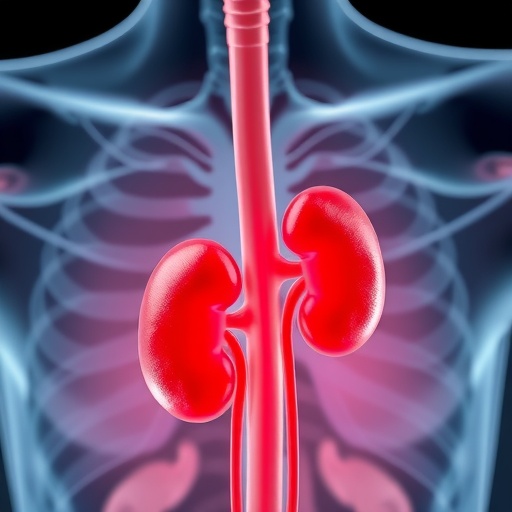
IMAGE
Share on FacebookShare on TwitterShare on LinkedinShare on RedditShare on Telegram

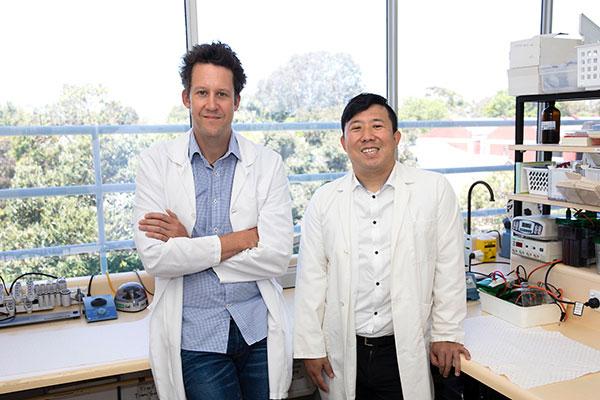
IMAGE

Credit: Women & Infants Research Foundation

A major advancement in pioneering technology based around the use of an artificial womb to save extremely premature babies is being hailed as a medical and biotechnological breakthrough.

Recently published in the medical publication, the American Journal of Obstetrics & Gynecology, the study presents world-first data demonstrating the ability of an artificial placenta-based life support platform to maintain extremely preterm lamb fetuses (600-700g); equivalent to a human fetus at 24 weeks of gestation.

Head of WIRF’s Perinatal Research Laboratories and Local Chief Investigator, Associate Professor Matt Kemp, said that whilst previous research had demonstrated the feasibility of extended survival with artificial placenta technology in late preterm fetuses, there was no published evidence that demonstrated the use of the platform to support extremely preterm fetuses – the eventual clinical target of this technology.

“For several decades there has been little improvement in outcomes of extremely preterm infants born at the border of viability (21-24 weeks gestation),” Assoc Prof Kemp said.

“In the AJOG study, we have proven the use of this technology to support, for the first time, extremely preterm lambs equivalent to 24 weeks of human gestation in a stable, growth-normal state for five days.

“This result underscores the potential clinical application of this technology for extremely preterm infants born at the border of viability. In the world of artificial placenta technology, we have effectively broken the 4 minute mile.”

Assoc Professor Matt Kemp said the latest findings represent a significant milestone in the technology’s future implementation into clinical use.

“If we are to improve outcomes for babies born at the border of viability we must recognise that they are not ‘small babies’; rather, they are a unique patient demographic that, due to their extremely underdeveloped lungs and limited cardiovascular capacity, require an entirely different treatment approach from older preterm infants.

“The technology was designed to revolutionise the treatment of severely premature newborns. The goal is to offer a bridge between a natural womb and the outside world to give babies born at the earliest gestational ages more time for their fragile lungs to mature.

“With additional refinement, what today might be considered as futuristic technology might soon not be so futuristic and might be standard of care.”

###

The EVE Therapy project brings together leading academic researchers from the Women and Infants Research Foundation, The University of Western Australia and Tohoku University Hospital, Japan, and is undertaken in close partnership with one of Japan’s foremost biomedical technology companies, Nipro Corporation.

Perth-based researchers, including Visiting Fellow and project development head Dr Haruo Usuda, work year-round with researchers from Tohoku University Hospital in Sendai (led by A/Prof Masatoshi Saito and Dr Shimpei Watanabe) and the Artificial Placenta Development Team at Nipro Corporation in Osaka (led by Mr Shinichi Kawamura).

Media Contact
Richie Hodgson
[email protected]

Original Source

https://www.tohoku.ac.jp/en/press/artificial_womb_March2019.html

Related Journal Article

http://dx.doi.org/10.1016/j.ajog.2019.03.001

Tags: Medicine/Health
Share12Tweet8Share2ShareShareShare2

Related Posts

Flame retardant BDE-209 targets molecularly linked to ulcerative colitis

July 6, 2026

Kidney transplant outcomes in older adults studied by German researchers

July 6, 2026

Salmonella protein SopB curbs early inflammation to slow disease progression

July 6, 2026

Multi-metal cooperation drives lung cancer chemoresistance, reversed by MiADMSA

July 6, 2026
Please login to join discussion

POPULAR NEWS

  • Detection of EDCs in Breast Milk and Infant Urine Up to Six Months Highlights Early Exposure Risks

    77 shares
    Share 31 Tweet 19
  • New Drug Candidate Developed at McMaster Shows Potential for Treating Brain Cancer

    58 shares
    Share 23 Tweet 15
  • Saying Goodbye to PGY-6: Pediatric Fellowship Realities

    103 shares
    Share 41 Tweet 26
  • KTU Researchers Explore Ultrasound’s Role in Enhancing Blood Flow Beyond Diagnostics

    53 shares
    Share 21 Tweet 13

About

We bring you the latest biotechnology news from best research centers and universities around the world. Check our website.

Follow us

Recent News

Flame retardant BDE-209 targets molecularly linked to ulcerative colitis

Ultra-high frequency particle impacts mimic rockbursts to shatter hard rock

Kidney transplant outcomes in older adults studied by German researchers

Subscribe to Blog via Email

Enter your email address to subscribe to this blog and receive notifications of new posts by email.

Join 83 other subscribers
  • Contact Us

Bioengineer.org © Copyright 2023 All Rights Reserved.

Welcome Back!

Login to your account below

Forgotten Password?

Retrieve your password

Please enter your username or email address to reset your password.

Log In
No Result
View All Result
  • Homepages
    • Home Page 1
    • Home Page 2
  • News
  • National
  • Business
  • Health
  • Lifestyle
  • Science

Bioengineer.org © Copyright 2023 All Rights Reserved.