• HOME
  • NEWS
  • EXPLORE
    • CAREER
      • Companies
      • Jobs
    • EVENTS
    • iGEM
      • News
      • Team
    • PHOTOS
    • VIDEO
    • WIKI
  • BLOG
  • COMMUNITY
    • FACEBOOK
    • INSTAGRAM
    • TWITTER
Saturday, February 7, 2026
BIOENGINEER.ORG
No Result
View All Result
  • Login
  • HOME
  • NEWS
  • EXPLORE
    • CAREER
      • Companies
      • Jobs
        • Lecturer
        • PhD Studentship
        • Postdoc
        • Research Assistant
    • EVENTS
    • iGEM
      • News
      • Team
    • PHOTOS
    • VIDEO
    • WIKI
  • BLOG
  • COMMUNITY
    • FACEBOOK
    • INSTAGRAM
    • TWITTER
  • HOME
  • NEWS
  • EXPLORE
    • CAREER
      • Companies
      • Jobs
        • Lecturer
        • PhD Studentship
        • Postdoc
        • Research Assistant
    • EVENTS
    • iGEM
      • News
      • Team
    • PHOTOS
    • VIDEO
    • WIKI
  • BLOG
  • COMMUNITY
    • FACEBOOK
    • INSTAGRAM
    • TWITTER
No Result
View All Result
Bioengineer.org
No Result
View All Result
Home NEWS Science News Chemistry

Electron accelerators reveal the radical secrets of antioxidants

Bioengineer by Bioengineer
March 19, 2019
in Chemistry
Reading Time: 2 mins read
0
IMAGE
Share on FacebookShare on TwitterShare on LinkedinShare on RedditShare on Telegram

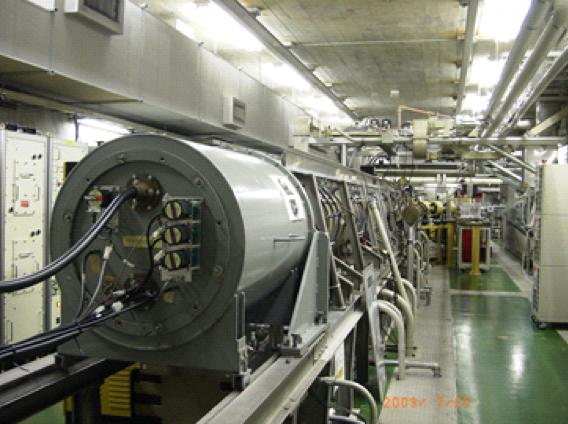
Osaka University researcher proves the value of electron accelerators for creating free radicals and understanding their damaging effects on biological molecules
IMAGE

Credit: Osaka University

Osaka, Japan – In a groundbreaking series of experiments, an Osaka University researcher has demonstrated an exciting new method for understanding the power of antioxidants to protect us from harmful free radicals. Professor Kazuo Kobayashi has used linear electron accelerators, sometimes called “linacs,” to fling electrons at speeds not previously seen in biological research. When the electrons slammed into water molecules in the samples, highly reactive free radicals were produced. This work will be extremely valuable for understanding the body’s naturally occurring antioxidant molecules and proteins, such as ascorbic acid, also called vitamin C.

A free radical is a molecule with an unpaired electron, which makes it very eager to react. Some biological processes, including photosynthesis, harness energic free radicals to power vital chemical reactions. However, when a free radical gets loose, it can be extremely damaging to DNA and other important biomolecules. Rogue radicals can also be created by radiation, including from the sun’s UV light. To avert damage from free radicals, a circulating antioxidant molecule or protein in the body can absorb the extra electron. For many years, scientists could only guess at the exact pathway of this process, since the transfer of the electron from the free radical to the antioxidant occurs extremely fast, in times measured in trillionths of a second.

In the current research, to watch the charge transfer in action, electrons were accelerated by a linac in a process called pulse radiolysis. Since biological samples almost always contain water, the electrons could be counted on to slam into H2O molecules, leading to the rapid and reliable generation of free radicals inside the sample. Although the merits of this innovation are widely applicable, it took many years to gain acceptance in biological fields.

“Linacs are well-known in the field chemistry and physics,” Professor Kobayashi explains, “but less familiar to researchers from other fields. Some skeptics thought they are too complex and damaging to biomolecules to be useful. However, this research demonstrates how valuable linacs can be for understanding a wide range of biological processes.”

This method can not only elucidate many uncertain biological reaction mechanisms that include electron transfers, but also help develop new medications for preventing cell damage.

###

The work is published in Chemical Reviews as “Pulse Radiolysis Studies for Mechanism in Biochemical Redox Reactions” at DOI: https://doi.org/10.1021/acs.chemrev.8b00405.

Media Contact
Saori Obayashi
[email protected]

Related Journal Article

http://dx.doi.org/10.1021/acs.chemrev.8b00405

Tags: BiochemistryBiologyBiomechanics/BiophysicsMolecular Biology
Share12Tweet8Share2ShareShareShare2

Related Posts

blank

Breakthrough in Environmental Cleanup: Scientists Develop Solar-Activated Biochar for Faster Remediation

February 7, 2026
blank

Cutting Costs: Making Hydrogen Fuel Cells More Affordable

February 6, 2026

Scientists Develop Hand-Held “Levitating” Time Crystals

February 6, 2026

Observing a Key Green-Energy Catalyst Dissolve Atom by Atom

February 6, 2026
Please login to join discussion

POPULAR NEWS

  • Robotic Ureteral Reconstruction: A Novel Approach

    Robotic Ureteral Reconstruction: A Novel Approach

    82 shares
    Share 33 Tweet 21
  • Digital Privacy: Health Data Control in Incarceration

    63 shares
    Share 25 Tweet 16
  • Study Reveals Lipid Accumulation in ME/CFS Cells

    57 shares
    Share 23 Tweet 14
  • Breakthrough in RNA Research Accelerates Medical Innovations Timeline

    53 shares
    Share 21 Tweet 13

About

We bring you the latest biotechnology news from best research centers and universities around the world. Check our website.

Follow us

Recent News

Evaluating Pediatric Emergency Care Quality in Ethiopia

TPMT Expression Predictions Linked to Azathioprine Side Effects

Improving Dementia Care with Enhanced Activity Kits

Subscribe to Blog via Email

Success! An email was just sent to confirm your subscription. Please find the email now and click 'Confirm' to start subscribing.

Join 73 other subscribers
  • Contact Us

Bioengineer.org © Copyright 2023 All Rights Reserved.

Welcome Back!

Login to your account below

Forgotten Password?

Retrieve your password

Please enter your username or email address to reset your password.

Log In
No Result
View All Result
  • Homepages
    • Home Page 1
    • Home Page 2
  • News
  • National
  • Business
  • Health
  • Lifestyle
  • Science

Bioengineer.org © Copyright 2023 All Rights Reserved.