• HOME
  • NEWS
  • EXPLORE
    • CAREER
      • Companies
      • Jobs
    • EVENTS
    • iGEM
      • News
      • Team
    • PHOTOS
    • VIDEO
    • WIKI
  • BLOG
  • COMMUNITY
    • FACEBOOK
    • INSTAGRAM
    • TWITTER
Sunday, May 10, 2026
BIOENGINEER.ORG
No Result
View All Result
  • Login
  • HOME
  • NEWS
  • EXPLORE
    • CAREER
      • Companies
      • Jobs
        • Lecturer
        • PhD Studentship
        • Postdoc
        • Research Assistant
    • EVENTS
    • iGEM
      • News
      • Team
    • PHOTOS
    • VIDEO
    • WIKI
  • BLOG
  • COMMUNITY
    • FACEBOOK
    • INSTAGRAM
    • TWITTER
  • HOME
  • NEWS
  • EXPLORE
    • CAREER
      • Companies
      • Jobs
        • Lecturer
        • PhD Studentship
        • Postdoc
        • Research Assistant
    • EVENTS
    • iGEM
      • News
      • Team
    • PHOTOS
    • VIDEO
    • WIKI
  • BLOG
  • COMMUNITY
    • FACEBOOK
    • INSTAGRAM
    • TWITTER
No Result
View All Result
Bioengineer.org
No Result
View All Result
Home NEWS Science News Chemistry

Electron accelerators reveal the radical secrets of antioxidants

Bioengineer by Bioengineer
March 19, 2019
in Chemistry
Reading Time: 2 mins read
0
IMAGE
Share on FacebookShare on TwitterShare on LinkedinShare on RedditShare on Telegram

Osaka University researcher proves the value of electron accelerators for creating free radicals and understanding their damaging effects on biological molecules
IMAGE

Credit: Osaka University

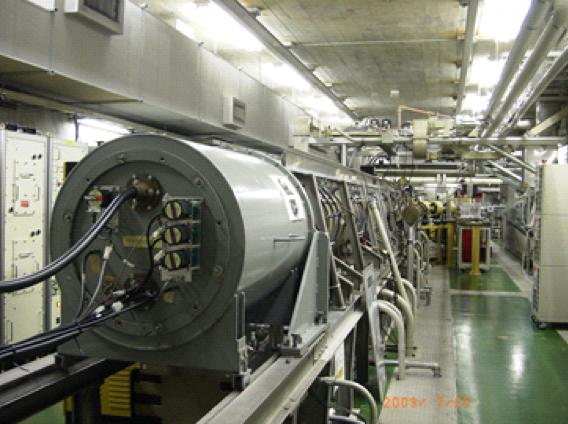
Osaka, Japan – In a groundbreaking series of experiments, an Osaka University researcher has demonstrated an exciting new method for understanding the power of antioxidants to protect us from harmful free radicals. Professor Kazuo Kobayashi has used linear electron accelerators, sometimes called “linacs,” to fling electrons at speeds not previously seen in biological research. When the electrons slammed into water molecules in the samples, highly reactive free radicals were produced. This work will be extremely valuable for understanding the body’s naturally occurring antioxidant molecules and proteins, such as ascorbic acid, also called vitamin C.

A free radical is a molecule with an unpaired electron, which makes it very eager to react. Some biological processes, including photosynthesis, harness energic free radicals to power vital chemical reactions. However, when a free radical gets loose, it can be extremely damaging to DNA and other important biomolecules. Rogue radicals can also be created by radiation, including from the sun’s UV light. To avert damage from free radicals, a circulating antioxidant molecule or protein in the body can absorb the extra electron. For many years, scientists could only guess at the exact pathway of this process, since the transfer of the electron from the free radical to the antioxidant occurs extremely fast, in times measured in trillionths of a second.

In the current research, to watch the charge transfer in action, electrons were accelerated by a linac in a process called pulse radiolysis. Since biological samples almost always contain water, the electrons could be counted on to slam into H2O molecules, leading to the rapid and reliable generation of free radicals inside the sample. Although the merits of this innovation are widely applicable, it took many years to gain acceptance in biological fields.

“Linacs are well-known in the field chemistry and physics,” Professor Kobayashi explains, “but less familiar to researchers from other fields. Some skeptics thought they are too complex and damaging to biomolecules to be useful. However, this research demonstrates how valuable linacs can be for understanding a wide range of biological processes.”

This method can not only elucidate many uncertain biological reaction mechanisms that include electron transfers, but also help develop new medications for preventing cell damage.

###

The work is published in Chemical Reviews as “Pulse Radiolysis Studies for Mechanism in Biochemical Redox Reactions” at DOI: https://doi.org/10.1021/acs.chemrev.8b00405.

Media Contact
Saori Obayashi
[email protected]

Related Journal Article

http://dx.doi.org/10.1021/acs.chemrev.8b00405

Tags: BiochemistryBiologyBiomechanics/BiophysicsMolecular Biology
Share12Tweet8Share2ShareShareShare2

Related Posts

Miniature Sensor Uses Light to Detect Touch — Chemistry

Miniature Sensor Uses Light to Detect Touch

May 8, 2026
Iron Minerals Determine Whether Dissolved Organic Matter Fuels Microbes or Becomes Long-Term Carbon Storage — Chemistry

Iron Minerals Determine Whether Dissolved Organic Matter Fuels Microbes or Becomes Long-Term Carbon Storage

May 8, 2026

Kate Evans Appointed Associate Lab Director for Biological and Environmental Systems Science at ORNL

May 8, 2026

Advancing Multiscale Modeling and Overcoming Operational Challenges in Autothermal COâ‚‚-to-Methanol Reactors

May 8, 2026
Please login to join discussion

POPULAR NEWS

  • Research Indicates Potential Connection Between Prenatal Medication Exposure and Elevated Autism Risk

    840 shares
    Share 336 Tweet 210
  • New Study Reveals Plants Can Detect the Sound of Rain

    727 shares
    Share 290 Tweet 181
  • Scientists Investigate Possible Connection Between COVID-19 and Increased Lung Cancer Risk

    68 shares
    Share 27 Tweet 17
  • Salmonella Haem Blocks Macrophages, Boosts Infection

    61 shares
    Share 24 Tweet 15

About

We bring you the latest biotechnology news from best research centers and universities around the world. Check our website.

Follow us

Recent News

Evaluating Digoxin Use in Patients with Symptomatic Rheumatic Heart Disease

Evaluating the Effectiveness and Safety of Digitalis Glycosides in Treating Heart Failure

Urdu Fall Risk Questionnaire Adapted for Elderly

Subscribe to Blog via Email

Success! An email was just sent to confirm your subscription. Please find the email now and click 'Confirm' to start subscribing.

Join 82 other subscribers
  • Contact Us

Bioengineer.org © Copyright 2023 All Rights Reserved.

Welcome Back!

Login to your account below

Forgotten Password?

Retrieve your password

Please enter your username or email address to reset your password.

Log In
No Result
View All Result
  • Homepages
    • Home Page 1
    • Home Page 2
  • News
  • National
  • Business
  • Health
  • Lifestyle
  • Science

Bioengineer.org © Copyright 2023 All Rights Reserved.