For the first time, researchers unveil the genome of ito-mozuku (Nemacystus decipiens), the popular Japanese brown seaweed, providing data that could help farmers better grow the health food
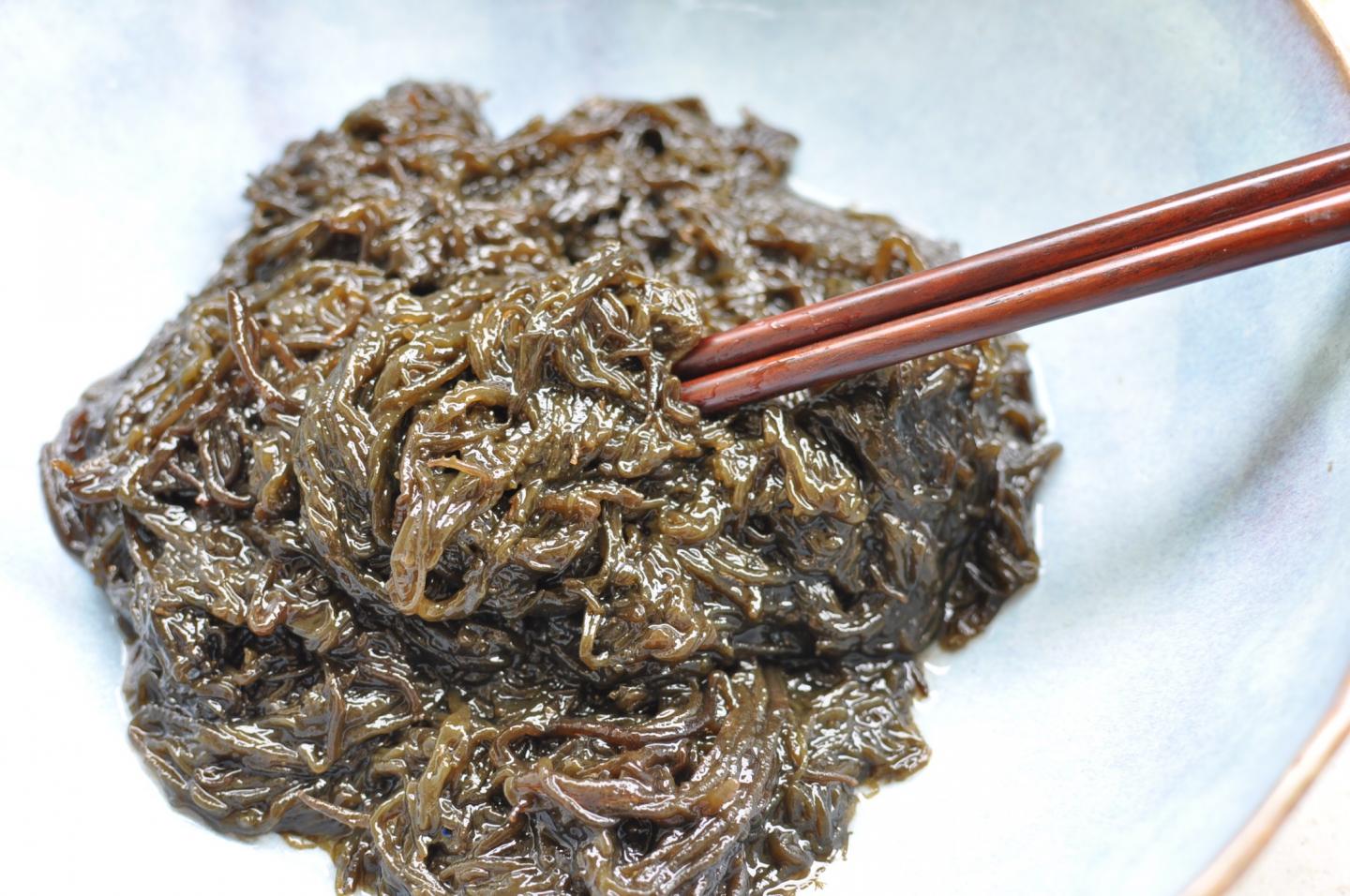
Credit: OIST
Along the tropical coastline of Okinawa, Japan, farmers raise rows of delectable seaweed and harvest thousands of tons of the crop each year. Unfortunately, scientists predict that pollution and rising ocean temperatures will blunt this impressive yield, forcing farmers to adopt new cultivation techniques. Recently, scientists at the Okinawa Institute of Science and Technology Graduate University (OIST) decoded the genome of the popular brown seaweed ito-mozuku (Nemacystus decipiens), providing data that could someday be critical to local farmers.
The study, published March 14, 2019 in Scientific Reports, presents the world’s first draft genome of ito-mozuku. Just three years ago, the unit released the first draft genome of another local species of edible seaweed, Cladosiphon okamuranus, called Okinawa mozuku. Both seaweed species contain exceptionally high concentrations of fucoidan, a slimy substance thought to stymie the formation of blood clots and cancerous tumors, among other health benefits. The researchers have spotted which genes drive up this fucoidan concentration, a discovery that could have applications in the health food industry.
Besides revealing genes that imbue mozuku with health benefits, the research could be useful for farming.
“My future plan is to establish new methods for cultivation of this species,” said Dr. Koki Nishitsuji, first author of the study and a staff scientist in the OIST Marine Genomics Unit, led by Prof. Noriyuki Satoh. Nishitsuji is now working to develop genetic markers to distinguish ito-mozuku from its close cousin.
“Using those markers, we can do cross-breeding,” he said. “This is a popular method for making new varieties of land plants, especially wheat and potatoes, but in the case of seaweed, no one has succeeded in cross-breeding.”
The Marine Genomics Unit conducted their study with the help of the Onna Fisheries Cooperative, an organization based just around the corner from OIST campus. The group established the “Onna-1” strain of ito-mozuku in 2006 and provided samples for the genome study. The Unit plans to continue sequencing samples from the Cooperative, but someday, they hope to extend their research even further.
“So far, we plan to continue our ‘seaweed project’ in Okinawa,” said Nishitsuji. “If possible, we would like to expand it to cover all of Japan.”
Fucoidan Factories
Compared to other brown seaweeds, such as kombu (Saccharina japonica) or wakame (Undaria pinnatifida), both ito-mozuku and Okinawa mozuku are incredibly rich sources of fucoidan. The reason why might be coded in their genes.
The researchers found that both mozuku species contain a fused gene that drives their fucoidan production. On their own, the two genes code for two separate enzymes–proteins that facilitate chemical reactions and ultimately help produce fucoidan. Once fused, the genes can be expressed simulataneously and produce a single enzyme equipped with two functions. Armed with a double-edged enzyme, mozuku likely pumps out fucoidan in a fraction of the time it takes other seaweeds, Nishitsuji said.
The researchers uncovered an additional pair of fused genes in ito-mozuku that they didn’t find in Okinawa mozuku. They predict that, when expressed, these genes may boost the number of sulfate groups transferred to fucoidan, a chemical reaction that may be key to the substance’s health benefits. The unit plans to put this theory to the test in future studies, as they continue to collect genomic data from brown seaweeds across Okinawa and greater Japan.
“Land crops have a long history of genetic study,” said Nishitsuji. “But no one has pursued this kind of research in seaweed.” Knowing the cultural and economic importance of the crop in Japan, the Marine Genomics Unit aims to bring our understanding of seaweed up to speed.
###
Media Contact
Kaoru Natori
[email protected]
Original Source
https:/
Related Journal Article
http://dx.