• HOME
  • NEWS
  • EXPLORE
    • CAREER
      • Companies
      • Jobs
    • EVENTS
    • iGEM
      • News
      • Team
    • PHOTOS
    • VIDEO
    • WIKI
  • BLOG
  • COMMUNITY
    • FACEBOOK
    • INSTAGRAM
    • TWITTER
Wednesday, January 14, 2026
BIOENGINEER.ORG
No Result
View All Result
  • Login
  • HOME
  • NEWS
  • EXPLORE
    • CAREER
      • Companies
      • Jobs
        • Lecturer
        • PhD Studentship
        • Postdoc
        • Research Assistant
    • EVENTS
    • iGEM
      • News
      • Team
    • PHOTOS
    • VIDEO
    • WIKI
  • BLOG
  • COMMUNITY
    • FACEBOOK
    • INSTAGRAM
    • TWITTER
  • HOME
  • NEWS
  • EXPLORE
    • CAREER
      • Companies
      • Jobs
        • Lecturer
        • PhD Studentship
        • Postdoc
        • Research Assistant
    • EVENTS
    • iGEM
      • News
      • Team
    • PHOTOS
    • VIDEO
    • WIKI
  • BLOG
  • COMMUNITY
    • FACEBOOK
    • INSTAGRAM
    • TWITTER
No Result
View All Result
Bioengineer.org
No Result
View All Result
Home NEWS Science News Biology

New technology could detect Dengue fever earlier

Bioengineer by Bioengineer
March 12, 2019
in Biology
Reading Time: 2 mins read
0
IMAGE
Share on FacebookShare on TwitterShare on LinkedinShare on RedditShare on Telegram

Researchers from the University of Bath are developing a new tool for detecting the presence of Dengue fever early on, helping prevent people from suffering potential life-threatening complications.
IMAGE

Credit: University of Bath

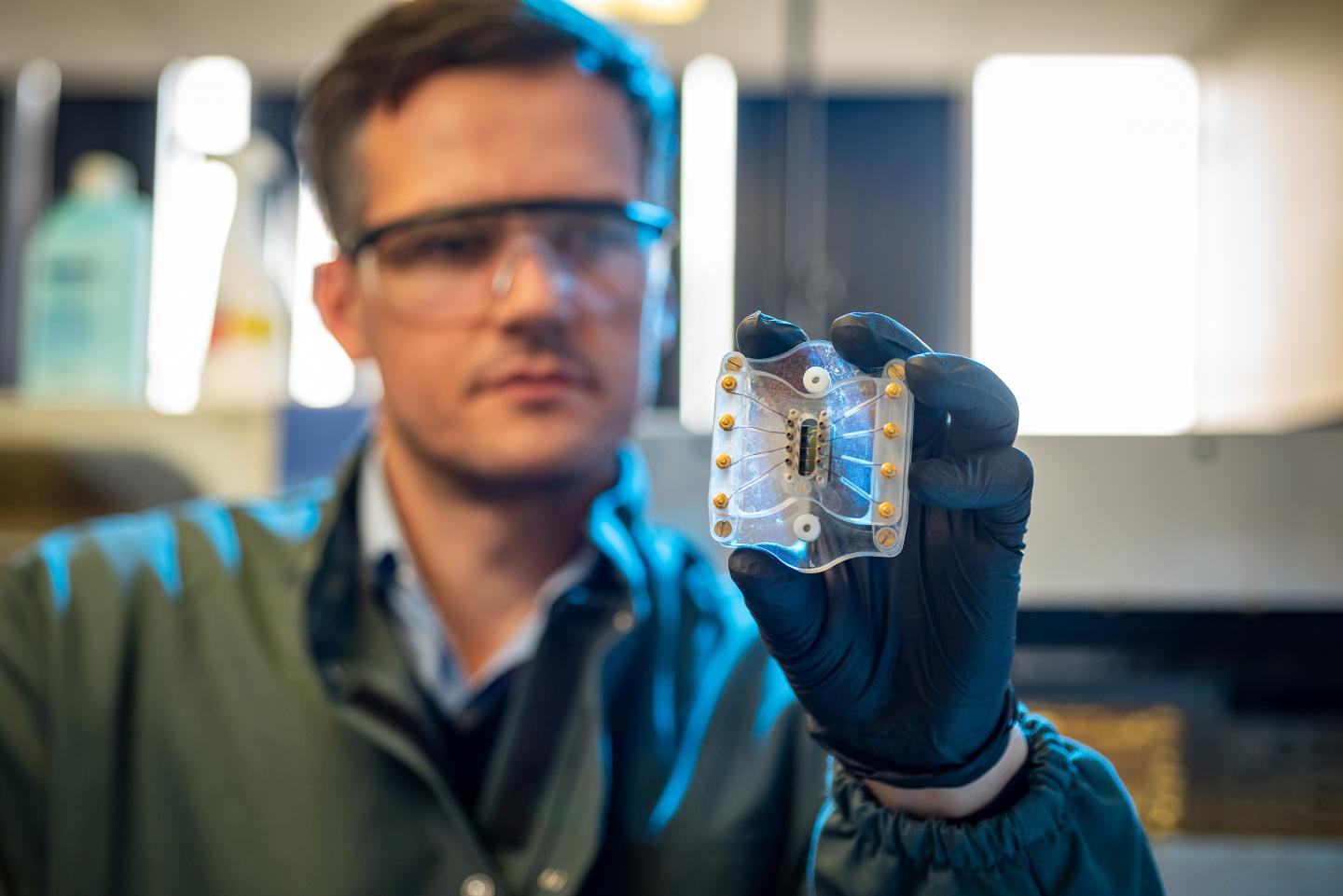
Dr Paulo Rocha from the University of Bath’s Department of Electronic & Electrical Engineering is developing a low-cost integrative sensing tool for early detection of Dengue virus, using a novel platform containing electrical sensors to investigate the behaviour of human cells infected with Dengue virus.

When someone is infected by the Dengue virus it produces proteins, particularly ‘non-structural protein 1’ (NS1) which is secreted from infected cells. Using a three centimetre squared platform, the Bath-based research team will observe the electrical behaviour of human cells in vitro infected by different concentrations of NS1.

A better understanding of the electrical behaviour of these cells, the researchers believe, will help create a more accurate and sensitive way of detecting the presence of Dengue virus.

In the future, it is hoped this research will lead to the development of a low cost, disposable, real time wearable system for detecting Dengue fever as well as Zika virus and Yellow Fever virus, both of which belong to the same Flaviviridae family. This will be of particular benefit to communities in developing countries where access to healthcare may be limited and Dengue fever is particularly prevalent.

Dengue fever is an incurable mosquito-borne tropical disease initiated by the Dengue virus. It is spread by mosquitos mostly in tropical and subtropical areas of the world with symptoms ranging from fever and muscle/joint pains to life threatening Dengue hemorrhagic fever. Each year it is estimated 390 million dengue infections occur around the world. Of these, 500,000 cases develop into dengue haemorrhagic fever which results in up to 25,000 deaths annually worldwide.

A method that doctors currently adopt to test for Dengue fever is by examining the presence of NS1 in a patient’s bloodstream through a simple blood test. However, many people who are infected by Dengue virus may not be diagnosed due to the concentration of NS1 being so low and therefore not detected. This prevents correct diagnosis and the early intervention of drugs to counteract and reduce the effects of the virus.

Lead researcher and Assistant Professor in the University of Bath’s Department of Electronic & Electrical Engineering,
Dr Paulo Rocha, said: “If we can detect Dengue fever earlier on, we can ultimately efficiently treat a person’s symptoms and prevent the virus from developing into a more serious infection.

“By determining if there is a correlation with a cell’s electrical signal and the presence – no matter how little the concentration – of NS1, we can identify if someone is infected with Dengue virus earlier.”

###

Media Contact
Robert Breckon
[email protected]

Original Source

https://www.bath.ac.uk/announcements/new-technology-could-detect-dengue-fever-earlier/

Tags: Biomedical/Environmental/Chemical EngineeringBiotechnologyDeveloping CountriesDisease in the Developing WorldElectrical Engineering/ElectronicsEnvironmental HealthInfectious/Emerging DiseasesPublic HealthTechnology/Engineering/Computer Science
Share12Tweet8Share2ShareShareShare2

Related Posts

blank

Impact of Sex on Mortality in Sjögren’s Disease

January 14, 2026
blank

Exploring PDR Gene Family and miRNAs in Wheat

January 14, 2026

Genetic Insights into Circadian Adaptation in Endangered Fish

January 13, 2026

Blastocystis Boosts B and K2 Vitamins in Antelope Gut

January 13, 2026
Please login to join discussion

POPULAR NEWS

  • Enhancing Spiritual Care Education in Nursing Programs

    154 shares
    Share 62 Tweet 39
  • PTSD, Depression, Anxiety in Childhood Cancer Survivors, Parents

    147 shares
    Share 59 Tweet 37
  • Robotic Ureteral Reconstruction: A Novel Approach

    73 shares
    Share 29 Tweet 18
  • Study Reveals Lipid Accumulation in ME/CFS Cells

    52 shares
    Share 21 Tweet 13

About

BIOENGINEER.ORG

We bring you the latest biotechnology news from best research centers and universities around the world. Check our website.

Follow us

Recent News

Gender Differences in Sjögren’s Disease: Impact on Survival

Global Strategies for Sarcopenia: Research and Practice Insights

B Cell Pathways Link Schizophrenia and Immune Disorders

Subscribe to Blog via Email

Enter your email address to subscribe to this blog and receive notifications of new posts by email.

Join 71 other subscribers
  • Contact Us

Bioengineer.org © Copyright 2023 All Rights Reserved.

Welcome Back!

Login to your account below

Forgotten Password?

Retrieve your password

Please enter your username or email address to reset your password.

Log In
No Result
View All Result
  • Homepages
    • Home Page 1
    • Home Page 2
  • News
  • National
  • Business
  • Health
  • Lifestyle
  • Science

Bioengineer.org © Copyright 2023 All Rights Reserved.