• HOME
  • NEWS
  • EXPLORE
    • CAREER
      • Companies
      • Jobs
    • EVENTS
    • iGEM
      • News
      • Team
    • PHOTOS
    • VIDEO
    • WIKI
  • BLOG
  • COMMUNITY
    • FACEBOOK
    • INSTAGRAM
    • TWITTER
Saturday, December 6, 2025
BIOENGINEER.ORG
No Result
View All Result
  • Login
  • HOME
  • NEWS
  • EXPLORE
    • CAREER
      • Companies
      • Jobs
        • Lecturer
        • PhD Studentship
        • Postdoc
        • Research Assistant
    • EVENTS
    • iGEM
      • News
      • Team
    • PHOTOS
    • VIDEO
    • WIKI
  • BLOG
  • COMMUNITY
    • FACEBOOK
    • INSTAGRAM
    • TWITTER
  • HOME
  • NEWS
  • EXPLORE
    • CAREER
      • Companies
      • Jobs
        • Lecturer
        • PhD Studentship
        • Postdoc
        • Research Assistant
    • EVENTS
    • iGEM
      • News
      • Team
    • PHOTOS
    • VIDEO
    • WIKI
  • BLOG
  • COMMUNITY
    • FACEBOOK
    • INSTAGRAM
    • TWITTER
No Result
View All Result
Bioengineer.org
No Result
View All Result
Home NEWS Science News Biology

Scientists discovered where black carbon comes from in the Arctic in winter and summer

Bioengineer by Bioengineer
February 15, 2019
in Biology
Reading Time: 2 mins read
0
IMAGE
Share on FacebookShare on TwitterShare on LinkedinShare on RedditShare on Telegram

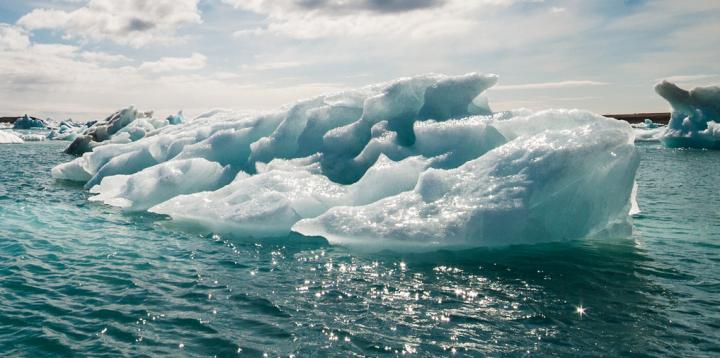
Scientists present an analysis of source apportion of BC into the atmosphere throughout the Arctic in different seasons
IMAGE

Credit: Tomsk Polytechnic University


Scientists from seven countries, including Austria, the Netherlands and five key Arctic states (Russia, USA, Canada, Norway, and Sweden) – participants of the International Arctic Science Committee (IASC) published an article on the study of the so-called sources of black carbon emissions in the Arctic in the Science Advances.

Black carbon (BC) aerosols are formed under incomplete fuel combustion in diesel engines, as well as during wildfires, wood burning in wood-burning stoves, brick-kilns, and so on. The main component of black carbon is soot which falls on the surface of snow and ice thus decreasing the ability of the originally white surface to reflect incoming solar radiation. In turn, this amplifies the melting of snow and ice cover, and therefore, can accelerate global warming.

A co-author of the study, head of TPU International Research Laboratory for Arctic Seas Carbon, Associate Member of RAS, Professor Igor Semiletov says:

‘The article called Source apportionment of circum-Arctic atmospheric black carbon from isotopes and modeling for the first time presents an analysis of source apportion for soot aerosols or BC into the atmosphere throughout the Arctic in different seasons. The significance of studying atmospheric pollution with BC is determined by its global climatic and environmental impact. ‘

Black carbon pollutes the snow, darkens its surface. It starts absorbing solar radiation better, heat quicker, and melt faster. BC interacts with clouds that affects their development, amount of rainfall, and reflectivity. According to the study, these effects make the Arctic a particularly vulnerable part of the planet. In addition, BC negatively affects human health, ecosystems, and atmospheric visibility.

Prof. Semiletov notes: ‘In the present study, the seasonal contribution of various Arctic areas to BC emissions was revealed based on complex elemental and isotopic analysis of BC, known characteristics of main sources and the most contemporary transport models of atmospheric circulation.

The main BC sources were dominated by emissions from fossil fuel combustion in winter and by biomass burning, i.e. wildfires and other sources, in summer. The annual mean source of BC to the circum-Arctic made 39 ± 10% from biomass burning.’

According to the scientist, the results obtained are extremely important for the BC sources inventory and their seasonality that are necessary conditions for the elaboration of preventive measures taken by the International Arctic Science Committee.

###

Media Contact
Kristina Nabokova
[email protected]
7-382-270-5685

Original Source

https://news.tpu.ru/en/news/2019/02/14/34360/

Related Journal Article

http://dx.doi.org/10.1126/sciadv.aau8052

Tags: Climate ChangeEarth Science
Share12Tweet8Share2ShareShareShare2

Related Posts

blank

Rice miRNA: Key Regulator in Fungal Interactions

December 3, 2025
Human Impact Alters Leopard and Ungulate Dynamics

Human Impact Alters Leopard and Ungulate Dynamics

December 3, 2025

Adaptive Microsatellite Variants in Indian Yak Populations

December 2, 2025

Guide to Single-Cell RNA Transcriptomics Unveiled

December 2, 2025
Please login to join discussion

POPULAR NEWS

  • New Research Unveils the Pathway for CEOs to Achieve Social Media Stardom

    New Research Unveils the Pathway for CEOs to Achieve Social Media Stardom

    204 shares
    Share 82 Tweet 51
  • Scientists Uncover Chameleon’s Telephone-Cord-Like Optic Nerves, A Feature Missed by Aristotle and Newton

    121 shares
    Share 48 Tweet 30
  • Neurological Impacts of COVID and MIS-C in Children

    107 shares
    Share 43 Tweet 27
  • MoCK2 Kinase Shapes Mitochondrial Dynamics in Rice Fungal Pathogen

    70 shares
    Share 28 Tweet 18

About

We bring you the latest biotechnology news from best research centers and universities around the world. Check our website.

Follow us

Recent News

Boosting Cancer Immunotherapy by Targeting DNA Repair

Evaluating eGFR Equations in Chinese Children

Metformin-Alogliptin Combo vs. Monotherapy in Diabetes

Subscribe to Blog via Email

Success! An email was just sent to confirm your subscription. Please find the email now and click 'Confirm' to start subscribing.

Join 69 other subscribers
  • Contact Us

Bioengineer.org © Copyright 2023 All Rights Reserved.

Welcome Back!

Login to your account below

Forgotten Password?

Retrieve your password

Please enter your username or email address to reset your password.

Log In
No Result
View All Result
  • Homepages
    • Home Page 1
    • Home Page 2
  • News
  • National
  • Business
  • Health
  • Lifestyle
  • Science

Bioengineer.org © Copyright 2023 All Rights Reserved.