• HOME
  • NEWS
  • EXPLORE
    • CAREER
      • Companies
      • Jobs
    • EVENTS
    • iGEM
      • News
      • Team
    • PHOTOS
    • VIDEO
    • WIKI
  • BLOG
  • COMMUNITY
    • FACEBOOK
    • INSTAGRAM
    • TWITTER
Saturday, February 7, 2026
BIOENGINEER.ORG
No Result
View All Result
  • Login
  • HOME
  • NEWS
  • EXPLORE
    • CAREER
      • Companies
      • Jobs
        • Lecturer
        • PhD Studentship
        • Postdoc
        • Research Assistant
    • EVENTS
    • iGEM
      • News
      • Team
    • PHOTOS
    • VIDEO
    • WIKI
  • BLOG
  • COMMUNITY
    • FACEBOOK
    • INSTAGRAM
    • TWITTER
  • HOME
  • NEWS
  • EXPLORE
    • CAREER
      • Companies
      • Jobs
        • Lecturer
        • PhD Studentship
        • Postdoc
        • Research Assistant
    • EVENTS
    • iGEM
      • News
      • Team
    • PHOTOS
    • VIDEO
    • WIKI
  • BLOG
  • COMMUNITY
    • FACEBOOK
    • INSTAGRAM
    • TWITTER
No Result
View All Result
Bioengineer.org
No Result
View All Result
Home NEWS Science News Biology

Magnetic teeth hold promise for materials and energy

Bioengineer by Bioengineer
February 1, 2019
in Biology
Reading Time: 3 mins read
0
IMAGE
Share on FacebookShare on TwitterShare on LinkedinShare on RedditShare on Telegram

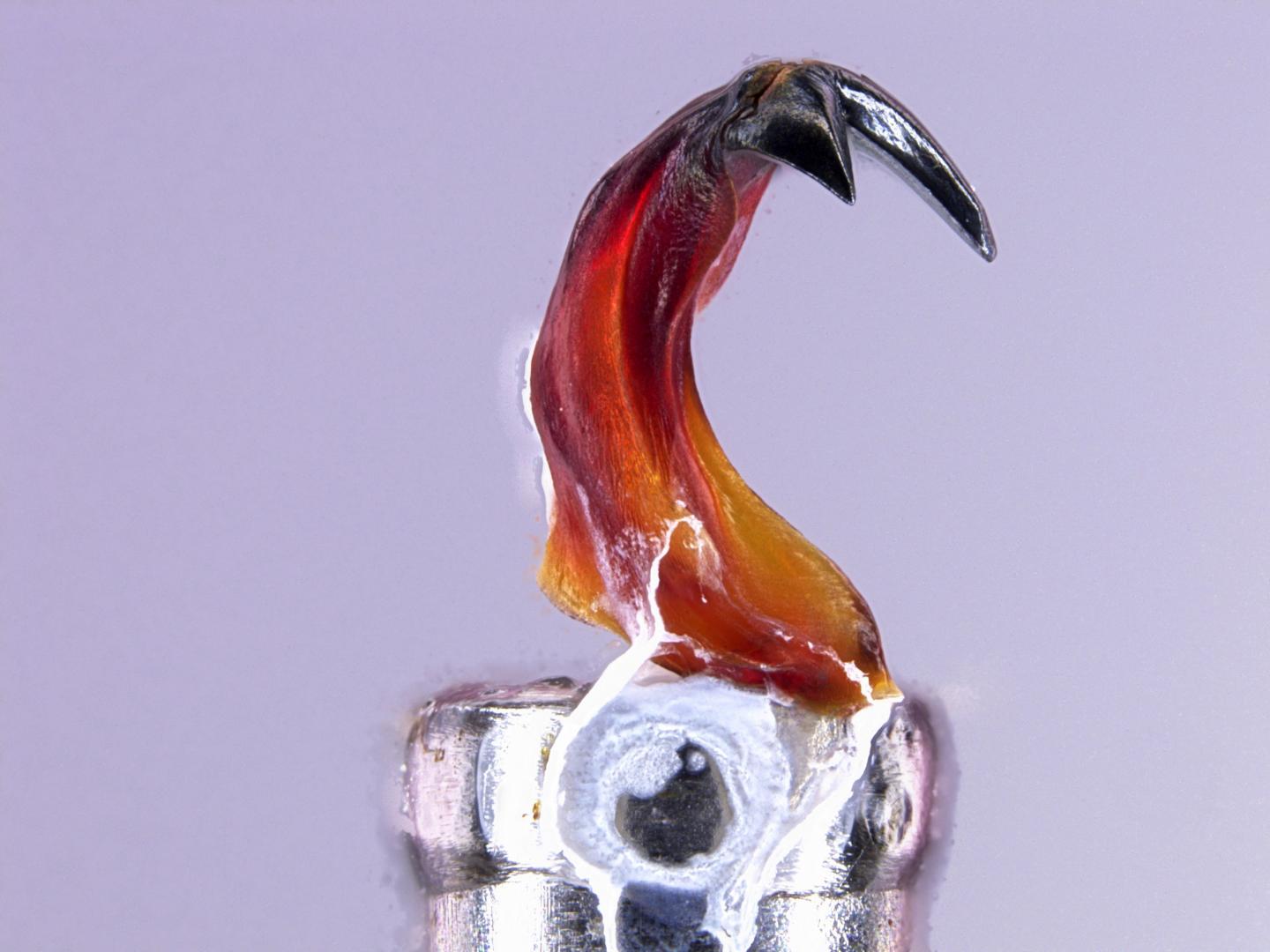
A mollusk with teeth that can grind down rock may hold the key to making next generation abrasion-resistant materials and nanoscale materials for energy
IMAGE

Credit: Kisailus Biomimetics & Nanostructured Materials Lab


A mollusk with teeth that can grind down rock may hold the key to making next generation abrasion-resistant materials and nanoscale materials for energy.

The mollusk, called a gumboot chiton, scrapes algae off ocean rocks using a specialized set of teeth made from the magnetic mineral magnetite. The teeth have the maximum hardness and stiffness of any known biomineral. Although magnetite is a geologic mineral commonly found in the earth’s crust, only a few animals are known to produce it, and little is known about how they make it.

A better understanding of the biomineralization process, combined with a thorough understanding of chiton tooth architecture and mechanics, could help scientists not only improve wear-resistant coatings and tooling, but also help grow nanoscale materials for energy and water-based applications.

Now, for the first time, a team led by Michiko Nemoto, an assistant professor of agriculture at Okayama University and David Kisailus, a professor of materials science and chemical engineering in UC Riverside’s Bourns College of Engineering, has discovered a piece of the genetic puzzle that allows the chiton to produce magnetite nanomaterials.

Chitons have several dozen rows of teeth attached to a ribbon-like structure. Each tooth is composed of a mineralized cusp, or pointed area, and base supporting the mineralized cusp. Magnetite is deposited only in the cusp region. As teeth wear down they are replaced by new teeth, so teeth in varying stages of formation are always present.

Rather than looking for specific genes, the researchers examined the transcriptome, the set of all RNA molecules in the teeth, to see what substances the genes were actually expressing. DNA contains the blueprints, but RNA is what “transcribes” the blueprints and helps carry them out.

They found that the 20 most abundant RNA transcripts in the developing teeth region contain ferritin, a protein that stores iron and releases it in a controlled fashion, while those in the mineralized teeth region include proteins of mitochondria that may provide the energy required to transform the raw materials into magnetite. On the fully mineralized cusp the researchers also identified 22 proteins that included a new protein they called “radular teeth matrix protein1.” The new protein might interact with other substances present on the teeth to produce iron oxide.

The findings could help scientists solve an urgent problem for next generation electronics– nanoscale energy sources to power them. Knowing how to control the growth of biological magnetite, whose magnetic fields have electrical applications, could help scientists create nanoscale energy materials.

The open access paper, “Integrated transcriptomic and proteomic analyses of a molecular mechanism of radular teeth biomineralization in Cryptochiton stelleri,” was published January 29 in Scientific Reports. In addition to Nemoto and Kisailus, authors include Dongni Ren, Steven Herrera, Songqin Pan, Takashi Tamura, Kenji Inagaki.

###

Media Contact
Holly Ober
[email protected]
951-827-5893

Original Source

https://news.ucr.edu/articles/2019/01/31/magnetic-teeth-hold-promise-materials-and-energy

Related Journal Article

http://dx.doi.org/10.1038/s41598-018-37839-2

Tags: Biomedical/Environmental/Chemical EngineeringBiotechnologyChemistry/Physics/Materials SciencesEnergy/Fuel (non-petroleum)GeneticsMarine/Freshwater BiologyMaterialsMolecular BiologyNanotechnology/Micromachines
Share12Tweet8Share2ShareShareShare2

Related Posts

Florida Cane Toad: Complex Spread and Selective Evolution

Florida Cane Toad: Complex Spread and Selective Evolution

February 7, 2026
New Study Uncovers Mechanism Behind Burn Pit Particulate Matter–Induced Lung Inflammation

New Study Uncovers Mechanism Behind Burn Pit Particulate Matter–Induced Lung Inflammation

February 6, 2026

DeepBlastoid: Advancing Automated and Efficient Evaluation of Human Blastoids with Deep Learning

February 6, 2026

Navigating the Gut: The Role of Formic Acid in the Microbiome

February 6, 2026
Please login to join discussion

POPULAR NEWS

  • Robotic Ureteral Reconstruction: A Novel Approach

    Robotic Ureteral Reconstruction: A Novel Approach

    82 shares
    Share 33 Tweet 21
  • Digital Privacy: Health Data Control in Incarceration

    63 shares
    Share 25 Tweet 16
  • Study Reveals Lipid Accumulation in ME/CFS Cells

    57 shares
    Share 23 Tweet 14
  • Breakthrough in RNA Research Accelerates Medical Innovations Timeline

    53 shares
    Share 21 Tweet 13

About

We bring you the latest biotechnology news from best research centers and universities around the world. Check our website.

Follow us

Recent News

Barriers and Boosters of Seniors’ Physical Activity in Karachi

Evaluating Pediatric Emergency Care Quality in Ethiopia

TPMT Expression Predictions Linked to Azathioprine Side Effects

Subscribe to Blog via Email

Enter your email address to subscribe to this blog and receive notifications of new posts by email.

Join 73 other subscribers
  • Contact Us

Bioengineer.org © Copyright 2023 All Rights Reserved.

Welcome Back!

Login to your account below

Forgotten Password?

Retrieve your password

Please enter your username or email address to reset your password.

Log In
No Result
View All Result
  • Homepages
    • Home Page 1
    • Home Page 2
  • News
  • National
  • Business
  • Health
  • Lifestyle
  • Science

Bioengineer.org © Copyright 2023 All Rights Reserved.