• HOME
  • NEWS
  • EXPLORE
    • CAREER
      • Companies
      • Jobs
    • EVENTS
    • iGEM
      • News
      • Team
    • PHOTOS
    • VIDEO
    • WIKI
  • BLOG
  • COMMUNITY
    • FACEBOOK
    • INSTAGRAM
    • TWITTER
Thursday, March 26, 2026
BIOENGINEER.ORG
No Result
View All Result
  • Login
  • HOME
  • NEWS
  • EXPLORE
    • CAREER
      • Companies
      • Jobs
        • Lecturer
        • PhD Studentship
        • Postdoc
        • Research Assistant
    • EVENTS
    • iGEM
      • News
      • Team
    • PHOTOS
    • VIDEO
    • WIKI
  • BLOG
  • COMMUNITY
    • FACEBOOK
    • INSTAGRAM
    • TWITTER
  • HOME
  • NEWS
  • EXPLORE
    • CAREER
      • Companies
      • Jobs
        • Lecturer
        • PhD Studentship
        • Postdoc
        • Research Assistant
    • EVENTS
    • iGEM
      • News
      • Team
    • PHOTOS
    • VIDEO
    • WIKI
  • BLOG
  • COMMUNITY
    • FACEBOOK
    • INSTAGRAM
    • TWITTER
No Result
View All Result
Bioengineer.org
No Result
View All Result
Home NEWS Science News Cancer

Treatment for obesity and fatty liver disease may be in reach

Bioengineer by Bioengineer
January 31, 2019
in Cancer
Reading Time: 2 mins read
0
IMAGE
Share on FacebookShare on TwitterShare on LinkedinShare on RedditShare on Telegram

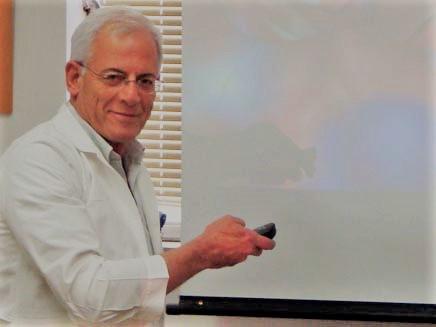
Hebrew University professor Amiram Goldblum’s discovers 27 new molecules with significant therapeutic potential
IMAGE

Credit: Hebrew University


Professor Amiram Goldblum and his team at the Hebrew University of Jerusalem’s Institute for Drug Research have discovered 27 new molecules. These molecules all activate a special protein called PPAR-delta and have the potential to treat fatty liver disease, obesity, diabetic nephrotoxicity, and to heal wounds.

News of these findings was published today in Scientific Reports, a Nature journal, and was made possible thanks to a new, award-winning algorithm that Goldblum’s team developed. This algorithm sifted through a database of 1.56 million molecules and picked out 27 with a strong therapeutic potential, as determined by biologists at the Novartis Genomic (GNF) Institute in San Diego.

To date, these new molecules are undergoing pharmaceutical evaluations to treat two main health conditions. The first is Fatty Liver Disease, also known as NASH (Non-Alcoholic SteatoHeptatis). This disease currently has no cure and is a leading cause of liver cancer in the Western world. The second is obesity. PPAR-delta activation has the potential to increase physical endurance and trim waistlines by getting muscle cells to burn more fat. Future evaluations will hopefully include testing treatments for improved wound healing, and to prevent kidney toxicity in diabetics.

Professor Goldblum is cautiously optimistic about these findings. “With such a large group of highly active molecules, there is a high probability to find treatments for several common diseases. However, we should wait till all the experiments are done before we get our hopes up too high,” he shared.

To date, there is much pharmaceutical interest in Goldblum’s new molecules. Integra Holdings, Hebrew University’s biotech company, determined that 21 of the 27 have the potential to reach pharmaceutical success, especially as a possible cure for Fatty Liver disease. Additionally, Israel’s Heller Institute of Medical Research is currently testing PPAR-delta’s physical endurance properties on mice. Goldblum predicts that in a few years we will hopefully be seeing several of these molecules in the pipeline for clinical studies on humans.

###

Media Contact
Tali Aronsky
[email protected]
972-556-664-371

Related Journal Article

http://dx.doi.org/10.1038/s41598-019-38508-8

Tags: cancerDiet/Body WeightEndocrinologyLiverMedicine/HealthMolecular Biology
Share12Tweet8Share2ShareShareShare2

Related Posts

Microtubules Found to Actively Ensure Accurate Chromosome Distribution During Cell Division

March 25, 2026

Alectinib Enhances CAR T-Cell Attack in ALK Neuroblastoma

March 23, 2026

Dr. Chun Li Honored with SNMMI Mars Shot Research Fund Award

March 20, 2026

Pre-Chemotherapy Exercise Demonstrates Potential to Alleviate Cancer-Related Fatigue

March 20, 2026
Please login to join discussion

POPULAR NEWS

  • blank

    Revolutionary AI Model Enhances Precision in Detecting Food Contamination

    96 shares
    Share 38 Tweet 24
  • Imagine a Social Media Feed That Challenges Your Views Instead of Reinforcing Them

    1003 shares
    Share 397 Tweet 248
  • Uncovering Functions of Cavernous Malformation Proteins in Organoids

    54 shares
    Share 22 Tweet 14
  • Promising Outcomes from First Clinical Trials of Gene Regulation in Epilepsy

    51 shares
    Share 20 Tweet 13

About

We bring you the latest biotechnology news from best research centers and universities around the world. Check our website.

Follow us

Recent News

In-Sensor Cryptography Links Physical Process to Digital Identity

Can Psychosocial Factors Influence Cancer Risk?

Depression Factors in Elderly: Pre vs. Post-COVID Analysis

Subscribe to Blog via Email

Success! An email was just sent to confirm your subscription. Please find the email now and click 'Confirm' to start subscribing.

Join 78 other subscribers
  • Contact Us

Bioengineer.org © Copyright 2023 All Rights Reserved.

Welcome Back!

Login to your account below

Forgotten Password?

Retrieve your password

Please enter your username or email address to reset your password.

Log In
No Result
View All Result
  • Homepages
    • Home Page 1
    • Home Page 2
  • News
  • National
  • Business
  • Health
  • Lifestyle
  • Science

Bioengineer.org © Copyright 2023 All Rights Reserved.