• HOME
  • NEWS
  • EXPLORE
    • CAREER
      • Companies
      • Jobs
    • EVENTS
    • iGEM
      • News
      • Team
    • PHOTOS
    • VIDEO
    • WIKI
  • BLOG
  • COMMUNITY
    • FACEBOOK
    • INSTAGRAM
    • TWITTER
Thursday, March 26, 2026
BIOENGINEER.ORG
No Result
View All Result
  • Login
  • HOME
  • NEWS
  • EXPLORE
    • CAREER
      • Companies
      • Jobs
        • Lecturer
        • PhD Studentship
        • Postdoc
        • Research Assistant
    • EVENTS
    • iGEM
      • News
      • Team
    • PHOTOS
    • VIDEO
    • WIKI
  • BLOG
  • COMMUNITY
    • FACEBOOK
    • INSTAGRAM
    • TWITTER
  • HOME
  • NEWS
  • EXPLORE
    • CAREER
      • Companies
      • Jobs
        • Lecturer
        • PhD Studentship
        • Postdoc
        • Research Assistant
    • EVENTS
    • iGEM
      • News
      • Team
    • PHOTOS
    • VIDEO
    • WIKI
  • BLOG
  • COMMUNITY
    • FACEBOOK
    • INSTAGRAM
    • TWITTER
No Result
View All Result
Bioengineer.org
No Result
View All Result
Home NEWS Science News Biology

Humans colonized diverse environments in Southeast Asia and Oceania during the Pleistocene

Bioengineer by Bioengineer
January 28, 2019
in Biology
Reading Time: 2 mins read
0
IMAGE
Share on FacebookShare on TwitterShare on LinkedinShare on RedditShare on Telegram

New review compares the regional adaptations of humans and those of other hominin species to add support to the argument that our species is ecologically unique
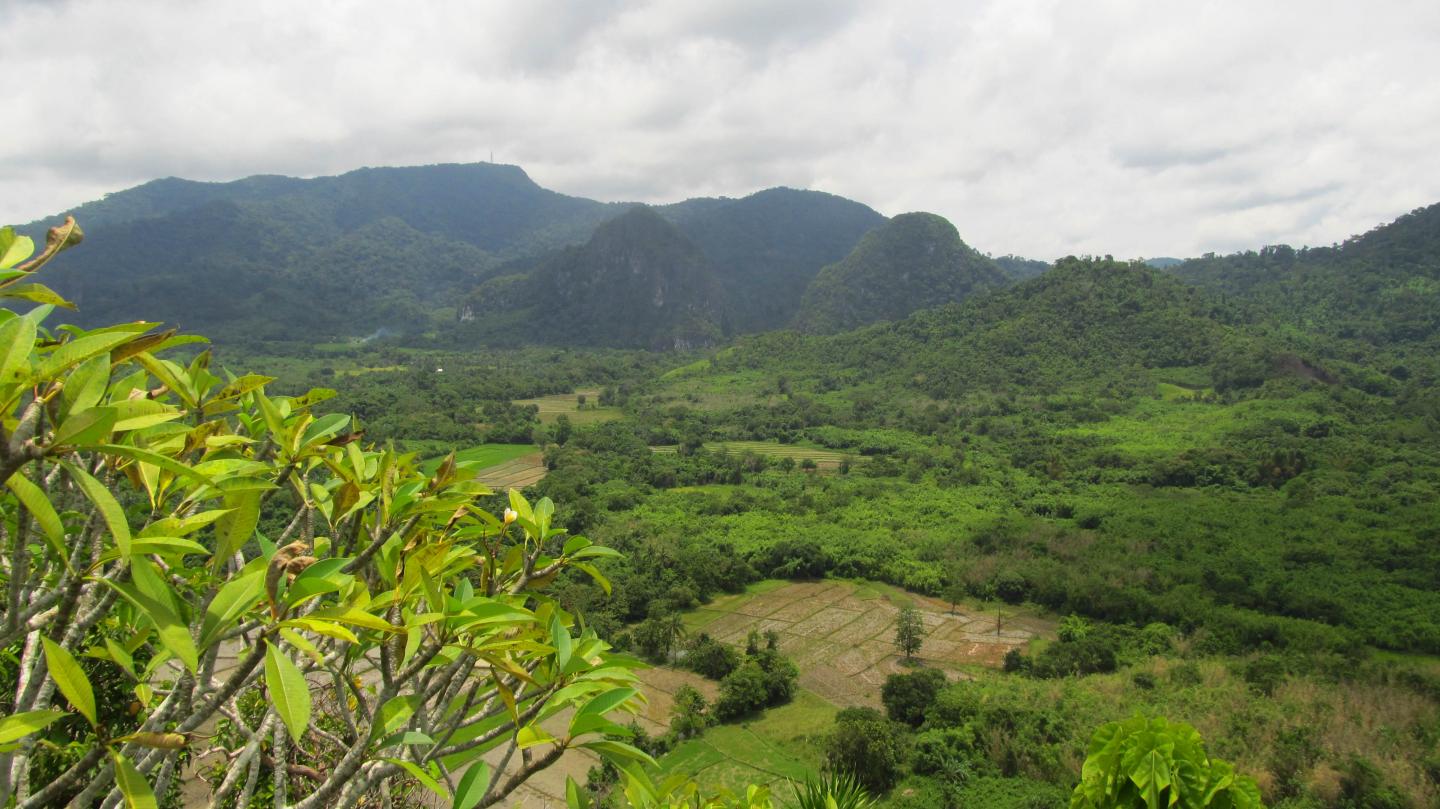
IMAGE

Credit: Noel Amano

Investigations into what it means to be human have often focused on attempts to uncover the earliest material traces of ‘art’, ‘language’, or technological ‘complexity’. More recently, however, scholars have begun to argue that more attention should be paid to the ecological uniqueness of our species. A new study, published in Archaeological Research in Asia, reviews the palaeoecological information associated with hominin dispersals into Southeast Asia and Oceania throughout the Pleistocene (1.25 Ma to 12 ka). Our species’ ability to specialize in the exploitation of diverse and ‘extreme’ settings in this part of the world stands in stark contrast to the ecological adaptations of other hominin taxa, and reaffirms the utility of exploring the environmental adaptations of Homo sapiens as an avenue for understanding what it means to be human.

The paper, published by scientists from the Max Planck Institute for the Science of Human History focuses on hominin movements across the supposed ‘Movius Line’ a boundary previously argued to separate populations with different cultural and cognitive capacities. While such divisions and assumptions are now clearly outdated, the authors argue that focus on this part of the world may, instead, be used to study the different patterns of colonization of diverse tropical and maritime habitats by different members of our ancestral line. As Noel Amano, co-author on the study states, ‘analysis of biogeochemical records, animal assemblages, and fossil plant records associated with hominin arrival can be used to reconstruct the degree to which novel or specialized adaptations were required at a given place and time’.

Southeast Asia offers a particularly exciting region in this regard as such records can be linked to a variety of hominins throughout the Pleistocene, including Homo erectus, Homo floresiensis (or ‘the Hobbit’), and Homo sapiens. As Patrick Roberts, lead author of the study states the accumulated evidence shows, ‘While earlier members of our genus appear to have followed riverine and lacustrine corridors, Homo sapiens specialized in adaptations to tropical rainforests, faunally depauperate island settings, montane environments, and deep-water marine habitats.’ The authors hope that, in future, the growth of new methods and records for determining past hominin ecologies will enable similar comparisons to be undertaken in different parts of the world, further testing the unique capacities of our species during its global expansion.

###

Media Contact
Anne Gibson
[email protected]
49-364-168-6950

Related Journal Article

http://dx.doi.org/10.1016/j.ara.2019.01.003

Tags: AnthropologyArchaeologyEcology/EnvironmentEvolution
Share13Tweet8Share2ShareShareShare2

Related Posts

How to sway group opinions: Encourage opponents to stay undecided

How to sway group opinions: Encourage opponents to stay undecided

March 23, 2026
Deep Learning Model Maps How Individual Cells Shape Disease Outcomes

Deep Learning Model Maps How Individual Cells Shape Disease Outcomes

March 20, 2026

Removing only 15 female sharks annually could endanger the entire population, scientists warn

March 20, 2026

Scientists Urge Fragrance Industry to Transition from Sustainability Talk to Active Funding of Plant Conservation

March 20, 2026
Please login to join discussion

POPULAR NEWS

  • blank

    Revolutionary AI Model Enhances Precision in Detecting Food Contamination

    96 shares
    Share 38 Tweet 24
  • Imagine a Social Media Feed That Challenges Your Views Instead of Reinforcing Them

    1003 shares
    Share 397 Tweet 248
  • Uncovering Functions of Cavernous Malformation Proteins in Organoids

    54 shares
    Share 22 Tweet 14
  • Promising Outcomes from First Clinical Trials of Gene Regulation in Epilepsy

    51 shares
    Share 20 Tweet 13

About

We bring you the latest biotechnology news from best research centers and universities around the world. Check our website.

Follow us

Recent News

In-Sensor Cryptography Links Physical Process to Digital Identity

Can Psychosocial Factors Influence Cancer Risk?

Depression Factors in Elderly: Pre vs. Post-COVID Analysis

Subscribe to Blog via Email

Success! An email was just sent to confirm your subscription. Please find the email now and click 'Confirm' to start subscribing.

Join 78 other subscribers
  • Contact Us

Bioengineer.org © Copyright 2023 All Rights Reserved.

Welcome Back!

Login to your account below

Forgotten Password?

Retrieve your password

Please enter your username or email address to reset your password.

Log In
No Result
View All Result
  • Homepages
    • Home Page 1
    • Home Page 2
  • News
  • National
  • Business
  • Health
  • Lifestyle
  • Science

Bioengineer.org © Copyright 2023 All Rights Reserved.