• HOME
  • NEWS
  • EXPLORE
    • CAREER
      • Companies
      • Jobs
    • EVENTS
    • iGEM
      • News
      • Team
    • PHOTOS
    • VIDEO
    • WIKI
  • BLOG
  • COMMUNITY
    • FACEBOOK
    • INSTAGRAM
    • TWITTER
Tuesday, December 16, 2025
BIOENGINEER.ORG
No Result
View All Result
  • Login
  • HOME
  • NEWS
  • EXPLORE
    • CAREER
      • Companies
      • Jobs
        • Lecturer
        • PhD Studentship
        • Postdoc
        • Research Assistant
    • EVENTS
    • iGEM
      • News
      • Team
    • PHOTOS
    • VIDEO
    • WIKI
  • BLOG
  • COMMUNITY
    • FACEBOOK
    • INSTAGRAM
    • TWITTER
  • HOME
  • NEWS
  • EXPLORE
    • CAREER
      • Companies
      • Jobs
        • Lecturer
        • PhD Studentship
        • Postdoc
        • Research Assistant
    • EVENTS
    • iGEM
      • News
      • Team
    • PHOTOS
    • VIDEO
    • WIKI
  • BLOG
  • COMMUNITY
    • FACEBOOK
    • INSTAGRAM
    • TWITTER
No Result
View All Result
Bioengineer.org
No Result
View All Result
Home NEWS Science News Biology

Not only do Gulf of Aqaba corals survive climate change but their offspring may too

Bioengineer by Bioengineer
January 22, 2019
in Biology
Reading Time: 2 mins read
0
IMAGE
Share on FacebookShare on TwitterShare on LinkedinShare on RedditShare on Telegram

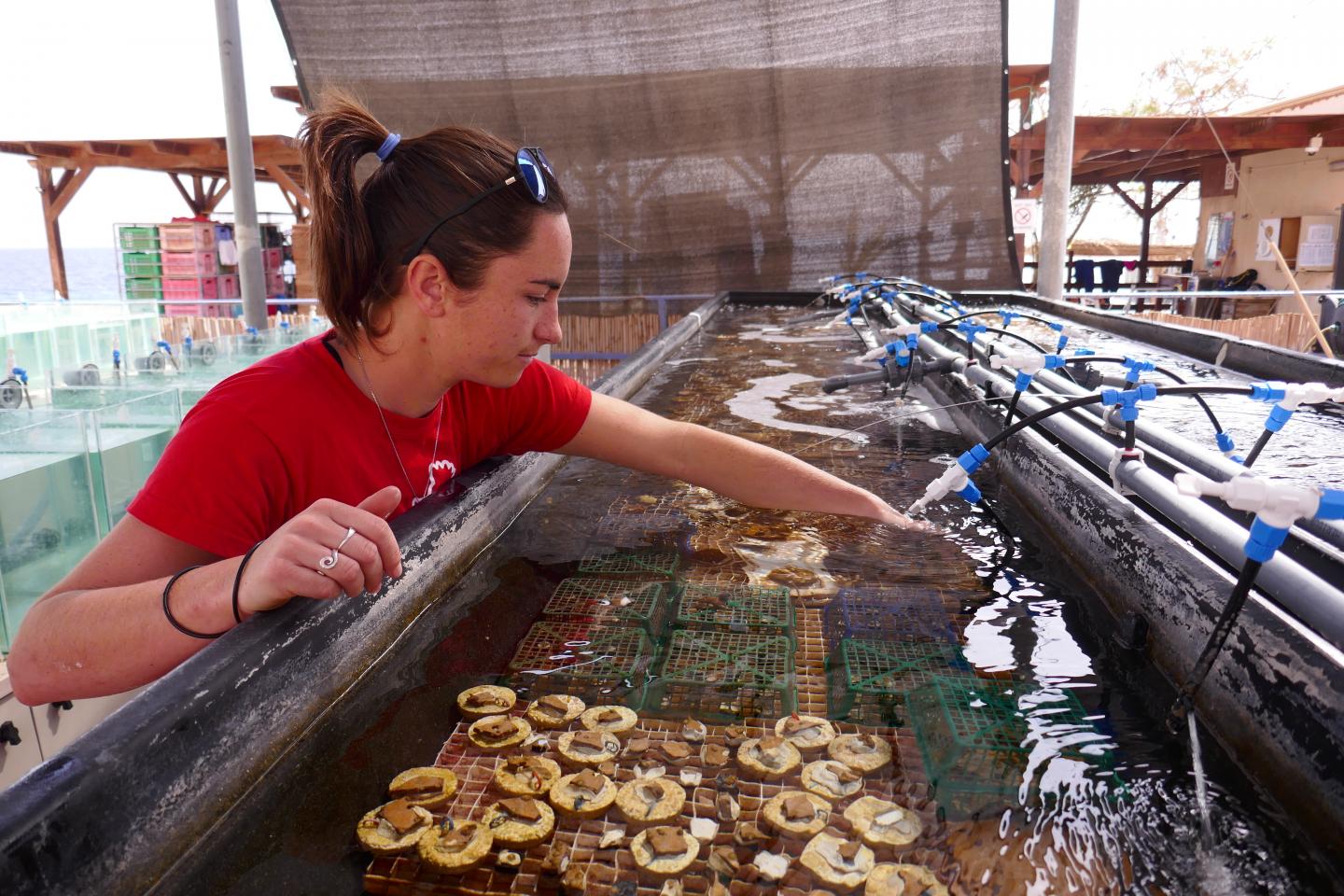
IMAGE

Credit: N. Isendahl


While coral reefs worldwide are suffering severe damage due to global warming and ocean acidification, there is one place in the world where they are surviving these harsh conditions – the Gulf of Aqaba in the Red Sea.

The researchers who discovered this phenomenon are now reporting a new, promising finding: even when parent corals from the Gulf of Aqaba experience increased temperatures and ocean acidification stress during the peak reproductive period, they are not only able to maintain normal physiological function, but also have the same reproductive output and produce offspring that function and survive as well as those which were produced under today’s ambient water conditions.

While only one species has been tested for one reproductive cycle so far, this is a success story that shows that corals in the Gulf of Aqaba may persist through climate change, according to Jessica Bellworthy, a doctoral student who carried out the study in the laboratory of Prof. Maoz Fine, of Bar-Ilan University’s Mina and Everard Goodman Faculty of Life Sciences, along with scientists from Ecole Polytechnique Fédérale de Lausanne (EPFL). The study was recently published in the Journal of Experimental Biology.

Using a Red Sea Simulator developed in Israel, the researchers tightly manipulated water conditions in Prof. Fine’s lab at an 80-aquarium, high-tech facility located at the Interuniversity Institute for Marine Science in Eilat to mimic the ocean under a severe climate change scenario.

“To our surprise but also joy, there were no detected differences in the number or the quality of the offspring produced under ocean acidification and warming scenario compared to the present day ambient control conditions,” says Bellworthy.

Previous work in Prof. Fine’s lab showing the corals’ resistance focused solely on their adult life stages. This led the researchers to investigate the impact of climate change and ocean acidification on the reproductive performance of the adult population and on next generation corals.

“Corals around the world are already suffering mass mortality as a result of anomalously high water temperatures,” says Bellworthy. “In the Gulf of Aqaba we have noted a population that withstands thermal stress way beyond what is expected in this century. Furthermore, this study begins to show that this thermal resistance not only applies during the adult life phase but also during the early life stages, which are often considered much more vulnerable and sensitive. This adds support to previous suggestions from our lab and others that the Gulf of Aqaba may be a refuge for corals in the face of climate change.”

Over the coming year the researchers plan to run a similar experiment combining global and local harmful factors, such as ocean warming and heavy metal pollution, to investigate how local factors affect the ability of coral reefs to withstand climate change.

###

Media Contact
Elana Oberlander
[email protected]

Related Journal Article

http://dx.doi.org/10.1242/jeb.186940

Tags: Atmospheric ScienceClimate ChangeEcology/EnvironmentMarine/Freshwater BiologyOceanographyPollution/RemediationTemperature-Dependent Phenomena
Share12Tweet8Share2ShareShareShare2

Related Posts

First Molecular Detection of Dientamoeba fragilis in Dairy

First Molecular Detection of Dientamoeba fragilis in Dairy

December 16, 2025
blank

Barley DREB Genes: Key Players in Stress Responses

December 16, 2025

Unveiling Prolificacy Genes in Jining Grey Goats

December 16, 2025

Unveiling Hormone Genes in Prunus persica Seed Dormancy

December 15, 2025
Please login to join discussion

POPULAR NEWS

  • Scientists Uncover Chameleon’s Telephone-Cord-Like Optic Nerves, A Feature Missed by Aristotle and Newton

    Scientists Uncover Chameleon’s Telephone-Cord-Like Optic Nerves, A Feature Missed by Aristotle and Newton

    122 shares
    Share 49 Tweet 31
  • Nurses’ Views on Online Learning: Effects on Performance

    70 shares
    Share 28 Tweet 18
  • NSF funds machine-learning research at UNO and UNL to study energy requirements of walking in older adults

    70 shares
    Share 28 Tweet 18
  • MoCK2 Kinase Shapes Mitochondrial Dynamics in Rice Fungal Pathogen

    72 shares
    Share 29 Tweet 18

About

We bring you the latest biotechnology news from best research centers and universities around the world. Check our website.

Follow us

Recent News

First Molecular Detection of Dientamoeba fragilis in Dairy

Boosting Nurses’ Empowerment with NLP Techniques

Assessing Cognitive Impairment in Pediatric Cancer Patients

Subscribe to Blog via Email

Enter your email address to subscribe to this blog and receive notifications of new posts by email.

Join 70 other subscribers
  • Contact Us

Bioengineer.org © Copyright 2023 All Rights Reserved.

Welcome Back!

Login to your account below

Forgotten Password?

Retrieve your password

Please enter your username or email address to reset your password.

Log In
No Result
View All Result
  • Homepages
    • Home Page 1
    • Home Page 2
  • News
  • National
  • Business
  • Health
  • Lifestyle
  • Science

Bioengineer.org © Copyright 2023 All Rights Reserved.