• HOME
  • NEWS
  • EXPLORE
    • CAREER
      • Companies
      • Jobs
    • EVENTS
    • iGEM
      • News
      • Team
    • PHOTOS
    • VIDEO
    • WIKI
  • BLOG
  • COMMUNITY
    • FACEBOOK
    • INSTAGRAM
    • TWITTER
Saturday, February 7, 2026
BIOENGINEER.ORG
No Result
View All Result
  • Login
  • HOME
  • NEWS
  • EXPLORE
    • CAREER
      • Companies
      • Jobs
        • Lecturer
        • PhD Studentship
        • Postdoc
        • Research Assistant
    • EVENTS
    • iGEM
      • News
      • Team
    • PHOTOS
    • VIDEO
    • WIKI
  • BLOG
  • COMMUNITY
    • FACEBOOK
    • INSTAGRAM
    • TWITTER
  • HOME
  • NEWS
  • EXPLORE
    • CAREER
      • Companies
      • Jobs
        • Lecturer
        • PhD Studentship
        • Postdoc
        • Research Assistant
    • EVENTS
    • iGEM
      • News
      • Team
    • PHOTOS
    • VIDEO
    • WIKI
  • BLOG
  • COMMUNITY
    • FACEBOOK
    • INSTAGRAM
    • TWITTER
No Result
View All Result
Bioengineer.org
No Result
View All Result
Home NEWS Science News Health

Ketone body utilization decreases when blood flow to the heart is reduced

Bioengineer by Bioengineer
January 16, 2019
in Health
Reading Time: 2 mins read
0
IMAGE
Share on FacebookShare on TwitterShare on LinkedinShare on RedditShare on Telegram

IMAGE

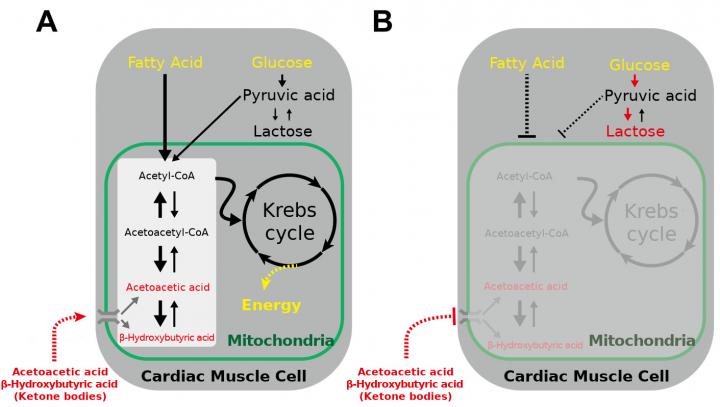
(A) Ketone bodies (acetoacetic acid, β hydroxybutyric acid) are typically decomposed into acetyl CoA in the mitochondria and become energy sources through the citric acid cycle.


Ketone bodies (acetoacetic acid, beta-hydroxybutyric acid) are metabolites that can be used as energy sources like glucose and fatty acids. They can be converted into acetyl-CoA, which produces energy via the Krebs cycle in the mitochondria, and are typically used as an alternative energy source during starvation, fasting, or periods of high-intensity exercise. However, their utilization rate in the heart and effect on disease conditions was poorly understood.

In a new study by researchers from Kumamoto University, Japan, blood samples were collected from cardiac catheterization patients at the entrance (aortic root) and exit (coronary sinus) of the vascular network that supplies blood to the heart (coronary circulation). The samples were then analyzed to determine the amount of ketone bodies in the heart

Researchers found that about 35% of the ketone bodies were consumed during coronary circulation under normal conditions. They also discovered that the utilization of ketone bodies decreases substantially when coronary circulation is reduced (myocardial ischemia). In myocardial ischemia, anaerobic metabolism is accelerated, lactic acid production is increased, and mitochondrial function requiring oxygen is impaired. When the mitochondrial function is impaired, ketone bodies cannot be used. This dynamic change occurs in just a few minutes, and the research shows that the heart is constantly moving and rapidly switching energy sources.

Dr. Yuichiro Arima of Kumamoto University, leader of this study commented, “Based on what we have seen here, we expect to see advancements in research on efficient energy use in the heart and perhaps the development of new treatment methods for heart disease.”

###

This research was posted online in the “Journal of the American College of Cardiology” on the 5th of November 2018 and will be published in the journal on the 14st of January 2019.

[Source]

Arima, Y. et al., 2018. Myocardial Ischemia Suppresses Ketone Body Utilization. Journal of the American College of Cardiology. Available at: http://dx.doi.org/10.1016/j.jacc.2018.10.040.

Media Contact
J. Sanderson & N. Fukuda
[email protected]

Related Journal Article

http://dx.doi.org/10.1016/j.jacc.2018.10.040

Tags: BiochemistryCardiologyHematologyMedicine/HealthMetabolism/Metabolic DiseasesPhysiology
Share12Tweet8Share2ShareShareShare2

Related Posts

Evaluating Pediatric Emergency Care Quality in Ethiopia

February 7, 2026

TPMT Expression Predictions Linked to Azathioprine Side Effects

February 7, 2026

Improving Dementia Care with Enhanced Activity Kits

February 7, 2026

Decoding Prostate Cancer Origins via snFLARE-seq, mxFRIZNGRND

February 7, 2026
Please login to join discussion

POPULAR NEWS

  • Robotic Ureteral Reconstruction: A Novel Approach

    Robotic Ureteral Reconstruction: A Novel Approach

    82 shares
    Share 33 Tweet 21
  • Digital Privacy: Health Data Control in Incarceration

    63 shares
    Share 25 Tweet 16
  • Study Reveals Lipid Accumulation in ME/CFS Cells

    57 shares
    Share 23 Tweet 14
  • Breakthrough in RNA Research Accelerates Medical Innovations Timeline

    53 shares
    Share 21 Tweet 13

About

We bring you the latest biotechnology news from best research centers and universities around the world. Check our website.

Follow us

Recent News

Evaluating Pediatric Emergency Care Quality in Ethiopia

TPMT Expression Predictions Linked to Azathioprine Side Effects

Improving Dementia Care with Enhanced Activity Kits

Subscribe to Blog via Email

Enter your email address to subscribe to this blog and receive notifications of new posts by email.

Join 73 other subscribers
  • Contact Us

Bioengineer.org © Copyright 2023 All Rights Reserved.

Welcome Back!

Login to your account below

Forgotten Password?

Retrieve your password

Please enter your username or email address to reset your password.

Log In
No Result
View All Result
  • Homepages
    • Home Page 1
    • Home Page 2
  • News
  • National
  • Business
  • Health
  • Lifestyle
  • Science

Bioengineer.org © Copyright 2023 All Rights Reserved.