• HOME
  • NEWS
  • EXPLORE
    • CAREER
      • Companies
      • Jobs
    • EVENTS
    • iGEM
      • News
      • Team
    • PHOTOS
    • VIDEO
    • WIKI
  • BLOG
  • COMMUNITY
    • FACEBOOK
    • INSTAGRAM
    • TWITTER
Saturday, February 7, 2026
BIOENGINEER.ORG
No Result
View All Result
  • Login
  • HOME
  • NEWS
  • EXPLORE
    • CAREER
      • Companies
      • Jobs
        • Lecturer
        • PhD Studentship
        • Postdoc
        • Research Assistant
    • EVENTS
    • iGEM
      • News
      • Team
    • PHOTOS
    • VIDEO
    • WIKI
  • BLOG
  • COMMUNITY
    • FACEBOOK
    • INSTAGRAM
    • TWITTER
  • HOME
  • NEWS
  • EXPLORE
    • CAREER
      • Companies
      • Jobs
        • Lecturer
        • PhD Studentship
        • Postdoc
        • Research Assistant
    • EVENTS
    • iGEM
      • News
      • Team
    • PHOTOS
    • VIDEO
    • WIKI
  • BLOG
  • COMMUNITY
    • FACEBOOK
    • INSTAGRAM
    • TWITTER
No Result
View All Result
Bioengineer.org
No Result
View All Result
Home NEWS Science News Biology

Gene expression study sheds new light on African Salmonella

Bioengineer by Bioengineer
January 15, 2019
in Biology
Reading Time: 2 mins read
0
IMAGE
Share on FacebookShare on TwitterShare on LinkedinShare on RedditShare on Telegram

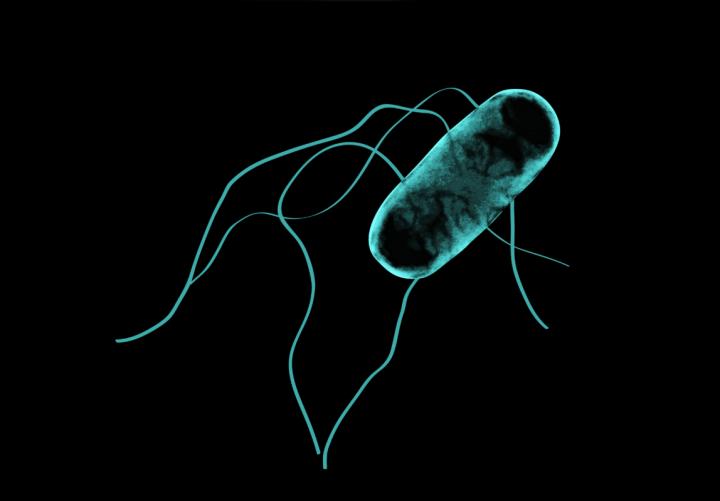
IMAGE

Credit: Jay Hinton group, University of Liverpool


Scientists at the University of Liverpool have taken another step forward in understanding the bacteria that are causing a devastating Salmonella epidemic currently killing around 400,000 people each year in sub-Saharan Africa.

Published in the journal PLOS Biology and representing five years of work, researchers at the Institute of Integrative Biology have completed one of the largest bacterial comparative gene expression studies to date.

Invasive nontyphoidal Salmonellosis (iNTS) occurs when Salmonella bacteria, which normally cause gastrointestinal illness, enter the bloodstream and spread through the human body. The African iNTS epidemic is caused by a variant of Salmonella Typhimurium (ST313) that is resistant to antibiotics and generally affects individuals with immune systems weakened by malaria or HIV.

“Although the genomes of African and global S. Typhimurium are 95% identical, the remaining 5% is very different,” explains study author Dr RocĂ­o Canals Alvarez. “Most of these differences do not cause changes in gene expression, but we need to identify the genetic alterations that affect gene expression and could influence the outcome of a bacterial infection in humans.”

To discover these key genetic differences, the researchers carried out a large-scale comparative transcriptomic approach between the lethal African Salmonella and the common ‘global’ version that causes gastroenteritis.

The researchers grew each of the Salmonella strains in 16 different ways that represented different stages of the human infection process. They also isolated Salmonella from mouse macrophages – immune cells used by the bacteria to hijack the host during infection.

By investigating the transcriptome of African and global S. Typhimurium under these different conditions, they discovered that 677 genes and small RNAs were expressed differently between the two strains.

A parallel proteomic approach identified the gene expression differences that led to alterations at the protein level. Two proof-of-principle experiments revealed the genetic basis of an African Salmonella metabolic defect and discovered a novel bacterial plasmid maintenance system.

To allow researchers all around the world to work with the new information, the new data are presented in a user-friendly online tool called the SalComD23580 gene expression compendium.

“This study takes the power of transcriptomics to a new level for a bacterium. Our ‘functional transcriptomic’ approach is relevant to a broad audience and can be applied to many other organisms. The analytical pipeline and the community data resource aspects are generic and could inspire others to use a similar approach to answer their research questions,” adds Professor Jay Hinton, who led the study.

###

The paper ‘Adding function to the genome of African Salmonella ST313’ is published in PLOS Biology. DOI: https://doi.org/10.1371/journal.pbio.3000059

Media Contact
Simon Wood
[email protected]

Related Journal Article

http://dx.doi.org/10.1371/journal.pbio.3000059

Tags: BacteriologyBiologyGenesInfectious/Emerging Diseases
Share12Tweet8Share2ShareShareShare2

Related Posts

Florida Cane Toad: Complex Spread and Selective Evolution

Florida Cane Toad: Complex Spread and Selective Evolution

February 7, 2026
New Study Uncovers Mechanism Behind Burn Pit Particulate Matter–Induced Lung Inflammation

New Study Uncovers Mechanism Behind Burn Pit Particulate Matter–Induced Lung Inflammation

February 6, 2026

DeepBlastoid: Advancing Automated and Efficient Evaluation of Human Blastoids with Deep Learning

February 6, 2026

Navigating the Gut: The Role of Formic Acid in the Microbiome

February 6, 2026
Please login to join discussion

POPULAR NEWS

  • Robotic Ureteral Reconstruction: A Novel Approach

    Robotic Ureteral Reconstruction: A Novel Approach

    82 shares
    Share 33 Tweet 21
  • Digital Privacy: Health Data Control in Incarceration

    63 shares
    Share 25 Tweet 16
  • Study Reveals Lipid Accumulation in ME/CFS Cells

    57 shares
    Share 23 Tweet 14
  • Breakthrough in RNA Research Accelerates Medical Innovations Timeline

    53 shares
    Share 21 Tweet 13

About

We bring you the latest biotechnology news from best research centers and universities around the world. Check our website.

Follow us

Recent News

Evaluating Pediatric Emergency Care Quality in Ethiopia

TPMT Expression Predictions Linked to Azathioprine Side Effects

Improving Dementia Care with Enhanced Activity Kits

Subscribe to Blog via Email

Success! An email was just sent to confirm your subscription. Please find the email now and click 'Confirm' to start subscribing.

Join 73 other subscribers
  • Contact Us

Bioengineer.org © Copyright 2023 All Rights Reserved.

Welcome Back!

Login to your account below

Forgotten Password?

Retrieve your password

Please enter your username or email address to reset your password.

Log In
No Result
View All Result
  • Homepages
    • Home Page 1
    • Home Page 2
  • News
  • National
  • Business
  • Health
  • Lifestyle
  • Science

Bioengineer.org © Copyright 2023 All Rights Reserved.