• HOME
  • NEWS
  • EXPLORE
    • CAREER
      • Companies
      • Jobs
    • EVENTS
    • iGEM
      • News
      • Team
    • PHOTOS
    • VIDEO
    • WIKI
  • BLOG
  • COMMUNITY
    • FACEBOOK
    • INSTAGRAM
    • TWITTER
Thursday, June 25, 2026
BIOENGINEER.ORG
No Result
View All Result
  • Login
  • HOME
  • NEWS
  • EXPLORE
    • CAREER
      • Companies
      • Jobs
        • Lecturer
        • PhD Studentship
        • Postdoc
        • Research Assistant
    • EVENTS
    • iGEM
      • News
      • Team
    • PHOTOS
    • VIDEO
    • WIKI
  • BLOG
  • COMMUNITY
    • FACEBOOK
    • INSTAGRAM
    • TWITTER
  • HOME
  • NEWS
  • EXPLORE
    • CAREER
      • Companies
      • Jobs
        • Lecturer
        • PhD Studentship
        • Postdoc
        • Research Assistant
    • EVENTS
    • iGEM
      • News
      • Team
    • PHOTOS
    • VIDEO
    • WIKI
  • BLOG
  • COMMUNITY
    • FACEBOOK
    • INSTAGRAM
    • TWITTER
No Result
View All Result
Bioengineer.org
No Result
View All Result
Home NEWS Science News Biology

7,000 years of demographic history in France

Bioengineer by Bioengineer
May 25, 2020
in Biology
Reading Time: 2 mins read
0
IMAGE
Share on FacebookShare on TwitterShare on LinkedinShare on RedditShare on Telegram

IMAGE

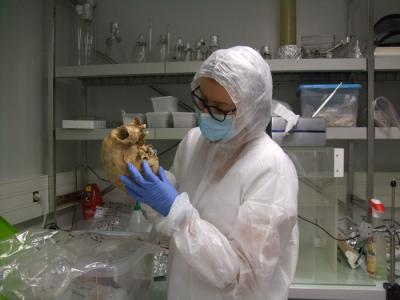
Credit: © Eva-Maria Geigl et Thierry Grange, Institut Jacques Monod (CNRS/Université de Paris)


A team led by scientists from the Institut Jacques Monod (CNRS/Université de Paris)* have shown that French prehistory was punctuated by two waves of migration: the first during the Neolithic period, about 6,300 years ago, the second during the Bronze Age, about 4,200 years ago. This study, published in PNAS on May 25, which looked at the genomes of 243 ancient individuals over 7,000 years, demonstrates how admixture between native hunter-gatherers and the first Anatolian Neolithic migrants, who brought with them a lifestyle based on agriculture, persists to this day in the genomes of French people. Admixture of the Neolithic populations with those from the Pontic steppes**, who arrived 4,200 years ago in what is now France, also left a lasting imprint, with the Y chromosome of the majority of French men still bearing the signature of men from the steppes.

###

Notes

*- This work also involved researchers from the French National Institute for Preventive Archaeological Research (Inrap), and several laboratories: Archaeology and Ancient History: Mediterranean-Europe (CNRS/Université de Strasbourg/Université de Haute Alsace), the Archaeology Research Unit for Mediterranean Societies (CNRS/Université Paul Valéry Montpellier 3/Ministère de la Culture/Inrap), ‘Trajectories. From sedentarisation to the state’ (CNRS/Université Paris 1 Panthéon Sorbonne/Inrap/Ministère de la Culture), Works and Archaeological Research on Cultures, Spaces and Societies (CNRS/ Université Toulouse Jean Jaurès/Ministère de la Culture) and ‘Cultures and Environments Prehistory, Antiquity, Middle Ages’ (CNRS/ Université Côte d’Azur).

**- The people of the western and European part of the Eurasian steppe, which continues eastward through southern Siberia, Kazakhstan, to Mongolia and Manchuria in northern China, probably brought metallurgy to the rest of Europe.

Media Contact
Alexiane Agullo
[email protected]

Tags: ArchaeologyBiologyEvolutionGeneticsOld World
Share12Tweet8Share2ShareShareShare2

Related Posts

Scientists Attack Soybean Cyst Nematode by Starving Its Food Source

June 25, 2026

Decoding the Secret Code of a Crucial Immune Sensor

June 24, 2026

Decades of Data Reveal Which Orcas Call Puget Sound Home

June 24, 2026

Copal Tree Genetics Reveal Tropical Forest Connectivity

June 24, 2026
Please login to join discussion

POPULAR NEWS

  • Saying Goodbye to PGY-6: Pediatric Fellowship Realities

    103 shares
    Share 41 Tweet 26
  • Multi-Hospital Study Reveals Long Covid Burden Is Twice as High as Current Estimates

    92 shares
    Share 36 Tweet 23
  • Detection of EDCs in Breast Milk and Infant Urine Up to Six Months Highlights Early Exposure Risks

    77 shares
    Share 31 Tweet 19
  • New Drug Candidate Developed at McMaster Shows Potential for Treating Brain Cancer

    58 shares
    Share 23 Tweet 15

About

We bring you the latest biotechnology news from best research centers and universities around the world. Check our website.

Follow us

Recent News

New UK Study Reveals Plant-Based Alternatives Have Twice the Additives Compared to Animal Products

FDA Approves New Treatment for HR+, HER2+ Advanced Breast Cancer Following Promising Results from the PATINA Trial by Alliance Foundation

New Study Uncovers Key Factors Driving Water Chemistry in Nanoscale Environments

Subscribe to Blog via Email

Enter your email address to subscribe to this blog and receive notifications of new posts by email.

Join 82 other subscribers
  • Contact Us

Bioengineer.org © Copyright 2023 All Rights Reserved.

Welcome Back!

Login to your account below

Forgotten Password?

Retrieve your password

Please enter your username or email address to reset your password.

Log In
No Result
View All Result
  • Homepages
    • Home Page 1
    • Home Page 2
  • News
  • National
  • Business
  • Health
  • Lifestyle
  • Science

Bioengineer.org © Copyright 2023 All Rights Reserved.