• HOME
  • NEWS
  • EXPLORE
    • CAREER
      • Companies
      • Jobs
    • EVENTS
    • iGEM
      • News
      • Team
    • PHOTOS
    • VIDEO
    • WIKI
  • BLOG
  • COMMUNITY
    • FACEBOOK
    • INSTAGRAM
    • TWITTER
Tuesday, July 7, 2026
BIOENGINEER.ORG
No Result
View All Result
  • Login
  • HOME
  • NEWS
  • EXPLORE
    • CAREER
      • Companies
      • Jobs
        • Lecturer
        • PhD Studentship
        • Postdoc
        • Research Assistant
    • EVENTS
    • iGEM
      • News
      • Team
    • PHOTOS
    • VIDEO
    • WIKI
  • BLOG
  • COMMUNITY
    • FACEBOOK
    • INSTAGRAM
    • TWITTER
  • HOME
  • NEWS
  • EXPLORE
    • CAREER
      • Companies
      • Jobs
        • Lecturer
        • PhD Studentship
        • Postdoc
        • Research Assistant
    • EVENTS
    • iGEM
      • News
      • Team
    • PHOTOS
    • VIDEO
    • WIKI
  • BLOG
  • COMMUNITY
    • FACEBOOK
    • INSTAGRAM
    • TWITTER
No Result
View All Result
Bioengineer.org
No Result
View All Result
Home NEWS Science News

4G network infrastructure could mean fewer accidents by drivers

Bioengineer by Bioengineer
January 17, 2017
in Science News
Reading Time: 2 mins read
0
Share on FacebookShare on TwitterShare on LinkedinShare on RedditShare on Telegram
IMAGE

Credit: University of Bristol

New research that suggests a pre-existing 4G network infrastructure could help drivers make safe decisions in or near accidents has won the 'Best Paper Award' at an international conference.

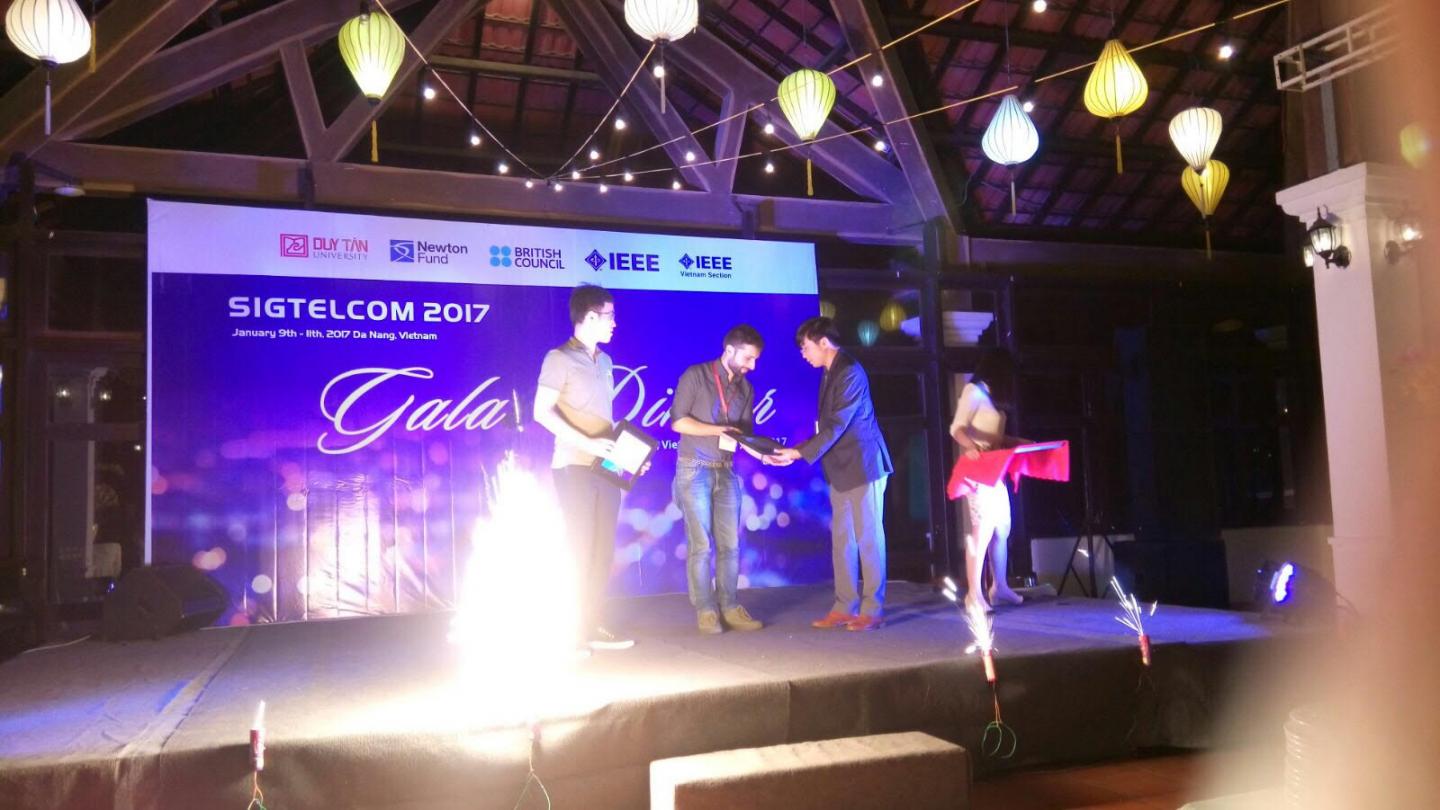
The research carried out by the University of Bristol Communication Systems & Networks (CSN) Group, in collaboration with the Université Blaise Pascal in France, was presented at the international conference Signal Processing, Telecommunications & Computing (SigTelCom) 2017, supported by IEEE, Newton Fund and British Council.

An important factor in vehicle-related accidents is the lack of information and if drivers are aware of their surroundings and road conditions, many accidents could be avoided. As driverless cars begin to gain momentum, improvements will be needed to ensure vehicles receive the correct information. A key question is how high-quality data can be shared by an Intelligent Transportation System (ITS) to help drivers in emergency situations.

The research team suggest a cost-effective solution to this problem is for city-owned base stations to form a single frequency network (SFN), which will enable drivers to have the information they need to make safe decisions in or near accidents.

In order to ensure that transmissions are reliable, tight bounds on the outage probability would need to be developed when the SFN is overlaid on an existing cellular network.

The researchers also present an extremely efficient transmission power allocation algorithm that, for the situations outlined, can reduce the total immediate SFN transmission power by up to 20 times compared to a static uniform power allocation solution. This is particularly important when base stations rely on an off-grid power source, such as batteries.

Dr Andrea Tassi, Senior Research Associate in Wireless Connectivity for Autonomous Vehicles from the Department of Electrical and Electronic Engineering and CSN Group, who led the research, said: "Obtaining high-quality sensor information is critical in vehicle emergencies. We have shown that our proposed power allocation (PA) model can help to significantly reduce the transmission power of the proposed network while target signal-to-noise and interference ratio (SINR) outage constraints are met. With cars receiving reliable information, our research could improve road safety in future intelligent transportation systems."

The University's CSN Group is part of the Innovate UK-funded projects, VENTURER and FLOURISH, and is playing a leading role in connectivity for automotive applications.

###

Paper:

'Wireless Vehicular Networks in Emergencies: A Single Frequency Network Approach' by Andrea Tassi, Malcolm Egan, Robert J. Piechocki and Andrew Nix, presented at SigTelCom 2017.

Media Contact

Joanne Fryer
[email protected]
44-011-733-17276
@BristolUni

http://www.bristol.ac.uk

############

Story Source: Materials provided by Scienmag
Share12Tweet8Share2ShareShareShare2

Related Posts

Flame retardant BDE-209 targets molecularly linked to ulcerative colitis

July 6, 2026
Ultra-high frequency particle impacts mimic rockbursts to shatter hard rock

Ultra-high frequency particle impacts mimic rockbursts to shatter hard rock

July 6, 2026

Kidney transplant outcomes in older adults studied by German researchers

July 6, 2026

Embodied cognition yields interpretable trajectory predictions for autonomous systems.

July 6, 2026
Please login to join discussion

POPULAR NEWS

  • Detection of EDCs in Breast Milk and Infant Urine Up to Six Months Highlights Early Exposure Risks

    77 shares
    Share 31 Tweet 19
  • New Drug Candidate Developed at McMaster Shows Potential for Treating Brain Cancer

    58 shares
    Share 23 Tweet 15
  • Saying Goodbye to PGY-6: Pediatric Fellowship Realities

    103 shares
    Share 41 Tweet 26
  • KTU Researchers Explore Ultrasound’s Role in Enhancing Blood Flow Beyond Diagnostics

    53 shares
    Share 21 Tweet 13

About

We bring you the latest biotechnology news from best research centers and universities around the world. Check our website.

Follow us

Recent News

Flame retardant BDE-209 targets molecularly linked to ulcerative colitis

Ultra-high frequency particle impacts mimic rockbursts to shatter hard rock

Kidney transplant outcomes in older adults studied by German researchers

Subscribe to Blog via Email

Enter your email address to subscribe to this blog and receive notifications of new posts by email.

Join 83 other subscribers
  • Contact Us

Bioengineer.org © Copyright 2023 All Rights Reserved.

Welcome Back!

Login to your account below

Forgotten Password?

Retrieve your password

Please enter your username or email address to reset your password.

Log In
No Result
View All Result
  • Homepages
    • Home Page 1
    • Home Page 2
  • News
  • National
  • Business
  • Health
  • Lifestyle
  • Science

Bioengineer.org © Copyright 2023 All Rights Reserved.