A framework for identifying the most vulnerable marine species will boost global conservation and policy efforts against anthropogenic climate change.
Credit: The University of Queensland
A framework for identifying the most vulnerable marine species will boost global conservation and policy efforts against anthropogenic climate change.
University of Queensland researchers and global marine experts developed the framework by reviewing marine biology literature and categorising a wide range of threats – from climate change, to pollution, to fishing – faced by more than 45,000 species.
Dr Nathalie Butt from UQ’s School of Earth and Environmental Sciences said the research revealed the most endangered species from all threats.
“Molluscs, corals, and echinoderms – hard or spiny creatures such sea urchins – are truly feeling the impacts in our oceans, facing a diverse range of threats,” Dr Butt said.
“They’re affected by fishing and bycatch, pollution and climate change.
“Flowerpot corals – an incredibly fragile but stunning form of coral found in the Pacific and Indian Oceans and the Persian Sea – is one group of species that is especially affected by climate change-related stressors, such as ocean acidification.
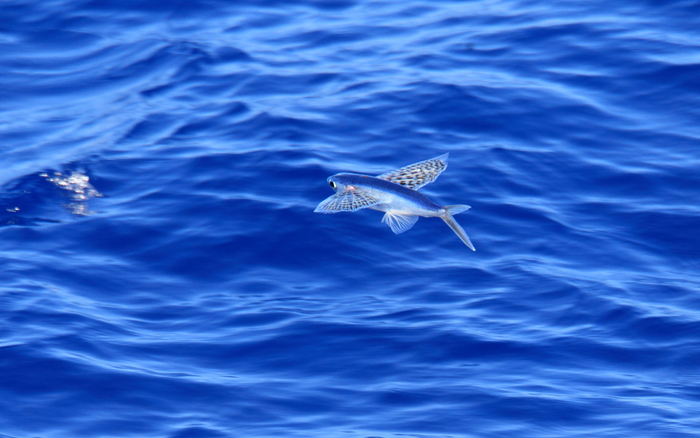
“We also discovered that starfish, sea snails and flying fish are increasingly vulnerable to climate change-related stressors, all of which can be found in oceans around the world.
“Roughy fishes are quite vulnerable to the effects of pollution, including organic, inorganic, and nutrient pollution, which was quite a surprise, as they live at a range of depths, including deep sea, which demonstrates how far the effects of pollution are spreading.”
Dr Butt said the accelerating rate of environmental change was a motivating factor for the development of the framework.
“The environment is changing so quickly because of human actions, and we need to use all information available to help us assess which animals are at risk and why, and to help develop the most appropriate ways to protect and manage them – that’s where this framework comes in,” she said.
“This framework is unique as it uses biological characteristics or traits of marine species to assess their vulnerability to specific stressors or threats with the greatest potential impact, such as pollution, fishing, and of course, climate change.”
Fellow researcher Associate Professor Carissa Klein said this information would allow users to make more informed decisions about how to allocate and prioritise their resources to protect the world’s most vulnerable species.
“Conservationists can use the framework to prioritise resources for their protection and determine which management actions would best protect particular species or groups of species and where,” Dr Klein said.
“We assessed all species and all threats that we know about now across the planet.
“The exciting thing is that we built the framework so that we could accommodate new information, whether that be about new species or information about threatening processes.
“This means that the work can also be applied in particular places to protect the ocean, using more detailed information about the species, and their threats, in that place.”
The project was jointly researched with the University of California Santa Barbara (UCSB) and involved global taxonomic experts from around the world.
The research has been published in Ecosphere (doi.org/10.1002/ecs2.3919).
Journal
Ecosphere
DOI
10.1002/ecs2.3919
Subject of Research
Animals
Article Title
A trait-based framework for assessing the vulnerability of marine species to human impacts