• HOME
  • NEWS
  • EXPLORE
    • CAREER
      • Companies
      • Jobs
    • EVENTS
    • iGEM
      • News
      • Team
    • PHOTOS
    • VIDEO
    • WIKI
  • BLOG
  • COMMUNITY
    • FACEBOOK
    • INSTAGRAM
    • TWITTER
Thursday, May 21, 2026
BIOENGINEER.ORG
No Result
View All Result
  • Login
  • HOME
  • NEWS
  • EXPLORE
    • CAREER
      • Companies
      • Jobs
        • Lecturer
        • PhD Studentship
        • Postdoc
        • Research Assistant
    • EVENTS
    • iGEM
      • News
      • Team
    • PHOTOS
    • VIDEO
    • WIKI
  • BLOG
  • COMMUNITY
    • FACEBOOK
    • INSTAGRAM
    • TWITTER
  • HOME
  • NEWS
  • EXPLORE
    • CAREER
      • Companies
      • Jobs
        • Lecturer
        • PhD Studentship
        • Postdoc
        • Research Assistant
    • EVENTS
    • iGEM
      • News
      • Team
    • PHOTOS
    • VIDEO
    • WIKI
  • BLOG
  • COMMUNITY
    • FACEBOOK
    • INSTAGRAM
    • TWITTER
No Result
View All Result
Bioengineer.org
No Result
View All Result
Home NEWS Science News Health

35-second scan could pick the next sporting champion

Bioengineer by Bioengineer
August 4, 2020
in Health
Reading Time: 3 mins read
0
IMAGE
Share on FacebookShare on TwitterShare on LinkedinShare on RedditShare on Telegram

IMAGE

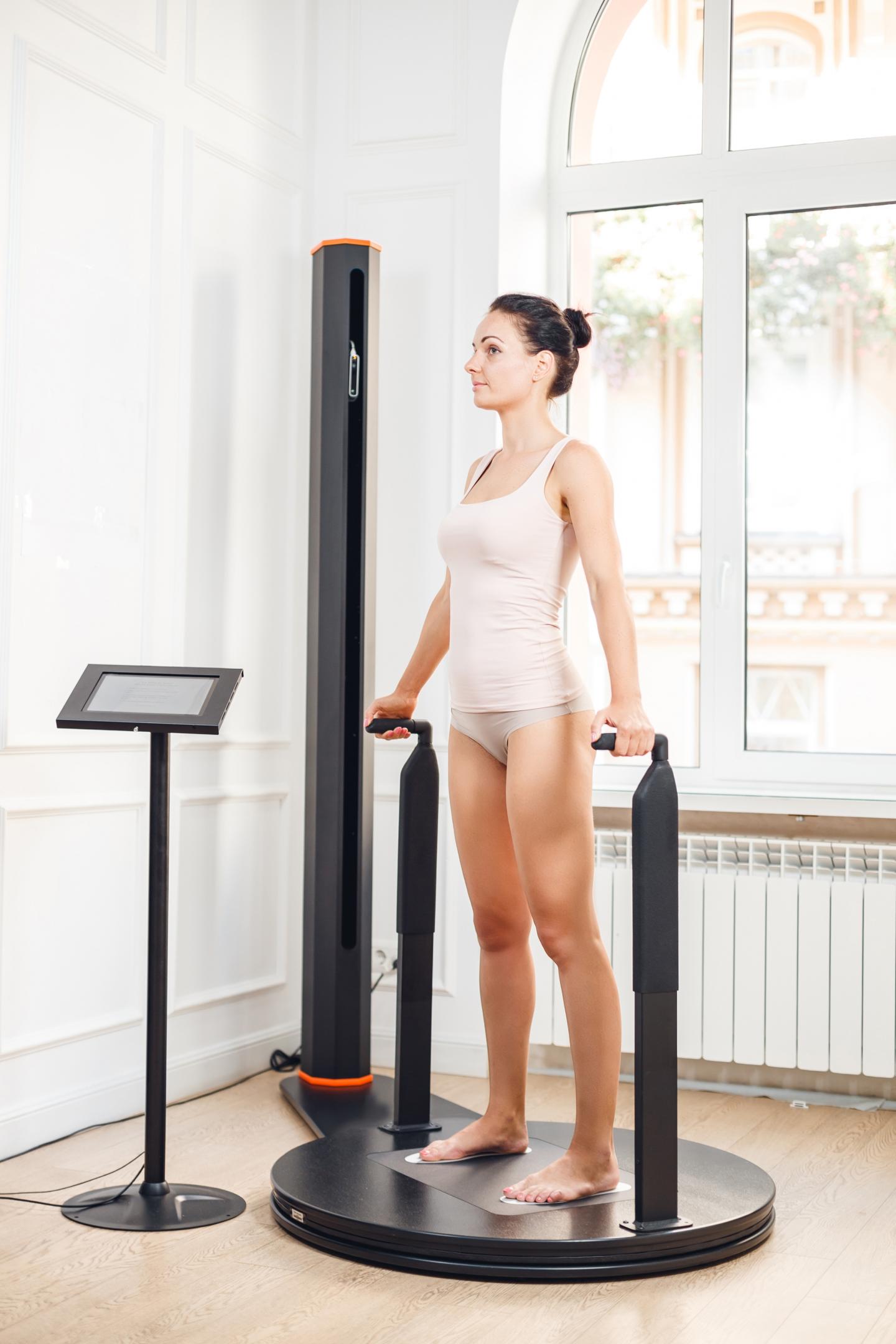
Credit: By Ivan River

How hard is it to pick the next Usain Bolt, Ian Thorpe or Anna Meares? Finding a world champion often falls to talent scouts and involves years of hard work, but could it be as simple as a 35-second body scan?

A new paper by University of South Australia sports scientist Professor Grant Tomkinson analyses how a $7500 3D portable whole-body scanner can identify sporting talent for particular codes and monitor body changes in athletes to ensure they are performing at their peak.

Prof Tomkinson, an adjunct researcher at UniSA based in the United States, has tested the reliability of a 3D whole-body scanner to measure athletes’ shape and composition, comparing it with X-rays, MRIs and manual tests, which involve bone calipers and girth tapes.

Anthropometry has been used for decades to identify talent, improve sports performance and health, but manual assessments and x-rays have their drawbacks, Prof Tomkinson says.

“3D scanning is less invasive than manual tests, and because it is fast, large samples can be easily measured, there is no need for physical contact, it doesn’t require a lot of expertise and it can measure body surface areas and volumes,” he says. “And, unlike x-rays, it doesn’t emit any potentially harmful radiation.”

Prof Tomkinson and a team from the University of North Dakota scanned 49 athletes (30 women and 19 men), subjecting them to a series of 35-second scans, extracting millions of measurements within 2 mm accuracy.

All that is required is a 3D camera, a turntable and measurement extraction software.

“3D scans measure both cross-sectional areas and volumes and surface areas so they are generally better predictors of sporting success than manual tests,” he says.

In a few seconds a 3D body scan can measure the length of an arm and leg, the circumference of a thigh, or a body girth, as well as detect any asymmetries, such as scoliosis, or different leg lengths, which can affect the body’s musculature.

One of the main ways to select athletes for specific sports is to compare their body size and shape with the general population. For example, 3D body scans of elite rowers show that the best male rowers have much larger chests than the general population and elite female rowers have larger thighs than most women.

Similarly, marathon runners have a very defined physique – they are shorter, lighter, have longer legs relative to their torso and are leaner than the average person.

3D whole-body scanning has recently been used in several large anthropometric surveys of military personnel and the general population, but there is scant reliable anthropometric data on athletes beyond traditional manual measures, Prof Tomkinson says.

“Tracking changes in whole body and lean mass using 3D scanning would be an inexpensive and safer alternative to x-rays and magnetic resonance imaging (MRI) and could potentially be used to identify talent earlier and refine training to improve performance,” Prof Tomkinson says.

###

Media Contact
Candy Gibson
[email protected]

Original Source

https://www.unisa.edu.au/Media-Centre/Releases/2020/35-second-scan-could-pick-the-next-sporting-champion/

Related Journal Article

http://dx.doi.org/10.1080/1091367X.2020.1791124

Tags: ExerciseMedicine/HealthMusculatureSports/Recreation
Share12Tweet8Share2ShareShareShare2

Related Posts

Nonlinear Atomic Tunneling Enhanced by Bright Squeezed Vacuum

May 21, 2026

Genetic Insights from 619,372 Metabolic Profiles

May 21, 2026

Bacterial STIs Hit Record Levels in Europe as Congenital Syphilis Cases Nearly Double

May 21, 2026

Oral Semaglutide Lowers Cardiometabolic Risks in Obesity

May 21, 2026
Please login to join discussion

POPULAR NEWS

  • blank

    New Study Reveals Plants Can Detect the Sound of Rain

    733 shares
    Share 292 Tweet 183
  • ESMO 2025: mRNA COVID Vaccines Enhance Efficacy of Cancer Immunotherapy

    304 shares
    Share 122 Tweet 76
  • Research Indicates Potential Connection Between Prenatal Medication Exposure and Elevated Autism Risk

    846 shares
    Share 338 Tweet 212
  • Breastmilk Balances E. coli and Beneficial Bacteria in Infant Gut Microbiomes

    58 shares
    Share 23 Tweet 15

About

We bring you the latest biotechnology news from best research centers and universities around the world. Check our website.

Follow us

Recent News

Innovative Reusable Brick Walls Revolutionize Construction Industry

Nonlinear Atomic Tunneling Enhanced by Bright Squeezed Vacuum

Label-Free Super-Resolution Imaging of Live Cells

Subscribe to Blog via Email

Enter your email address to subscribe to this blog and receive notifications of new posts by email.

Join 82 other subscribers
  • Contact Us

Bioengineer.org © Copyright 2023 All Rights Reserved.

Welcome Back!

Login to your account below

Forgotten Password?

Retrieve your password

Please enter your username or email address to reset your password.

Log In
No Result
View All Result
  • Homepages
    • Home Page 1
    • Home Page 2
  • News
  • National
  • Business
  • Health
  • Lifestyle
  • Science

Bioengineer.org © Copyright 2023 All Rights Reserved.