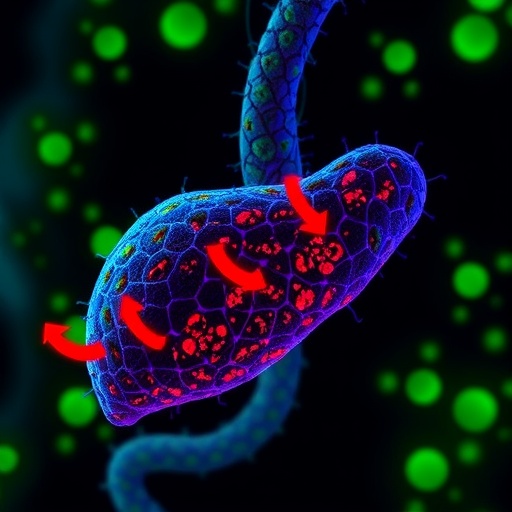
A team of researchers in China has uncovered a previously unrecognized molecular pathway that drives metabolic dysfunction-associated steatotic liver disease (MASLD), the fatty liver condition now affecting roughly a third of adults worldwide. The study, published in the journal Molecular Genetics and Genomics, reveals how a transcription factor called ZNF143 suppresses the liver cell’s ability to clear damaged mitochondria, and identifies the downstream ubiquitin machinery and ion channel that carry out that damage. The findings, which were supported by grants from the Natural Science Foundation of Hunan Province, suggest that a pathway best known from cancer and vascular biology may become a therapeutic target for one of the most common metabolic disorders on the planet.
MASLD, previously known as non-alcoholic fatty liver disease, has become the most prevalent chronic liver condition globally, with an estimated worldwide prevalence of approximately 38 percent based on recent systematic reviews. It ranges from simple fat accumulation to inflammation and fibrosis and can progress to cirrhosis and hepatocellular carcinoma. There are few approved pharmacological treatments, and understanding the underlying molecular drivers is a priority for researchers. Mitochondrial dysfunction has long been recognized as a central feature of MASLD. Mitochondria are the energy factories of the hepatocyte, and when they fail, fatty acids accumulate inside the cell and inflammatory damage follows. Mitophagy — the selective autophagic degradation of damaged mitochondria — is the cell’s quality control system for keeping its mitochondrial network healthy. Earlier work from other groups has shown that restoring mitophagy, for instance with quercetin or cyanidin-3-O-glucoside, can improve fatty liver disease in animal models, and that impaired mitophagy is a mechanistic biomarker in patients with the disease. But the regulatory circuits that shut mitophagy down during MASLD development have remained incompletely mapped.
The new study, led by Mei Long of the Department of Rheumatology and Immunology at the First Affiliated Hospital of Hengyang Medical School, University of South China, together with Kewei Tan of the No. 922 Hospital of the People’s Liberation Army Joint Logistics Support Force and Yujie Dong of the Department of Ultrasound Medicine at the same institution, set out to fill that gap. The researchers first profiled ZNF143, a zinc finger transcription factor that binds specific GC-rich DNA motifs and acts both as an activator and repressor of transcription. ZNF143 is best studied in cancer biology, where it promotes glioma growth through KPNA2-mediated Hippo signalling and supports breast cancer cell survival through the NQO1–p53–Beclin1 axis under metabolic stress. Prior work by the same team had already implicated ZNF143 in fatty liver disease, showing that it inhibits hepatocyte mitophagy by upregulating the long non-coding RNA NEAT1 and activating the ROCK2 pathway. The current study extends that work by identifying an entirely separate, protein-level arm of the same transcription factor’s suppressive effect on mitochondrial quality control.
To test their hypothesis, the researchers used two complementary models of MASLD. The first was an in vivo model in which C57BL/6J mice were fed a high-fat diet for 16 weeks to induce hepatic steatosis and metabolic stress. The second was an in vitro model in which Huh-7 human hepatoma cells, a standard hepatic cell line, were exposed to free fatty acids to mimic lipid overload. Histological changes were assessed by hematoxylin and eosin staining, lipid accumulation was quantified by Oil Red O staining, and mitochondrial damage was assessed with JC-1 staining to monitor mitochondrial membrane potential and transmission electron microscopy to visualize mitochondrial ultrastructure. Serum and tissue markers of liver injury, including alanine aminotransferase, aspartate aminotransferase, total cholesterol and triglycerides, were measured to gauge the severity of hepatic dysfunction.
When the team examined the high-fat-diet-fed mice and the free-fatty-acid-treated Huh-7 cells, they found that ZNF143 was significantly upregulated in both settings, consistent with a role for this transcription factor in disease progression rather than simply a bystander effect. When the researchers knocked down ZNF143 using RNA interference, the consequences were striking: lipid accumulation in the liver decreased, mitochondrial damage was reduced, and liver injury markers fell. The mechanism behind this improvement was traced to a restoration of hepatocyte mitophagy, confirming that ZNF143 acts as a brake on mitochondrial quality control during MASLD.
The next step was to identify the transcriptional target through which ZNF143 exerts its effect. Using chromatin immunoprecipitation, the researchers demonstrated that ZNF143 binds directly to the promoter region of SMURF1, a HECT-type E3 ubiquitin ligase known for its role in ubiquitinating and degrading diverse substrate proteins in cancer, vascular remodeling and inflammatory signalling. Dual-luciferase reporter assays confirmed that this binding functionally activates SMURF1 transcription. In other words, ZNF143 does not merely correlate with MASLD; it actively turns up the expression of a ubiquitin ligase that then acts downstream.
SMURF1 has a complicated history in liver biology. Previous studies have shown that deleting Smurf1 attenuates liver steatosis in mice by stabilizing p53, and that Smurf1 aggravates fatty liver disease by stabilizing SREBP-1c, a master regulator of lipid synthesis, in an E3-activity-independent manner. Conversely, another study reported that SMAD-specific E3 ubiquitin protein ligase 1 can be protective in alcoholic steatohepatitis. The current study adds a new substrate to SMURF1’s growing portfolio in hepatic disease and clarifies how this E3 ligase suppresses mitochondrial quality control. Using co-immunoprecipitation, the team showed that SMURF1 physically interacts with TRPV1, the transient receptor potential vanilloid type 1 ion channel, and that SMURF1 ubiquitinates TRPV1, leading to its proteasomal degradation. TRPV1, the receptor activated by capsaicin, the pungent compound in chili peppers, has long been linked to metabolic health. Activation of TRPV1 by dietary capsaicin improves visceral fat remodelling through calcium influx, and TRPV1 activation prevents fatty liver disease in mice through upregulation of the mitochondrial uncoupling protein UCP2. By degrading TRPV1, SMURF1 removes a protective channel that supports mitochondrial and metabolic homeostasis in the hepatocyte.
The researchers then performed epistasis experiments to confirm the hierarchy of the pathway. When they knocked down TRPV1 in free-fatty-acid-treated Huh-7 cells that had already had ZNF143 depleted, the beneficial effect of ZNF143 knockdown on mitophagy was reversed. Similarly, overexpressing SMURF1 in ZNF143-depleted cells abolished the improvement in mitochondrial clearance. These results established that ZNF143 acts upstream of SMURF1 and TRPV1 in the same linear pathway: ZNF143 turns on SMURF1 transcription, SMURF1 ubiquitinates TRPV1 and targets it for degradation, and loss of TRPV1 suppresses mitophagy, leading to mitochondrial dysfunction and fat accumulation.
The significance of the finding is twofold. First, it adds to the emerging view that MASLD is fundamentally a disorder of impaired mitochondrial turnover, not simply one of excessive lipid synthesis. Multiple groups have shown that PINK1/Parkin-mediated mitophagy relieves fatty liver disease and that reversing Parkin-related mitophagy attenuates the condition. The current work identifies ZNF143 as a transcriptional switch that turns this quality control system off, providing a mechanistic explanation for why mitophagy declines during disease progression. Second, the study places TRPV1 — a channel best known from pain biology and dietary capsaicin research — at the centre of hepatic mitochondrial homeostasis. Recent work has implicated TRPV1 in mitophagy regulation in other contexts as well, including a 2025 report showing that TRPV1 inhibits both ferroptosis and mitophagy in heart failure through SFXN2, and a 2020 study showing that blocking TRPV1 promotes terminal mitophagy in multiple myeloma. The context-dependent role of TRPV1 in mitophagy across different tissues remains an open question, but the current study firmly establishes it as a downstream effector of ZNF143 in hepatocytes.
Therapeutically, the pathway offers several potential points of intervention. Small-molecule inhibitors of ZNF143 activity have already been developed for cancer applications, including YPC-21661 and YPC-22026, which were shown to inhibit ZNF143 activity both in vitro and in vivo. Inhibitors of SMURF1 have been designed for pulmonary arterial hypertension, suggesting that pharmacological tools against this E3 ligase could be repurposed for metabolic liver disease. Alternatively, TRPV1 agonists such as capsaicin or its analogues could theoretically compensate for the loss of TRPV1 protein caused by SMURF1-mediated degradation, consistent with epidemiological and experimental data suggesting that capsaicin may promote vascular and metabolic health. The authors note that the study’s findings, generated in mice and in a human hepatoma cell line, will need to be validated in human tissue samples and in additional model systems before any clinical translation.
The research was performed in accordance with guidelines approved by the Medical Ethics Committee of the First Affiliated Hospital of University of South China, and all authors declare no conflict of interest. The datasets generated and analysed during the study are available within the published article. As global rates of MASLD continue to climb in parallel with obesity and type 2 diabetes, identifying transcription factors such as ZNF143 that govern mitochondrial quality control provides a mechanistic framework for understanding disease progression and offers a roadmap for developing targeted therapies that restore the hepatocyte’s ability to clear its damaged mitochondria before steatosis spirals into inflammation, fibrosis and cancer.
Subject of Research: The role of the transcription factor ZNF143 in suppressing hepatocyte mitophagy and driving MASLD progression through transcriptional activation of SMURF1 and subsequent ubiquitination and degradation of TRPV1.
Subject of Research: Biology
Article Title: ZNF143 suppresses mitophagy to drive MASLD progression by regulating SMURF1/TRPV1 axis
Article References: Long, M., Tan, K., & Dong, Y. (2026). ZNF143 suppresses mitophagy to drive MASLD progression by regulating SMURF1/TRPV1 axis. Molecular Genetics and Genomics, 301(1), Article 169. https://doi.org/10.1007/s00438-026-02501-4
Image Credits: AI Generated
DOI: 10.1007/s00438-026-02501-4
Keywords: ZNF143, SMURF1, TRPV1, mitophagy, MASLD, fatty liver disease, mitochondrial dysfunction, ubiquitination, hepatocyte, transcription factor
Cite Scienmag News
APA MLA Chicago
Drew Townsend. (September 8, 2026). ZNF143 drives fatty liver disease by suppressing mitophagy through SMURF1/TRPV1. Scienmag. https://scienmag.com/znf143-drives-fatty-liver-disease-by-suppressing-mitophagy-through-smurf1-trpv1/
Drew Townsend. “ZNF143 drives fatty liver disease by suppressing mitophagy through SMURF1/TRPV1.” Scienmag, 8 September 2026, https://scienmag.com/znf143-drives-fatty-liver-disease-by-suppressing-mitophagy-through-smurf1-trpv1/. Accessed 8 September 2026.
Drew Townsend. “ZNF143 drives fatty liver disease by suppressing mitophagy through SMURF1/TRPV1.” Scienmag. September 8, 2026. https://scienmag.com/znf143-drives-fatty-liver-disease-by-suppressing-mitophagy-through-smurf1-trpv1/
Copy citation Download RIS
Tags: fatty liver diseaseion channels in hepatocytesMASLDmetabolic disorder mechanismsmetabolic disorder therapeuticsmitochondrial dysfunctionmitophagy suppressionmolecular pathways in liver diseasenon-alcoholic fatty liver diseaseSMURF1therapeutic targets for fatty liverTRPV1ubiquitin machineryZNF143