Credit: OHSU
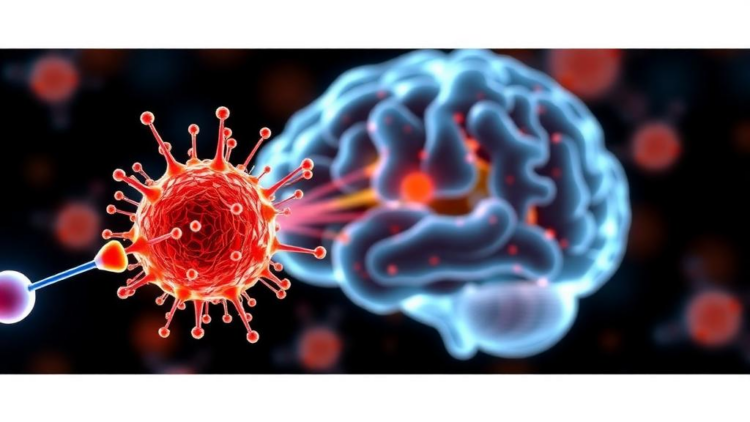
PORTLAND, Oregon – Though the Zika virus is widely known for a recent outbreak that caused children to be born with microencephaly, or having a small head, and other malformations, scientists have struggled to explain how the virus affects a baby as it grows in the womb.
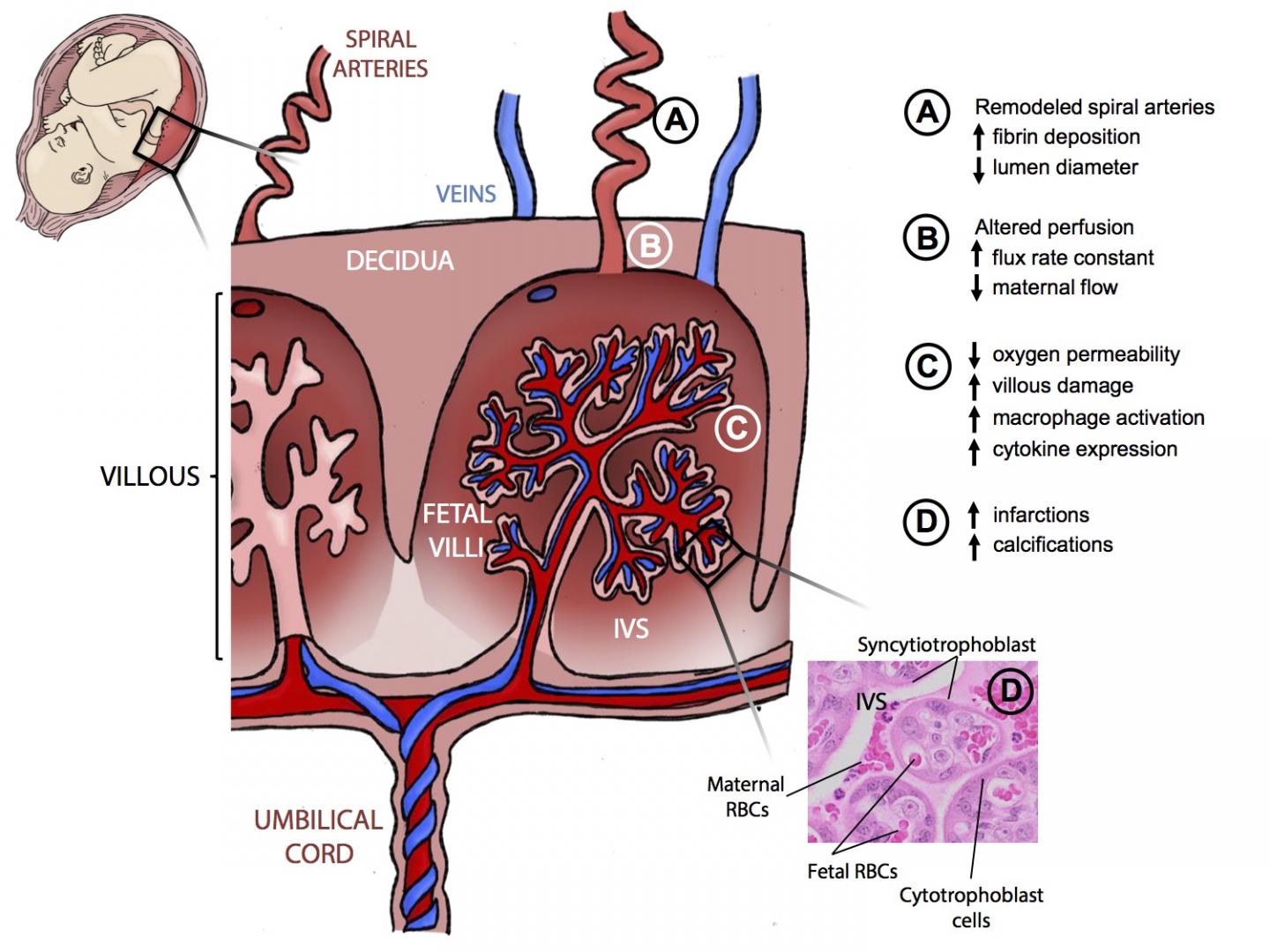
Now, new research suggests the virus damages a pregnant mother's placenta, an organ inside a woman's uterus that helps protect and care for a growing baby. A paper published in Nature Communications describes how Zika virus infection in five pregnant rhesus monkeys caused placental tissues to become thickened and inflamed.
As a result, the researchers saw less oxygen being transported across the placenta and to the baby. Decreased oxygen levels in a placenta can impair fetal development and ultimately the health of a baby after its born.
"The role of a placenta is to protect and provide nutrition to a growing baby for optimum health," said one of the paper's corresponding authors, Antonio Frias, M.D., an obstetrician and gynecologist at Oregon Health & Science University. "It's concerning how much damage the Zika virus can do to a placenta."
The paper's two other corresponding authors are associate professor Daniel Streblow, Ph.D., and assistant professor Alec Hirsch, Ph.D., both of whom lead molecular microbiology and immunology research at the OHSU Vaccine and Gene Therapy Institute. Streblow also leads pathobiology and immunology research at the Oregon National Primate Research Center and is a professor of molecular microbiology and immunology within the OHSU School of Medicine.
The reseachers used a non-invasive, in vivo MRI technique to evaluate oxygen levels inside the placenta and oxygen flow between mother and baby. They found that, in monkeys that were infected with Zika early in their pregnancies, the rate of oxygen transport through the placenta decreased about 10-fold.
The OHSU research team also determined the Zika virus can readily pass from mother to baby and remain in the baby long-term, leading to a chronic infection in utero. These findings may provide important insights into the mechanisms by which Zika virus causes disease during pregnancy.
By better understanding how both mother and child become infected with and affected by the Zika virus, researchers can determine how to prevent its infection and disease. The OHSU research team is using the knowledge gained from this study to help develop a safe and effective Zika vaccine for use during pregnancy.
###
This research was supported by the Oregon National Primate Research Center Core grant P51 OD011092 funded by the National Institutes of Health, as well as National Institutes of Health grants R21-HD091032 (DNS) and R01-HD086331 (AEF).
REFERENCE: Alec J. Hirsch, Victoria H.J. Roberts, Peta L. Grigsby, Nicole Haese, Matthias C. Schabel, Xiaojie Wang, Jamie O. Lo, Zheng Liu, Christopher D. Kroenke, Jessica L. Smith, Meredith Kelleher, Rebecca Broeckel, Craig N. Kreklywich, Christopher J. Parkins, Michael Denton, Patricia Smith, Victor DeFilippis, William Messer, Jay A. Nelson, Jon D. Hennebold, Marjorie Grafe, Lois Colgin, Anne Lewis, Rebecca Ducore, Tonya Swanson, Alfred W. Legasse, Michael K. Axthelm, Rhonda MacAllister, Ashlee V. Moses, Terry K. Morgan, Antonio E. Frias and Daniel N. Streblow, "Zika Virus Infection in Pregnant Rhesus Macaques Causes Placental Dysfunction and Immunopathology," Nature Communications, Jan. 17, 2018, DOI: 10.1038/s41467-017-02499-9, https://www.nature.com/articles/s41467-017-02499-9.
Media Contact
Franny White
[email protected]
503-494-4158
@ohsunews
http://www.ohsu.edu
Original Source
https://news.ohsu.edu/2018/01/17/zika-virus-damages-placenta-which-may-explain-malformed-babies http://dx.doi.org/10.1038/s41467-017-02499-9