Engineers have long sought ways to squeeze more cooling power out of passive thermal systems, those that move heat without pumps, fans, or any moving parts at all. A new computational study published in Results in Engineering takes this pursuit to an unusual level of complexity, combining a zigzag-corrugated wall, a water-saturated porous metal-like matrix, a strong magnetic field, and a cutting-edge coolant loaded with three different kinds of nanoparticles. The result is a detailed map of how these effects interact, along with a machine-learning surrogate that can predict the system’s performance almost instantaneously.
The research team, led by Syed M. Hussain and colleagues, simulated steady magnetohydrodynamic natural convection inside a rectangular cavity whose heated left wall is shaped into a periodic zigzag pattern, while the opposite vertical wall is cooled. The cavity is completely filled with a porous medium, and the working fluid is a so-called ternary hybrid nanofluid: water seeded with copper oxide (CuO), aluminum oxide (Al2O3), and silver (Ag) nanoparticles. Each material brings a complementary property to the mixture. Silver has by far the highest thermal conductivity at 429 watts per meter-kelvin and an enormous electrical conductivity of 6.3 times ten to the seventh siemens per meter, but it is dense and expensive. CuO offers good conductivity at moderate density and low cost, while Al2O3 is the lightest and cheapest of the three. Blending all three lets designers tune thermal conductivity, electrical conductivity, viscosity, and density in ways a single-particle fluid cannot match.
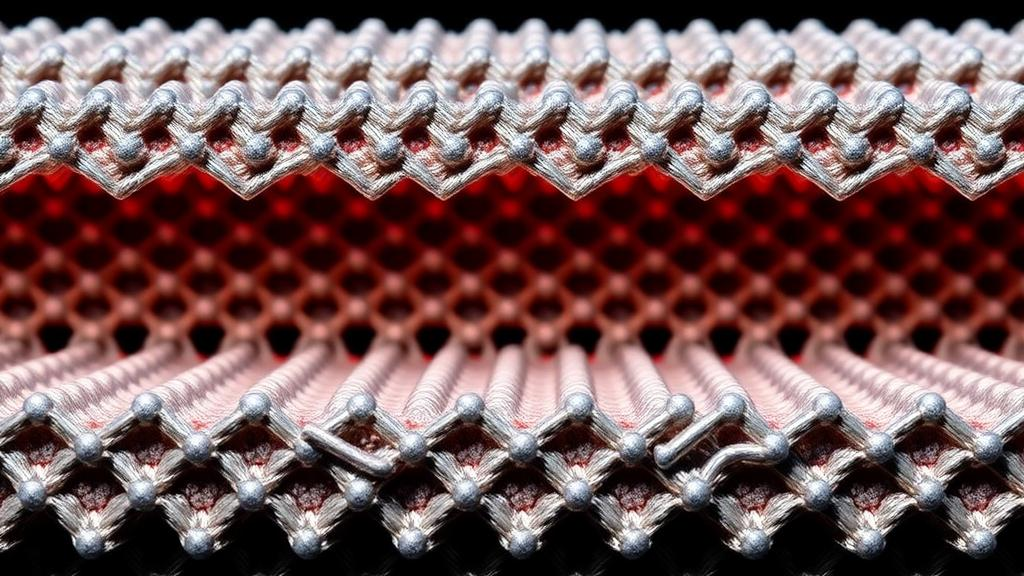
The physics of the problem is governed by five dimensionless parameters. The Rayleigh number measures the strength of buoyancy relative to viscous and thermal diffusion forces; the Hartmann number captures the damping imposed by an externally applied magnetic field; the Darcy number describes how easily fluid can move through the porous matrix; the nanoparticle volume fraction determines how much the fluid’s thermophysical properties are altered; and the corrugation number counts the number of complete zigzag periods along the heated wall. The team compared a perfectly flat wall with a wall carrying sixteen corrugations, with a fixed amplitude-to-height ratio of 0.05 and a pitch-to-height ratio of 0.25, to isolate exactly what the geometric texture contributes.
Solving the coupled equations of mass, momentum, and energy in such a geometry is far from trivial. The authors used the Galerkin finite element method implemented in COMSOL Multiphysics, modeling the porous resistance with the Darcy-Brinkman formulation. They justified neglecting the quadratic Forchheimer inertial drag term by verifying that the pore Reynolds number remained far below unity across the entire parameter range studied. A careful grid convergence analysis showed that an extra-fine hybrid mesh of roughly 176,000 degrees of freedom was sufficient, and the model was validated against published benchmark solutions, with average Nusselt number deviations below 0.6 percent at a Rayleigh number of ten thousand and below 3 percent at one hundred thousand.
The simulations reveal a striking synergy between the nanoparticles and the corrugated wall. Raising the Rayleigh number from one thousand to one hundred thousand increased the average Nusselt number by 59.1 percent in the smooth cavity but by 68.0 percent in the corrugated one. Even more dramatically, increasing the total nanoparticle volume fraction from zero to five percent boosted heat transfer by only 9.2 percent in the smooth cavity, yet by a remarkable 86.6 percent in the zigzag cavity. The reason lies in how the corrugations repeatedly break up and renew the thermal boundary layer at each crest and valley, allowing the enhanced conductivity of the nanofluid to be exploited far more effectively than along a flat wall where the boundary layer simply thickens undisturbed.
The magnetic field tells a different story. As the Hartmann number rises from zero to fifty, the Lorentz force generated by the interaction of the induced electric currents with the applied field opposes the buoyancy-driven circulation, collapsing the average Nusselt number by about 85 percent in the smooth cavity and 82.9 percent in the corrugated one. Yet the corrugated geometry retains a partial advantage: even when the primary vortex is largely suppressed, local recirculation cells trapped within the corrugation valleys persist and maintain a semi-convective character, whereas the smooth cavity approaches a nearly pure conduction regime. In effect, the zigzag texture acts as a geometric amplifier that softens the blow of magnetic damping while magnifying the benefit of the conductive nanoparticles.
Heat transfer, however, is only half the picture. The study also performs a full second-law analysis, tracking entropy generated by thermal gradients, viscous friction, and magnetic effects. Stronger buoyancy raises both heat transfer and irreversibility, with total entropy generation climbing from about 2.3 to 9.3 as the Rayleigh number increases. Raising the Hartmann number cuts entropy generation by roughly 75 percent, but the heat-transfer loss is even steeper, so an ecological coefficient of performance, defined as the ratio of average Nusselt number to total entropy generation, falls sharply. The entropy contours show that thermal irreversibility dominates throughout the enclosure, while viscous and magnetic contributions concentrate near the corrugated wall where velocity gradients are steepest, illustrating the classic engineering trade-off between maximizing transport and minimizing thermodynamic loss.
The most forward-looking element of the work is its artificial neural network surrogate. The authors trained a feed-forward multilayer perceptron with five inputs, the Rayleigh number, Hartmann number, volume fraction, Darcy number, and corrugation number, to predict two outputs: the average Nusselt number and the total entropy generation. Using a Levenberg-Marquardt training algorithm on a database of converged finite element solutions, split into training, validation, and independent test sets, the network achieved a coefficient of determination of 0.99998 on both training and testing data, with a minimum validation error of about 4.72 times ten to the minus ninth at epoch 286. This means that once the high-fidelity simulations are done, designers can explore thousands of parameter combinations in seconds rather than hours, provided they stay within the range of the training database.
The authors are careful to spell out the limits of their idealized model. The simulations assume a two-dimensional, single-phase Newtonian fluid in local thermal equilibrium with the porous matrix, dilute nanoparticle loading capped at five percent, and laminar flow. Real devices such as packed-bed solar collectors, metal-foam heat exchangers, or geothermal reservoirs can exhibit thermal non-equilibrium between solid and fluid, nanoparticle agglomeration over time, and eventually turbulent behavior, none of which are captured here. The reported trends should therefore be read as design-oriented parametric guidance rather than a quantitative replacement for experiments on a specific industrial system.
What makes the study notable is less any single technique than the integration of all of them in one physical setup. Corrugated surfaces, porous media, magnetohydrodynamics, ternary nanofluids, entropy analysis, and machine learning have each been studied extensively on their own, but their coupled behavior inside a single zigzag-corrugated porous cavity had received little attention. By showing that wall texture acts as an amplifier of nanoparticle-driven conductivity gains while partially shielding the flow from magnetic damping, and by packaging those insights into a near-perfectly accurate predictive model, the researchers have outlined a practical pathway for designing the next generation of passive, magnetically controllable thermal-management systems, from electronics cooling to solar energy conversion.
Subject of Research: Magnetohydrodynamic natural convection and entropy generation of a ternary hybrid nanofluid in a zigzag-corrugated porous cavity with ANN-based prediction
Article Title: MHD natural convection and entropy generation of a CuO–Al₂O₃–Ag/water ternary hybrid nanofluid in a zigzag-corrugated porous cavity with ANN-based prediction
Article References: Hussain, S. M., Karim, M., Riasat, A., Khan, N. Z., Ullah, A., Jamshed, W., Eid, M. R., Guedri, K., & Ahmad, H. (2026). MHD natural convection and entropy generation of a CuO–Al₂O₃–Ag/water ternary hybrid nanofluid in a zigzag-corrugated porous cavity with ANN-based prediction. Results in Engineering, 32, Article 113358. https://doi.org/10.1016/j.rineng.2026.113358
Image Credits: AI Generated
DOI: Not provided
Keywords: ternary hybrid nanofluid, natural convection, magnetohydrodynamics, porous cavity, entropy generation, zigzag corrugation, CuO nanoparticles, Al2O3 nanoparticles, silver nanoparticles, artificial neural network, finite element method, heat transfer enhancement
News Source: Blake Davidson. (October 13, 2026). Zigzag Walls and Triple Nanoparticles Boost Heat Transfer in Magnetized Porous Cavities. Scienmag.