Within a few decades, neurotechnologists project that wearable brain-monitoring and brain-stimulating devices could be as ubiquitous in offices, cockpits, control rooms and factories as computers and cell phones are today. That projection, laid out in a perspective article published on 26 August 2026 in Frontiers in Neuroergonomics by Sherry I. Brandt-Rauf of the Dornsife School of Public Health and Paul W. Brandt-Rauf of the School of Biomedical Engineering, Science and Health Systems at Drexel University, is not science fiction. It is a technical roadmap for a technology that is already leaving the laboratory, and a stark warning that our ethical, legal and social frameworks are dangerously unprepared for what comes next.
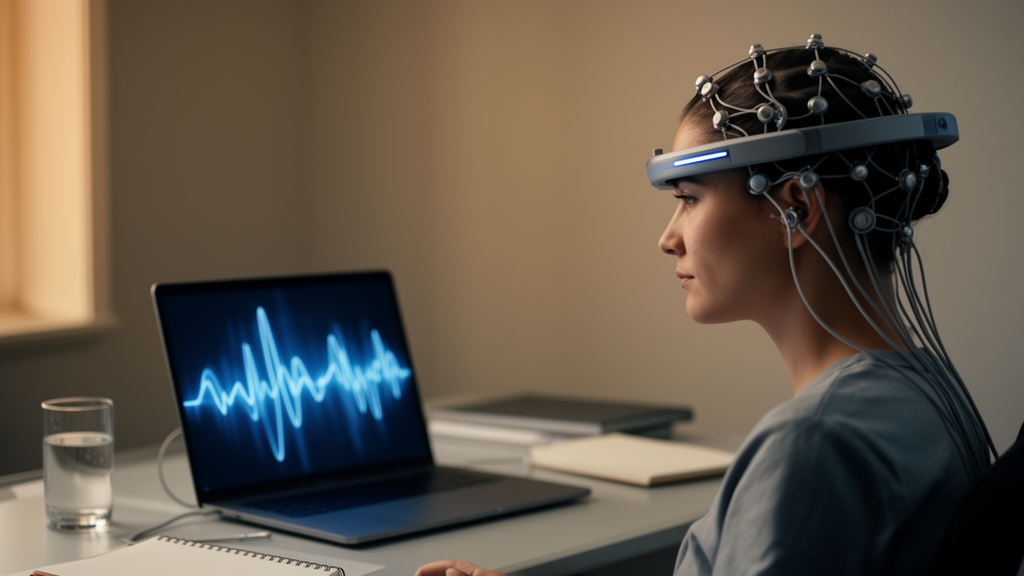
Neuroergonomics is the discipline that adapts clinical neurotechnology—once highly invasive, risky and confined to controlled experimental settings—into noninvasive, largely safe, miniaturized, wearable and portable systems that can monitor and even alter cognitive function in real-world environments, including the workplace. Its two critical components are the technology for monitoring brain activity and the technology for altering it. On the monitoring side, the most significant advance has been functional near-infrared spectroscopy, or fNIRS, a portable neuroimaging technique that can assess cognitive effort in specific brain regions by analyzing changes in oxygenated and deoxygenated hemoglobin via infrared spectroscopy, either alone or in conjunction with other physiologic measurements such as electroencephalography, pupillometry and dermal conductivity. When this measured cognitive effort is coupled with behavioral task measures such as task accuracy and task duration, it yields a comprehensive measure the authors call neural efficiency: the difference between the behavioral efficiency of task performance and the cognitive effort of brain activation.
On the alteration side, the most significant advance has been portable devices for transcranial direct brain stimulation with electrical currents, known as tDCS, or with magnetic fields, known as TMS. The two technologies can be combined into a closed-loop system: neuroimaging identifies the brain area that needs to be targeted, neurostimulation is directed to that specific area, and further neuroimaging monitors the effect until the stimulation achieves an optimal state of neural efficiency. In an economy that is becoming increasingly knowledge-based and reliant on optimal technology utilization, the authors anticipate that neuroergonomics will be increasingly relied upon to maintain and promote workplace productivity—improving safety and security, enhancing human-computer-robot interactions, expediting training and skill acquisition, facilitating neurorehabilitation and generally promoting worker neurocognitive enhancement.
The experimental evidence is accumulating fast. An fNIRS study of subjects engaged in a sustained attention reaction time task showed significant differences between the first ten and last ten minutes, demonstrating potential use for safety-sensitive tasks that require sustained attention but are subject to compromise by distraction or multitasking. A study of pilots in a flight simulator versus a real aircraft found that pilots in the actual aircraft had higher cortical activation and more errors during cognitively demanding tasks. fNIRS studies of urban transit drivers under simulated conditions and of coal mine workers under actual work conditions suggested the technology could help companies develop reasonable shiftwork schedules and ensure operator safety. On the stimulation side, tDCS applied during a vigilance task caused significant improvement in target detection, and in a real-world study of sleep-deprived nurses, TMS was used to modulate sustained attention and working memory after a night shift, significantly reducing mental fatigue. When applied during skill acquisition, tDCS led to immediate performance improvements that even persisted the following day, and it has significantly improved fine motor task performance in highly skilled work such as robotic surgery.
But here is where the story turns dark. In the workplace, it seems likely that employers will see significant reason to induce workers, overtly or covertly, to augment their cognitive capacity through neuroergonomics to increase productivity—since some employers already offer workers enhancements through chemical means such as caffeine or mechanical means such as computer-based augmentation. Usage of neuroergonomics could become a specific job requirement, and employers could even offer contracts specifying working hours based on measured cognitive workload rather than standard working hours. Discrimination by employers and insurers against workers who refuse to comply may become a real threat. And even without employer coercion, workers may feel compelled to pursue neuroenhancement on their own simply to compete with enhanced co-workers, autonomous robots or artificial general intelligence agents.
The social signals are already flashing. More than 90 percent of Swiss college students surveyed said they were prepared to try new products that increase IQ. A do-it-yourself brain stimulation community already exists, with blogs and websites dedicated exclusively to the topic; the most active tDCS forum on Reddit averages several posts per day, and the two most popular tDCS tutorial videos on YouTube have garnered tens of thousands of views each. A survey in Japan found that roughly 20 percent of respondents were willing to use enhancement technologies and 80 percent were tolerant toward others’ use, concluding there was no need to ban such technologies. Yet neuroscientists themselves are strikingly reluctant: in one survey, relatively few—just 8 percent—had used brain stimulation on themselves for neuroenhancement due to safety and other concerns, even though 39 percent considered it potentially useful in healthy populations. Experts warn of a long list of risks from do-it-yourself stimulation: off-target brain effects, interaction with ongoing brain activity, increasing some abilities while potentially decreasing others, effects lasting too long, small changes leading to bigger effects, interindividual variability and an uncertain risk-benefit ratio.
The deepest legal problem is who gets access to the data. Neural data may not be considered medical or health data whose privacy would be covered by existing legislation. The authors draw an analogy to genetic data, where legal protections have been enacted, and note that the connectome may be even more sensitive data, since it is a more immediate and intimate representation of the individual than their genome. In response, four U.S. states have recently included neural data in their consumer privacy data laws, and a federal law—the proposed MIND Act—has been put forward to establish a framework to protect neural data against privacy risks, including risks of workplace discrimination that might arise from neuroergonomic uses assessing worker productivity. The proposed legislation notes that neurotechnology includes devices that stimulate or alter the nervous system to influence its function, and that guidance is needed to ensure ethical use with transparency and opt-in mechanisms. The European Union currently lacks specific regulations dedicated to neurotechnologies, though protections have been proposed and a few countries have implemented frameworks designed to protect individual rights.
The second hard question—whether we can protect employees from themselves—may be equally difficult, especially as do-it-yourself enhancement accelerates with commercially available products. It has been suggested that manufacturers of neurotechnology devices may need to be required to disclose to users appropriate usage procedures and all possible side effects, even though those effects are not yet fully known. Currently, however, these devices may not fall under the scope of FDA regulation. In the workplace, the authors argue there will be an important role for occupational health professionals to advise employees and employers on the ethically appropriate usage of neural data and neural devices—though whether that advisory capacity can outrun commercial incentives is an open question.
Beneath it all lies the overarching issue: whether it is right to pursue human enhancement at all, in the workplace or elsewhere, of the brain or otherwise. Anti-enhancement arguments tend to put great weight on the unnatural threat to the human essence; pro-enhancement arguments rely on the autonomous right of the individual to self-improvement. One particularly intriguing aspect of the latter stems from the apparent ability of neural technologies for moral enhancement, including increasing altruism, trust, cooperation, fairness, empathy and a willingness to help others. So neural enhancement might make us less human but more humane. In the end, as with all technologies, the authors conclude, it is not that they are good or bad in themselves, but rather how we choose to use them that makes the difference—and right now, the frameworks for choosing are being rapidly outpaced by the technology itself.
Subject of Research: The ethical, legal and social issues of neuroergonomics in the workplace
Article Title: The ethical, legal and social issues of neuroergonomics in the workplace
Article References: Brandt-Rauf, S. I., & Brandt-Rauf, P. W. (2026). The ethical, legal and social issues of neuroergonomics in the workplace. Frontiers in Neuroergonomics, 7, Article 1923291. https://doi.org/10.3389/fnrgo.2026.1923291
Image Credits: AI Generated
DOI: 10.3389/fnrgo.2026.1923291
Keywords: neuroergonomics, neural data privacy, workplace surveillance, cognitive enhancement, brain-computer interfaces, neurotechnology regulation, worker rights, neuroethics, ethical, legal, social, issues
News Source: Cassandra Pierce. (October 16, 2026). Your Brain at Work: The Coming Battle Over Neural Data Rights. Scienmag.