


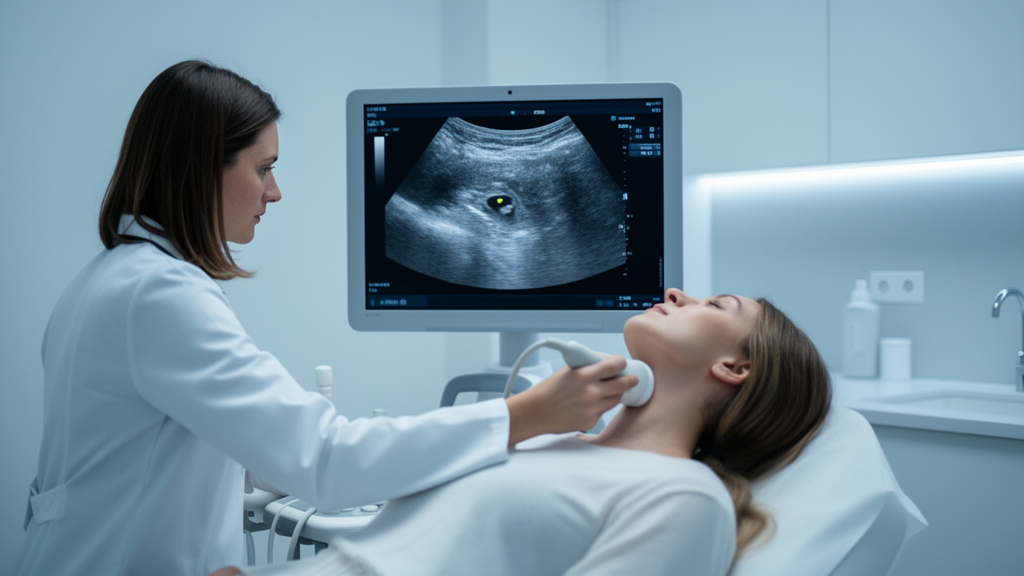
When a thyroid nodule is sampled with a fine-needle aspiration biopsy and the cells are reported as Bethesda II, or benign, the general expectation is a low risk of cancer. Yet a subset of patients who go on to have thyroid surgery turn out to harbor malignancy that the biopsy missed. A new retrospective study, published in Diagnostic Pathology, examined which clinical, laboratory and ultrasonographic characteristics were associated with such postoperative malignancy in patients whose preoperative cytology had been read as benign.
The research was a single-center study that included patients who underwent thyroid surgery following a preoperative Bethesda II fine-needle aspiration result between January 2020 and December 2024. The investigators retrospectively analyzed demographic characteristics, thyroid function tests, inflammatory markers and ultrasonographic findings. Nodules were classified by the EU-TIRADS ultrasound risk system, grouped as low risk for scores below 4 and high risk for scores of 4 or above. Patients were then divided into benign and malignant groups according to the final postoperative histopathological results, and univariable and multivariable logistic regression analyses were used to identify factors associated with malignancy.
In total, 176 patients with Bethesda II cytology were included. Postoperative histopathological examination revealed malignancy in 20 of them, corresponding to 11.4 percent of the cohort. That figure is higher than the malignancy risk generally attributed to benign cytology, underscoring the clinical problem of false-negative results in a selected group of patients who proceeded to surgery.
The most striking demographic difference was age. Patients in the postoperative malignant group were significantly younger than those in the benign group, with a median age of 29 years (interquartile range 26.75 to 32) compared with 41 years (interquartile range 35 to 49), a difference the authors reported as statistically significant (p = 0.0006). This suggests that, within this surgical cohort, younger patients with benign cytology were more likely to have cancer confirmed after operation than older patients.
Ultrasound risk category also separated the two groups. The proportion of patients with EU-TIRADS scores of 4 or higher was significantly greater in the malignant group, at 45.0 percent, than in the benign group, at 12.2 percent (p = 0.001). Looked at from the other direction, the malignancy rate was 7.4 percent among patients whose nodules were classified as EU-TIRADS below 4, but 32.1 percent among those classified as EU-TIRADS 4 or above. In other words, nodules carrying suspicious ultrasound features were roughly four times more likely to prove malignant after surgery in this cohort.
When the researchers turned to multivariable logistic regression to account for overlapping factors, two variables remained independently associated with postoperative malignancy. Younger age carried an odds ratio of 0.918 per year of age (95 percent confidence interval 0.868 to 0.970, p = 0.002), meaning each additional year of age was associated with lower odds of malignancy. An EU-TIRADS classification of 4 or higher carried an odds ratio of 5.72 (95 percent confidence interval 2.01 to 16.27, p = 0.001), indicating that high-risk ultrasound features were strongly and independently linked to cancer found after surgery.
Not every candidate factor performed as well. The study also evaluated inflammatory markers, including the neutrophil-to-lymphocyte ratio, the systemic immune-inflammation index and C-reactive protein. None of these showed a statistically significant association with postoperative malignancy. The authors therefore concluded that no statistically significant associations were observed for systemic inflammatory markers, and that the meaningful signals in their data were confined to age and ultrasound risk category.
The authors were careful to frame the scope of their conclusions. Younger age and EU-TIRADS of 4 or higher were associated with postoperative malignancy in this selected surgical cohort of patients with Bethesda II cytology, they reported, and these findings require confirmation in larger, prospective multicenter cohorts before their potential contribution to clinical risk assessment can be established. Because the study was retrospective and included only patients who underwent surgery, the malignancy rate cannot be generalized to all patients with benign cytology, most of whom are monitored rather than operated on.
Even with those limitations, the findings add to a practical conversation in thyroid nodule management: benign cytology does not eliminate the need to weigh ultrasound risk features and patient age when deciding on follow-up or surgery. In this cohort, the combination of youth and high-risk EU-TIRADS features marked the patients most likely to have cancer despite a benign biopsy result, while routinely measured inflammatory markers added no discriminatory value. The study, led by Adem Aslan and colleagues, was published open access on 2 October 2026.
Subject of Research: Factors associated with postoperative malignancy in patients with benign Bethesda II thyroid cytology
Article Title: Factors associated with postoperative malignancy in surgically treated patients with bethesda II benign thyroid cytology
Article References: Aslan, A., Çimen, Ş., Yerlikaya, M. B., Bayram, H., Ayık, E., Peksöz, R., & Akçay, M. N. (2026). Factors associated with postoperative malignancy in surgically treated patients with bethesda II benign thyroid cytology. Diagnostic Pathology. https://doi.org/10.1186/s13000-026-01861-0
Image Credits: AI Generated
DOI: 10.1186/s13000-026-01861-0
Keywords: thyroid nodules, Bethesda II cytology, fine-needle aspiration, false-negative results, EU-TIRADS, thyroid cancer, thyroid surgery, histopathology, inflammatory markers, retrospective study, logistic regression, Diagnostic Pathology
News Source: Ophelia Keating. (October 28, 2026). Younger age and higher ultrasound risk score linked to hidden thyroid cancer after benign biopsy results. Scienmag.



