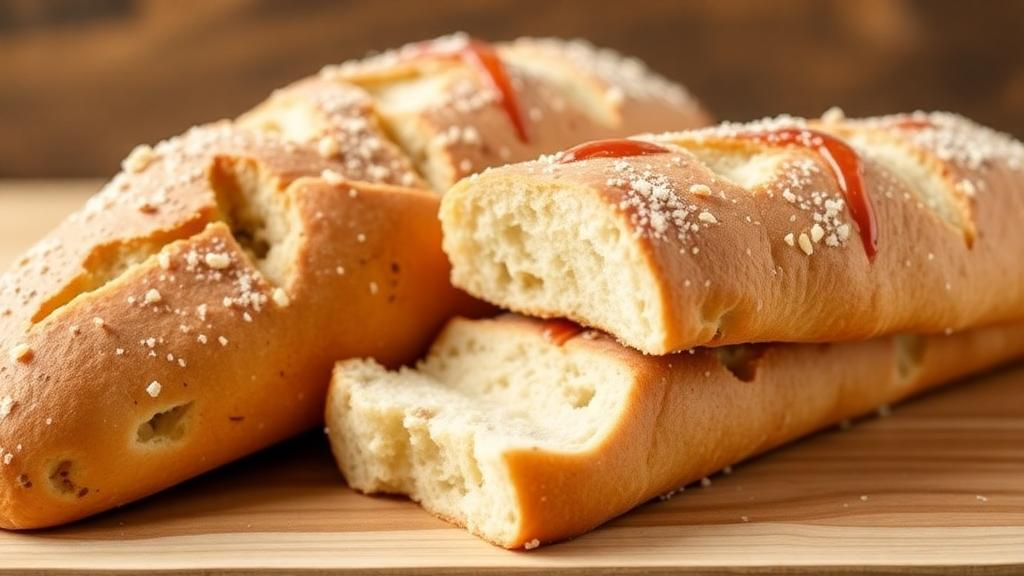
Salt is the quiet workhorse of the bakery. Beyond making bread taste good, sodium chloride strengthens gluten, controls water, slows staling, and keeps microbes at bay. That is why public health campaigns to cut dietary sodium keep colliding with the stubborn physics of dough. Now a team of food scientists in Iran has systematically tested how far a baguette can go without its salt, using yeast extract as the sole replacement, and the results offer both a promising recipe and a clear warning about where the limits lie.
The study, published in Current Research in Food Science, comes at a time when the World Health Organization continues to press for population-wide sodium reduction, and bread remains one of the largest dietary contributors simply because people eat so much of it. Previous attempts to swap in potassium chloride often failed on flavor, leaving a bitter or metallic aftertaste that consumers reject. Yeast extract, a natural ingredient rich in amino acids, peptides, and nucleotides, has long been suspected of a cleverer role: rather than mimicking salt’s chemistry, it could compensate for the lost saltiness through umami, the savory fifth taste.
What makes the new work unusual is its completeness. Earlier studies had tested yeast extract in crackers or spelt bread, or combined it with potassium chloride, but none had replaced sodium chloride across a full gradient in a single product while tracking dough rheology, molecular structure, texture, color, sensory scores, and microbial counts. The researchers baked baguettes in which 0, 25, 50, 75, or 100 percent of the salt was replaced by commercial yeast extract, then froze the loaves and followed them for 90 days.
The rheological measurements told a story of progressive weakening. In farinograph tests, dough stability time fell from just over seven minutes in the fully salted control to barely three minutes when all the salt was replaced, while the degree of softening more than doubled. Extensograph analysis showed the dough becoming dramatically more stretchable and less resistant to deformation, with the resistance-to-extensibility ratio dropping from 4.22 to 1.87. The explanation is electrostatic: salt ions shield charges on gluten proteins, allowing them to pack into a strong, cohesive network. Remove the ions, and the network loosens. Yeast extract, being organic rather than ionic, simply cannot fill that structural role.
Yet the chemistry of the bread itself changed in intriguing ways. Protein content climbed steadily with yeast extract, reaching nearly 13 percent at full replacement, a direct nutritional bonus from the extract’s nitrogen-rich compounds. Sodium content, meanwhile, plummeted from 0.42 percent in the control to just 0.07 percent in the fully substituted loaf, a reduction of more than 80 percent. Infrared spectroscopy revealed intensified amide bands confirming the added protein, and showed that yeast extract strengthened the short-range ordered structure of starch, a molecular feature associated with slower digestion by enzymes. X-ray diffraction detected a new crystalline peak in the high-replacement breads, hinting at altered starch organization during fermentation.
Color analysis brought an unexpected consumer-friendly finding. While crumb color stayed essentially unchanged, the crust became significantly redder and more yellow as yeast extract levels rose. The reason is the Maillard reaction: yeast extract is loaded with free amino acids that react vigorously with reducing sugars under baking heat, producing the red-brown melanoidin pigments that bakers and shoppers alike associate with a well-baked, flavorful loaf. In other words, the salt substitute made the bread look more appetizing, not less.
Sensory results were equally encouraging. A trained panel of thirteen assessors, blinded to formulation, found no statistically significant differences among the five breads in color, odor, texture, or overall acceptability. Only flavor showed a measurable decline, and even then only the fully salt-free bread scored clearly below the control, dropping from 4.17 to 3.33 on a five-point scale. The glutamates and nucleotides in yeast extract appear to have done exactly what the umami hypothesis predicted, masking much of the sensory deficit left by the missing salt across a wide range of replacement levels.
Texture, however, exposed the trade-off. Crumb hardness rose consistently with replacement level, from 46 grams in the control to nearly 82 grams at full substitution on baking day, and the gap widened after 90 days of frozen storage, when the fully replaced bread reached 128 grams. Chewiness followed the same pattern. The researchers attribute this to altered water distribution and protein-starch interactions that accelerate the recrystallization of amylopectin, the molecular engine of staling. Frozen storage itself also damaged the crumb, as growing ice crystals pressed against the structure and reduced cohesiveness and springiness in every loaf regardless of formulation.
Microbiology delivered the study’s most sobering lesson. Total bacterial counts on production day climbed in lockstep with yeast extract levels, from about 117 colony-forming units per gram in the control to 760 in the fully replaced bread. Commercial yeast extract is not sterile, and heat-resistant spores evidently survived baking. No yeasts or molds were detected in any sample, and freezing actually reduced bacterial counts across the board over 90 days, but the finding underscores that a biologically derived salt replacer carries a microbial load that pure sodium chloride never does. The authors suggest pre-treatments such as thermal processing or irradiation of the extract before use.
Balancing all of the evidence, the researchers conclude that replacing 25 to 50 percent of salt with yeast extract offers the best compromise: enough sodium chloride remains to support gluten strength and microbial control, while the extract contributes umami flavor, extra protein, and an appealingly browned crust with minimal microbial burden. Higher replacement levels, though sensorially tolerable in a trained panel, weakened the dough, firmed the crumb, and raised the initial bacterial load. The team cautions that larger consumer panels, industrial-scale trials, and longer storage studies are still needed before salt-reduced baguettes built on yeast extract reach the bakery shelf, but the blueprint for a tastier, healthier loaf is now on the table.
Subject of Research: Yeast extract as a sodium chloride replacer in baguette bread and its effects on dough rheology, bread quality, and frozen storage stability
Article Title: Yeast Extract for Salt Reduction in Baguette Bread: A Comprehensive Evaluation of Dough Properties, Bread Quality, and Storage Stability
Article References: Hedayati, S., Chaychi, F., Babaali, E., & Kazemi, A. (2026). Yeast extract for salt reduction in baguette bread: A comprehensive evaluation of dough properties, bread quality, and storage stability. Current Research in Food Science, 13, Article 101590. https://doi.org/10.1016/j.crfs.2026.101590
Image Credits: AI Generated
DOI: 10.1016/j.crfs.2026.101590
Keywords: yeast extract, salt reduction, sodium, baguette, bread quality, dough rheology, gluten, umami, frozen storage, food science, Maillard reaction, food microbiology
News Source: Daisy Hatcher. (October 6, 2026). Yeast Extract Could Cut Salt in Baguettes Without Sacrificing Taste, Study Finds. Scienmag.