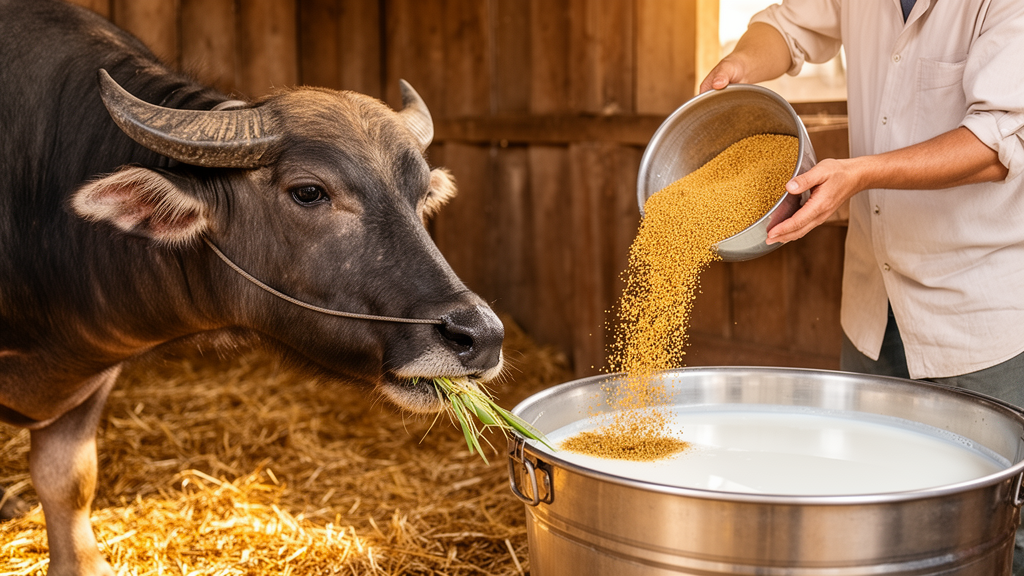
A combination of yeast cells and exogenous enzymes added to the diet of lactating buffaloes improved several milk quality traits and shifted blood biochemical parameters, according to a new study published in BMC Veterinary Research. The work, led by Alessandro Vastolo and colleagues including Serena Calabrò, addressed a gap in buffalo nutrition, where most knowledge about microbial and enzymatic feed additives has been extrapolated from studies in dairy cattle rather than tested directly in buffaloes.
The researchers evaluated the combined effects of yeast cells and enzymes on the performance of lactating multiparous buffaloes and on ruminal fermentation characteristics. Their approach had two components: an eight-week in vivo trial on Italian Mediterranean Buffalo cows, and an in vitro rumen fermentation experiment using buffalo ruminal fluid. Across both components, the parameters evaluated included diet chemical composition, in vitro fermentation characteristics, milk yield and composition, fecal composition, volatile fatty acids (VFA), and blood biochemical metabolites.
The in vivo results showed clear differences between supplemented and unsupplemented animals. Buffaloes receiving the yeast-enzyme supplement exhibited improved milk fat content (p < 0.001), protein content (p < 0.001) and casein content (p < 0.05), as well as higher production of energy-corrected milk (p < 0.01). These are statistically significant differences reported by the authors for the trial population, and they point to a measurable effect of the additive on the composition and energy value of the milk produced by the supplemented cows.
Fecal analyses added a digestive dimension to the findings. The supplemented group showed a lower fecal starch content (p < 0.05), along with differences in acetate and total VFA concentrations compared with the control animals. Lower fecal starch is consistent with greater starch disappearance from the digestive tract before excretion, although the study’s abstract reports the observed differences without detailing the underlying mechanisms. Blood biochemical analyses further showed higher glucose (p < 0.001), lower blood urea nitrogen (p < 0.001) and lower triglycerides (p < 0.05) at the end of the trial in the supplemented group.
The in vitro component of the study produced a more nuanced picture of the supplement’s effects on rumen fermentation. Fermentation results exhibited greater VFA production in the non-treated group (p < 0.001), whereas the treated group showed faster fermentation kinetics. In other words, the untreated rumen fluid produced more total volatile fatty acids overall, but the supplemented condition fermented more rapidly. The authors report both outcomes side by side, and the abstract does not reconcile them into a single directional claim about total fermentative output.
Taken together, the authors conclude that these results support the use of microbial and enzymatic feed additives as a promising nutritional strategy for modulating milk composition, certain blood biochemical parameters, and rumen fermentation characteristics of lactating buffaloes. Importantly, the study’s conclusions frame the additives as warranting further study in buffalo dairy production rather than as an established recommendation, reflecting the scope of a single eight-week trial in one buffalo breed.
The study is notable for testing the additives directly in buffaloes rather than relying on cattle data. Yeast cultures and exogenous enzymes are widely used as feed additives in ruminant nutrition, particularly in dairy cattle, due to their reported beneficial effects on rumen fermentation, nutrient degradability and animal performance, but the authors note that information on their application in buffalo nutrition remains limited. By combining an in vivo feeding trial with in vitro fermentation work using buffalo ruminal fluid, the study provides species-specific evidence on both animal-level responses and fermentative behavior.
The article was published on 24 October 2026 as an open-access research paper in BMC Veterinary Research, authored by Alessandro Vastolo, Barbara Piccirillo, Teresa Montefusco, Luca Negrone, Federico Infascelli and Serena Calabrò. The published version shared at this stage is a peer-reviewed, accepted manuscript carrying a permanent DOI, subject to further editorial edits before the final Version of Record replaces it.
The present results suggest that combined yeast and enzyme supplementation can alter milk composition and metabolic markers in lactating buffaloes, while the divergent in vitro findings on VFA production and fermentation speed underline that the rumen-level effects of such additives remain an active area of investigation.
Subject of Research: Combined yeast and enzyme feed supplementation in lactating buffaloes
Article Title: Yeast and enzyme supplementation in the diet for lactating buffalo: in vivo and in vitro evidence
Article References: Vastolo, A., Piccirillo, B., Montefusco, T., Negrone, L., Infascelli, F., & Calabrò, S. (2026). Yeast and enzyme supplementation in the diet for lactating buffalo: in vivo and in vitro evidence. BMC Veterinary Research. https://doi.org/10.1186/s12917-026-06056-9
Image Credits: AI Generated
DOI: 10.1186/s12917-026-06056-9
Keywords: buffalo, dairy nutrition, feed additives, yeast culture, exogenous enzymes, milk composition, rumen fermentation, volatile fatty acids, blood metabolites, in vitro fermentation, Italian Mediterranean Buffalo, BMC Veterinary Research
News Source: Daisy Hatcher. (October 28, 2026). Yeast and enzyme feed supplement boosts milk quality in lactating buffaloes. Scienmag.