In the ever-evolving realm of molecular biology and chemistry, nucleic acids such as DNA and RNA have long dominated scientific discourse as the primary carriers of genetic information. While DNA has been extensively characterized for its role in hereditary transmission, RNA has recently ascended from a mere intermediary in protein synthesis to a molecule of immense therapeutic potential, especially in the development of innovative vaccines. However, the frontier of nucleic acid research has expanded beyond their genetic functions, unveiling a fascinating facet where these molecules exhibit enzymatic activity, acting as catalysts to facilitate biochemical transformations. These catalytic nucleic acids, encompassing DNAzymes and ribozymes, represent an intriguing intersection of chemistry and biology that opens profound possibilities for both fundamental understanding and applied science.
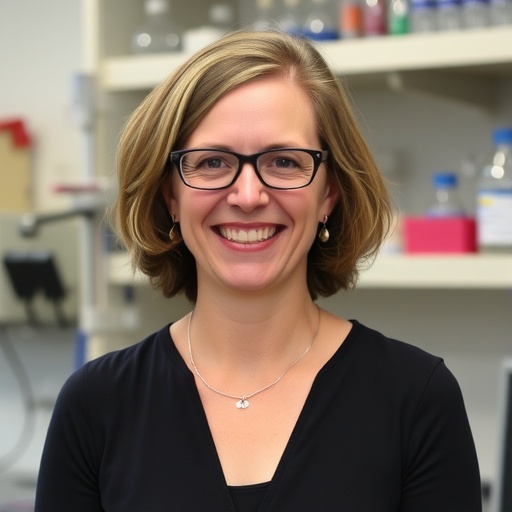
Professor Claudia Höbartner of the University of Würzburg has emerged as a pioneering figure in this nascent field, significantly advancing our comprehension of catalytic nucleic acids through her rigorous structural and functional investigations. Holding the Chair of Organic Chemistry I at Würzburg, she is instrumental in spearheading research activities within the Würzburg-Munich Cluster of Excellence NUCLEATE, a multidisciplinary initiative aimed at elucidating nucleic acid catalysis and harnessing its potential in synthetic biology and molecular medicine. Her work integrates cutting-edge techniques in structural biology, chemical synthesis, and molecular biophysics to decode the complexities of nucleic acid catalysis, challenging the traditional protein-centric view of enzymology.
In recognition of her groundbreaking contributions, the German Chemical Society (GDCh) bestowed upon Professor Höbartner the prestigious Albrecht Kossel Prize during the 2026 GDCh Biochemistry conference held in Würzburg. This accolade, named after the Nobel laureate Ludwig Kossel who made seminal discoveries in nucleic acid chemistry, underscores the high esteem in which her discoveries are held within the international scientific community. The award ceremony was marked by laudatory addresses from GDCh President Ruth Bieringer and Professor Andrea Rentmeister of LMU Munich, both emphasizing Professor Höbartner’s scientific passion and transformative insights.
A hallmark of Höbartner’s work includes the world-first determination of the three-dimensional structure of a DNAzyme—a DNA molecule with catalytic activity—an achievement that elucidates the molecular underpinnings of its catalytic mechanism. Prior to this, structural information about DNAzymes had remained elusive, limiting the ability to rationally design and optimize such biomolecules for applications. Her elucidation of DNAzyme structure has not only provided vital clues into how nucleic acids can orchestrate complex chemical reactions but has also paved the way for leveraging these molecules in nanotechnology, biosensing, and therapeutic contexts.
Equally momentous is her discovery of a ribozyme capable of transferring methyl groups, a biochemical function previously attributed predominantly to protein enzymes. Methyl group transfer is a critical epigenetic modification influencing gene expression, and uncovering a ribozyme with this capability suggests profound evolutionary and biomedical implications. Her findings imply that catalytic RNAs could have played a pivotal role in primordial biochemical pathways, supporting theories on the RNA world hypothesis that posit RNA as both genetic material and catalyst in early life forms. This discovery also opens innovative avenues in synthetic biology, where RNA-based catalysts may be engineered to introduce site-specific modifications or regulate molecular processes.
The research outputs of Professor Höbartner have gained global recognition through their publication in Nature, one of the most authoritative journals in science, thereby setting a new standard in nucleic acid catalysis research. Her studies intricately combine high-resolution structural analysis with biochemical assays, advancing the understanding of nucleotide modifications and catalytic dynamics. This holistic approach enables a richer portrayal of nucleic acid enzymology and fosters the translation of fundamental science into practical technologies.
Tracing her academic trajectory, Claudia Höbartner’s career is marked by international collaborations and prestigious appointments. After earning her degree in Technical Chemistry from the Vienna University of Technology in 2001 and her PhD in Chemistry from the University of Innsbruck in 2004, she expanded her expertise through postdoctoral research at the University of Illinois at Urbana-Champaign—a global leader in molecular biology—and subsequently returned to Innsbruck. Her postdoctoral work facilitated her proficiency in both chemical synthesis and molecular biophysics, critical for her future explorations of nucleic acid enzymes.
From 2008 onwards, she led a research group at the Max Planck Institute for Biophysical Chemistry in Göttingen, a hub renowned for advancements in physical and molecular biosciences. In 2014, she assumed a professorship in Göttingen, before transitioning in 2017 to her current position at Julius-Maximilians-Universität Würzburg. Throughout her career, Höbartner has continued to bridge chemical innovation with biological inquiry, reinforcing Würzburg’s status as a center of excellence in organic and biological chemistry.
Her stellar scientific accomplishments have earned her election in 2022 to the German National Academy of Sciences Leopoldina, an honor that reflects her pivotal role in shaping modern chemical biology. Further accolades followed, including the 2023 Gottfried Wilhelm Leibniz Prize, which is Germany’s highest research honor, and the Bavarian Order of Merit, recognizing her contributions both as a scholar and an ambassador of science. Since 2023, Höbartner has also been a vital member of the Executive Committee of the GDCh Biochemistry Division, lending her expertise to guide the future direction of biochemical research in Germany.
The Albrecht Kossel Prize, first awarded in 2014, is a distinguished recognition bestowed by the GDCh to honor significant advances in nucleic acid chemistry, commemorating Ludwig Kossel’s foundational work on the cell nucleus and nucleic acid composition. This prize not only celebrates scientific achievement but also highlights the enduring relevance of nucleic acid research in contemporary science and medicine. The German Chemical Society itself, boasting approximately 28,000 members across diverse specializations, fosters scholarly exchange and innovation, nurturing talents like Professor Höbartner who pioneer interdisciplinary frontiers.
Professor Claudia Höbartner’s exemplary work underscores the transformative potential of catalytic nucleic acids in redefining enzymology and molecular function. Her research offers a glimpse into ancient biochemical phenomena while simultaneously forging new pathways for medical and technological innovation. As catalysis by nucleic acids unfolds as a versatile and powerful paradigm, her discoveries continue to inspire scientists worldwide, heralding an era where DNA and RNA are not only information carriers but dynamic architects of molecular complexity.
Subject of Research: Catalytic nucleic acids, RNA and DNAzymes, nucleic acid structure and function, enzymatic methylation, origins of life chemistry, synthetic biology.
Article Title: Celebrating Claudia Höbartner: Unveiling the Catalytic Power of Nucleic Acids
News Publication Date: March 17, 2026
Web References:
https://www.uni-wuerzburg.de/en/nucleate/
References:
Publications in Nature detailing DNAzyme structure and methyltransferase ribozyme discoveries by Claudia Höbartner.
Image Credits:
Alexander Draheim / Gesellschaft Deutscher Chemiker
Keywords
Catalytic nucleic acids, DNAzyme, ribozyme, methyltransferase activity, nucleic acid structure, enzymology, origins of life, synthetic biology, Claudia Höbartner, Albrecht Kossel Prize, nucleic acid catalysis, GDCh.
Tags: catalytic nucleic acids researchClaudia Höbartner WürzburgDNA and RNA catalysisDNAzymes and ribozymes studymolecular biology nucleic acidsmolecular medicine advancementsnucleic acid enzymatic activitynucleic acid structure-function analysisorganic chemistry nucleic acidsRNA therapeutic potentialsynthetic biology nucleic acidsWürzburg-Munich Cluster NUCLEATE