• HOME
  • NEWS
  • EXPLORE
    • CAREER
      • Companies
      • Jobs
    • EVENTS
    • iGEM
      • News
      • Team
    • PHOTOS
    • VIDEO
    • WIKI
  • BLOG
  • COMMUNITY
    • FACEBOOK
    • INSTAGRAM
    • TWITTER
Tuesday, May 19, 2026
BIOENGINEER.ORG
No Result
View All Result
  • Login
  • HOME
  • NEWS
  • EXPLORE
    • CAREER
      • Companies
      • Jobs
        • Lecturer
        • PhD Studentship
        • Postdoc
        • Research Assistant
    • EVENTS
    • iGEM
      • News
      • Team
    • PHOTOS
    • VIDEO
    • WIKI
  • BLOG
  • COMMUNITY
    • FACEBOOK
    • INSTAGRAM
    • TWITTER
  • HOME
  • NEWS
  • EXPLORE
    • CAREER
      • Companies
      • Jobs
        • Lecturer
        • PhD Studentship
        • Postdoc
        • Research Assistant
    • EVENTS
    • iGEM
      • News
      • Team
    • PHOTOS
    • VIDEO
    • WIKI
  • BLOG
  • COMMUNITY
    • FACEBOOK
    • INSTAGRAM
    • TWITTER
No Result
View All Result
Bioengineer.org
No Result
View All Result
Home NEWS Science News Biology

WSU researchers use coal waste to create sustainable concrete

Bioengineer by Bioengineer
July 12, 2018
in Biology
Reading Time: 2 mins read
0
Share on FacebookShare on TwitterShare on LinkedinShare on RedditShare on Telegram
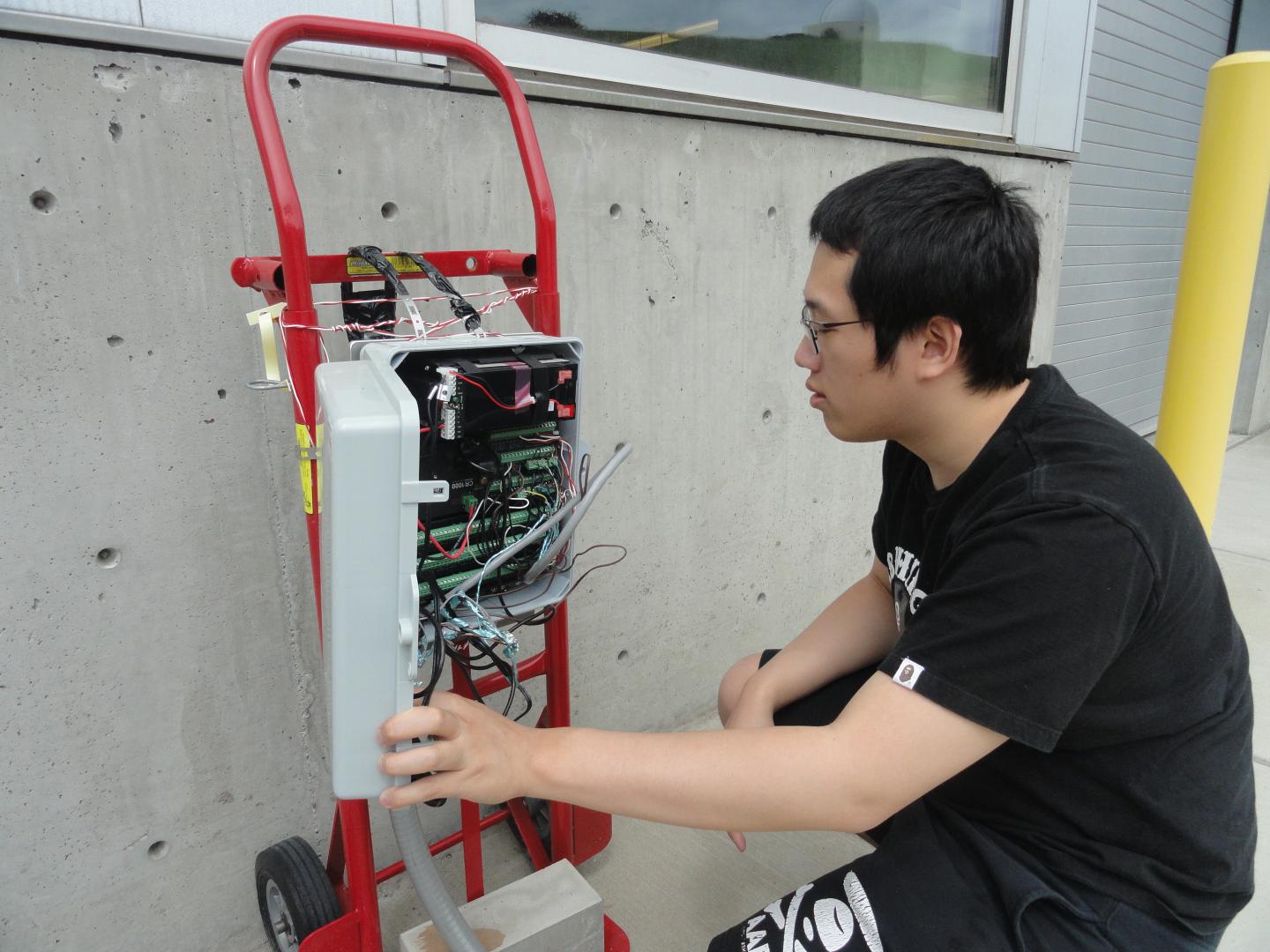
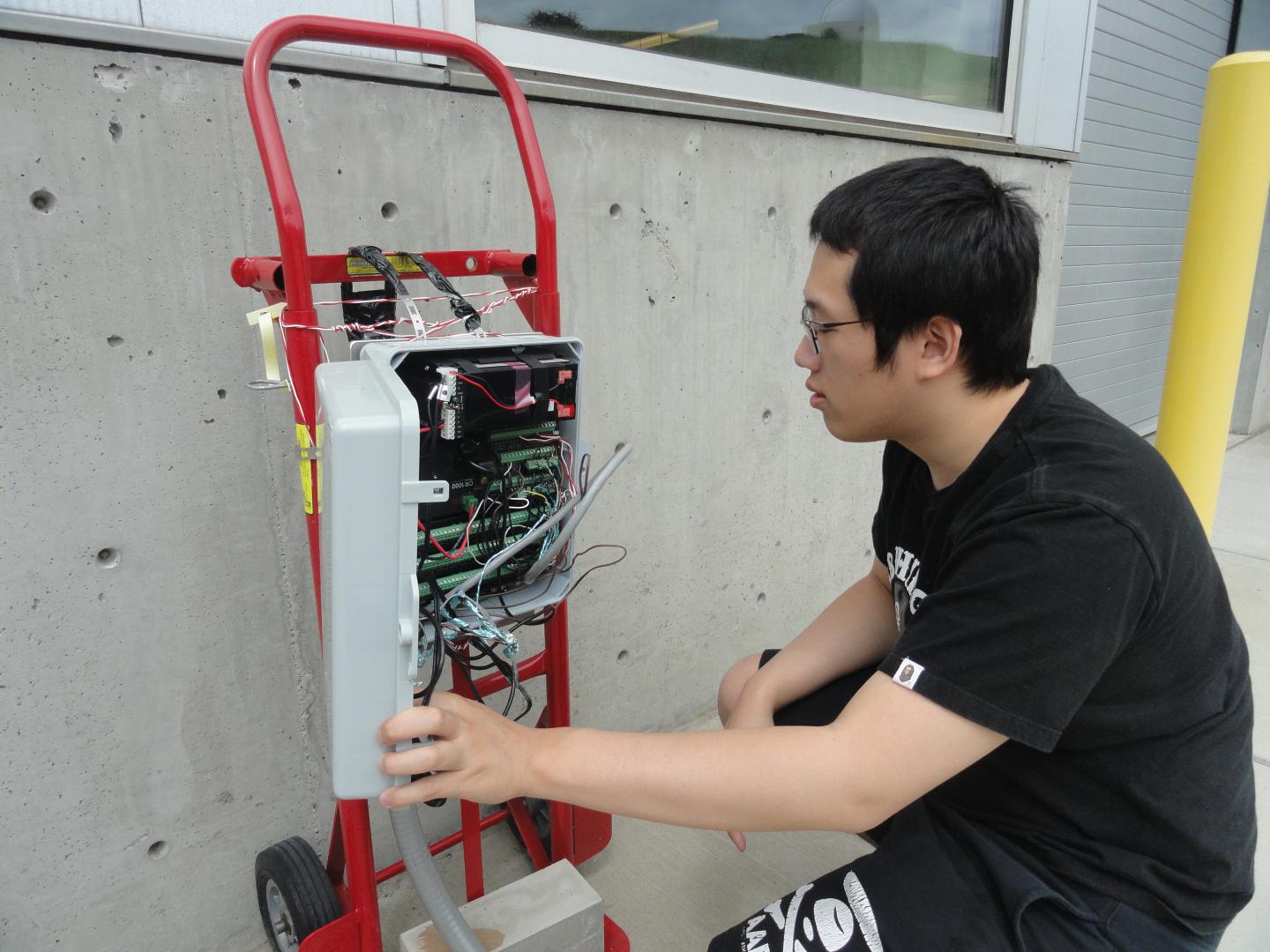
IMAGE

Credit: WSU

PULLMAN, Wash. – Washington State University researchers have created a sustainable alternative to traditional concrete using coal fly ash, a waste product of coal-based electricity generation.

The advance tackles two major environmental problems at once by making use of coal production waste and by significantly reducing the environmental impact of concrete production.

Xianming Shi, associate professor in WSU's Department of Civil and Environmental Engineering, and graduate student Gang Xu, have developed a strong, durable concrete that uses fly ash as a binder and eliminates the use of environmentally intensive cement. They report on their work in the August issue of the journal, Fuel.

Reduces energy demand, greenhouse emissions

Production of traditional concrete, which is made by combining cement with sand and gravel, contributes between five and eight percent of greenhouse gas emissions worldwide. That's because cement, the key ingredient in concrete, requires high temperatures and a tremendous amount of energy to produce.

Fly ash, the material that remains after coal dust is burned, meanwhile has become a significant waste management issue in the United States. More than 50 percent of fly ash ends up in landfills, where it can easily leach into the nearby environment.

While some researchers have used fly ash in concrete, they haven't been able to eliminate the intense heating methods that are traditionally needed to make a strong material.

"Our production method does not require heating or the use of any cement," said Xu.

Molecular engineering

This work is also significant because the researchers are using nano-sized materials to engineer concrete at the molecular level.

"To sustainably advance the construction industry, we need to utilize the 'bottom-up' capability of nanomaterials," said Shi.

The team used graphene oxide, a recently discovered nanomaterial, to manipulate the reaction of fly ash with water and turn the activated fly ash into a strong cement-like material. The graphene oxide rearranges atoms and molecules in a solution of fly ash and chemical activators like sodium silicate and calcium oxide. The process creates a calcium-aluminate-silicate-hydrate molecule chain with strongly bonded atoms that form an inorganic polymer network more durable than (hydrated) cement.

Aids groundwater, mitigates flooding

The team designed the fly ash concrete to be pervious, which means water can pass through it to replenish groundwater and to mitigate flooding potential.

Researchers have demonstrated the strength and behavior of the material in test plots on the WSU campus under a variety of load and temperature conditions. They are still conducting infiltration tests and gathering data using sensors buried under the concrete. They eventually hope to commercialize the patented technology.

"After further testing, we would like to build some structures with this concrete to serve as a proof of concept," said Xu.

###

The research was funded by the U.S. Department of Transportation's University Transportation Centers and the WSU Office of Commercialization.

Media Contact

Xianming Shi
[email protected]
509-335-7088
@WSUNews

Washington State University

Related Journal Article

http://dx.doi.org/10.1016/j.fuel.2018.04.033

Share12Tweet8Share2ShareShareShare2

Related Posts

New Insights into How Smoking Causes Lung Stiffness — Biology

New Insights into How Smoking Causes Lung Stiffness

May 19, 2026
Breakthrough Cancer Treatment Effective Across All Organ Types — Biology

Breakthrough Cancer Treatment Effective Across All Organ Types

May 18, 2026

Butyrate Alleviates Temporomandibular Joint Pain via Epigenetic Mechanisms

May 18, 2026

How Hibernation Impacts Visual Processing in Squirrels’ Brains

May 18, 2026
Please login to join discussion

POPULAR NEWS

  • Research Indicates Potential Connection Between Prenatal Medication Exposure and Elevated Autism Risk

    845 shares
    Share 338 Tweet 211
  • New Study Reveals Plants Can Detect the Sound of Rain

    731 shares
    Share 292 Tweet 182
  • Salmonella Haem Blocks Macrophages, Boosts Infection

    62 shares
    Share 25 Tweet 16
  • Breastmilk Balances E. coli and Beneficial Bacteria in Infant Gut Microbiomes

    58 shares
    Share 23 Tweet 15

About

We bring you the latest biotechnology news from best research centers and universities around the world. Check our website.

Follow us

Recent News

AI Revolutionizes Mental Health Care: New Reichman University Study Led by Prof. Anat Shoshani Unveils Therapy at Your Fingertips

Persistent Inequities Continue to Impact Cardiovascular Disease Burden and Care

New Insights into How Smoking Causes Lung Stiffness

Subscribe to Blog via Email

Enter your email address to subscribe to this blog and receive notifications of new posts by email.

Join 82 other subscribers
  • Contact Us

Bioengineer.org © Copyright 2023 All Rights Reserved.

Welcome Back!

Login to your account below

Forgotten Password?

Retrieve your password

Please enter your username or email address to reset your password.

Log In
No Result
View All Result
  • Homepages
    • Home Page 1
    • Home Page 2
  • News
  • National
  • Business
  • Health
  • Lifestyle
  • Science

Bioengineer.org © Copyright 2023 All Rights Reserved.