• HOME
  • NEWS
  • EXPLORE
    • CAREER
      • Companies
      • Jobs
    • EVENTS
    • iGEM
      • News
      • Team
    • PHOTOS
    • VIDEO
    • WIKI
  • BLOG
  • COMMUNITY
    • FACEBOOK
    • INSTAGRAM
    • TWITTER
Saturday, May 16, 2026
BIOENGINEER.ORG
No Result
View All Result
  • Login
  • HOME
  • NEWS
  • EXPLORE
    • CAREER
      • Companies
      • Jobs
        • Lecturer
        • PhD Studentship
        • Postdoc
        • Research Assistant
    • EVENTS
    • iGEM
      • News
      • Team
    • PHOTOS
    • VIDEO
    • WIKI
  • BLOG
  • COMMUNITY
    • FACEBOOK
    • INSTAGRAM
    • TWITTER
  • HOME
  • NEWS
  • EXPLORE
    • CAREER
      • Companies
      • Jobs
        • Lecturer
        • PhD Studentship
        • Postdoc
        • Research Assistant
    • EVENTS
    • iGEM
      • News
      • Team
    • PHOTOS
    • VIDEO
    • WIKI
  • BLOG
  • COMMUNITY
    • FACEBOOK
    • INSTAGRAM
    • TWITTER
No Result
View All Result
Bioengineer.org
No Result
View All Result
Home NEWS Science News Biology

WSU researchers develop alternative to wasteful methane flaring

Bioengineer by Bioengineer
February 9, 2018
in Biology
Reading Time: 2 mins read
0
Share on FacebookShare on TwitterShare on LinkedinShare on RedditShare on Telegram
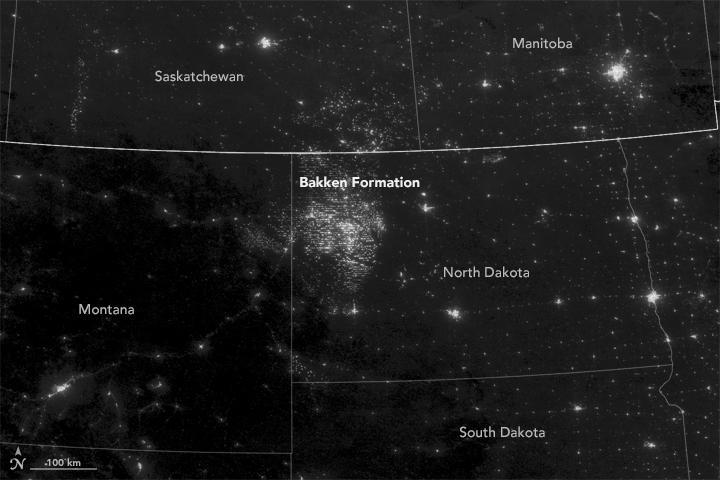
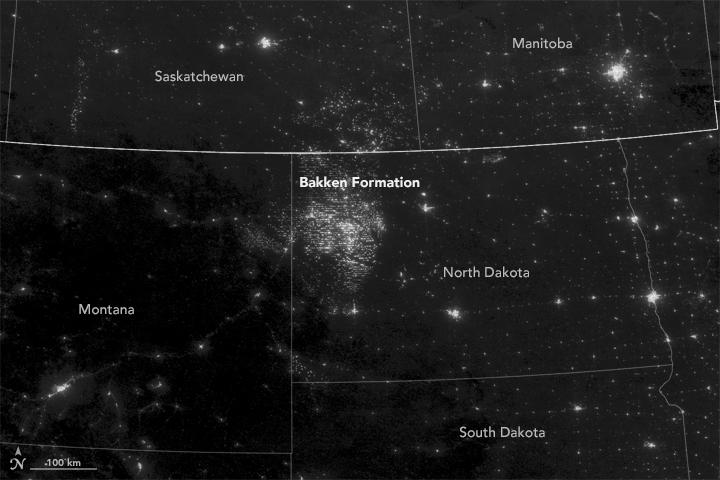
IMAGE

Credit: NASA's Earth Observatory

PULLMAN, Wash.–Jean-Sabin McEwen knocks out a web search for "North Dakota," "night sky" and "flaring," and quickly finds a picture from space showing a glowing cluster bigger than Minneapolis. It's from oil and gas fields burning off methane, producing as much greenhouse gas in a year as 1 million cars.

"It's a big problem because not only do you waste energy, but you produce CO2," says Su Ha, a Washington State University associate professor of chemical engineering and director of the O.H. Reaugh Laboratory for Oil and Gas Research. "So the question is: Is there something you can do better than that?"

Ha and McEwen, a WSU assistant professor of chemical engineering, say they have a solution: a small reactor that inexpensively breaks water and methane into carbon monoxide and hydrogen, which can be used for energy and industrial products. They report their discovery in the journal ACS Catalysis.

Methane, the primary component of natural gas, is a frequent byproduct of oil drilling. It is also a greenhouse gas 34 times more potent than carbon dioxide over the course of a century.

Piping it from remote areas is expensive, so energy companies burn off about one-third of the gas they produce in bright flares that can be seen from space. U.S. and Russian researchers in 2015 said flares around the planet accounted for 3.5 percent of the world's natural gas consumption.

McEwen and Ha's solution involves breaking down the methane in the field.

Ordinarily, methane is such a tightly bonded molecule that breaking it apart requires a lot of water and temperatures of about more than 1,800 F. But McEwen and Ha found that they could use much lower operating temperatures and an inexpensive nickel catalyst in the presence of an electrical field to orient methane and water in a way that makes them easier to break apart.

"It's like a combination lock," said Ha. "When you apply the right combination, when you apply the electric field with the right strength and right direction, it's like you are applying a combination to a lock and click, it opens."

At the end of the process, the researchers end up with carbon monoxide and hydrogen, the ingredients of syngas, or synthetic gas. The product can be used to make gasoline, or the reactor could be attached to fuel cells that convert and store the energy as electricity.

"The idea is to have something that is better suited to these remote areas than a large-scale reactor," said McEwen.

###

Graduate students Fanglin Che and Jake Gray contributed to the research, which was funded in part by the USDA/NIFA Hatch Project, the O.H. Reaugh Endowment Fund and the American Chemical Society Petroleum Research Fund.

The work is in keeping with Washington State University's Grand Challenges, a suite of initiatives aimed at addressing large societal problems. It is particularly relevant to the energy and water themes of the Sustainable Resources challenge.

Media Contact

Su Ha
[email protected]
509-335-3786
@WSUNews

Washington State University

Related Journal Article

http://dx.doi.org/10.1021/acscatal.7b01587

Share12Tweet8Share2ShareShareShare2

Related Posts

Uncovering C. elegans Immunity via Genetic Screens — Biology

Uncovering C. elegans Immunity via Genetic Screens

May 16, 2026
Single mother must adapt swiftly — the survival of her colony depends on it — Biology

Single mother must adapt swiftly — the survival of her colony depends on it

May 15, 2026

Why Are Nearly Everyone Right-Handed? It Might Be Linked to How We Learned to Walk

May 15, 2026

Excessive Neuronal Activity Initiates Severe Autoimmune Brain Disorder

May 15, 2026
Please login to join discussion

POPULAR NEWS

  • Research Indicates Potential Connection Between Prenatal Medication Exposure and Elevated Autism Risk

    844 shares
    Share 338 Tweet 211
  • New Study Reveals Plants Can Detect the Sound of Rain

    730 shares
    Share 291 Tweet 182
  • Salmonella Haem Blocks Macrophages, Boosts Infection

    62 shares
    Share 25 Tweet 16
  • Breastmilk Balances E. coli and Beneficial Bacteria in Infant Gut Microbiomes

    58 shares
    Share 23 Tweet 15

About

We bring you the latest biotechnology news from best research centers and universities around the world. Check our website.

Follow us

Recent News

New Blood Test Detects Tumor DNA to Guide Treatment in Advanced Cancer Cases

Transitional Care Boosts Heart Failure Outcomes in Elders

Low-Power Enhanced I2C Controller: RTL to GDSII

Subscribe to Blog via Email

Enter your email address to subscribe to this blog and receive notifications of new posts by email.

Join 82 other subscribers
  • Contact Us

Bioengineer.org © Copyright 2023 All Rights Reserved.

Welcome Back!

Login to your account below

Forgotten Password?

Retrieve your password

Please enter your username or email address to reset your password.

Log In
No Result
View All Result
  • Homepages
    • Home Page 1
    • Home Page 2
  • News
  • National
  • Business
  • Health
  • Lifestyle
  • Science

Bioengineer.org © Copyright 2023 All Rights Reserved.