• HOME
  • NEWS
  • EXPLORE
    • CAREER
      • Companies
      • Jobs
    • EVENTS
    • iGEM
      • News
      • Team
    • PHOTOS
    • VIDEO
    • WIKI
  • BLOG
  • COMMUNITY
    • FACEBOOK
    • INSTAGRAM
    • TWITTER
Sunday, August 2, 2026
BIOENGINEER.ORG
No Result
View All Result
  • Login
  • HOME
  • NEWS
  • EXPLORE
    • CAREER
      • Companies
      • Jobs
        • Lecturer
        • PhD Studentship
        • Postdoc
        • Research Assistant
    • EVENTS
    • iGEM
      • News
      • Team
    • PHOTOS
    • VIDEO
    • WIKI
  • BLOG
  • COMMUNITY
    • FACEBOOK
    • INSTAGRAM
    • TWITTER
  • HOME
  • NEWS
  • EXPLORE
    • CAREER
      • Companies
      • Jobs
        • Lecturer
        • PhD Studentship
        • Postdoc
        • Research Assistant
    • EVENTS
    • iGEM
      • News
      • Team
    • PHOTOS
    • VIDEO
    • WIKI
  • BLOG
  • COMMUNITY
    • FACEBOOK
    • INSTAGRAM
    • TWITTER
No Result
View All Result
Bioengineer.org
No Result
View All Result
Home NEWS Science News Biology

WSU researcher develops safer gene therapy

Bioengineer by Bioengineer
February 9, 2018
in Biology
Reading Time: 2 mins read
0
Share on FacebookShare on TwitterShare on LinkedinShare on RedditShare on Telegram
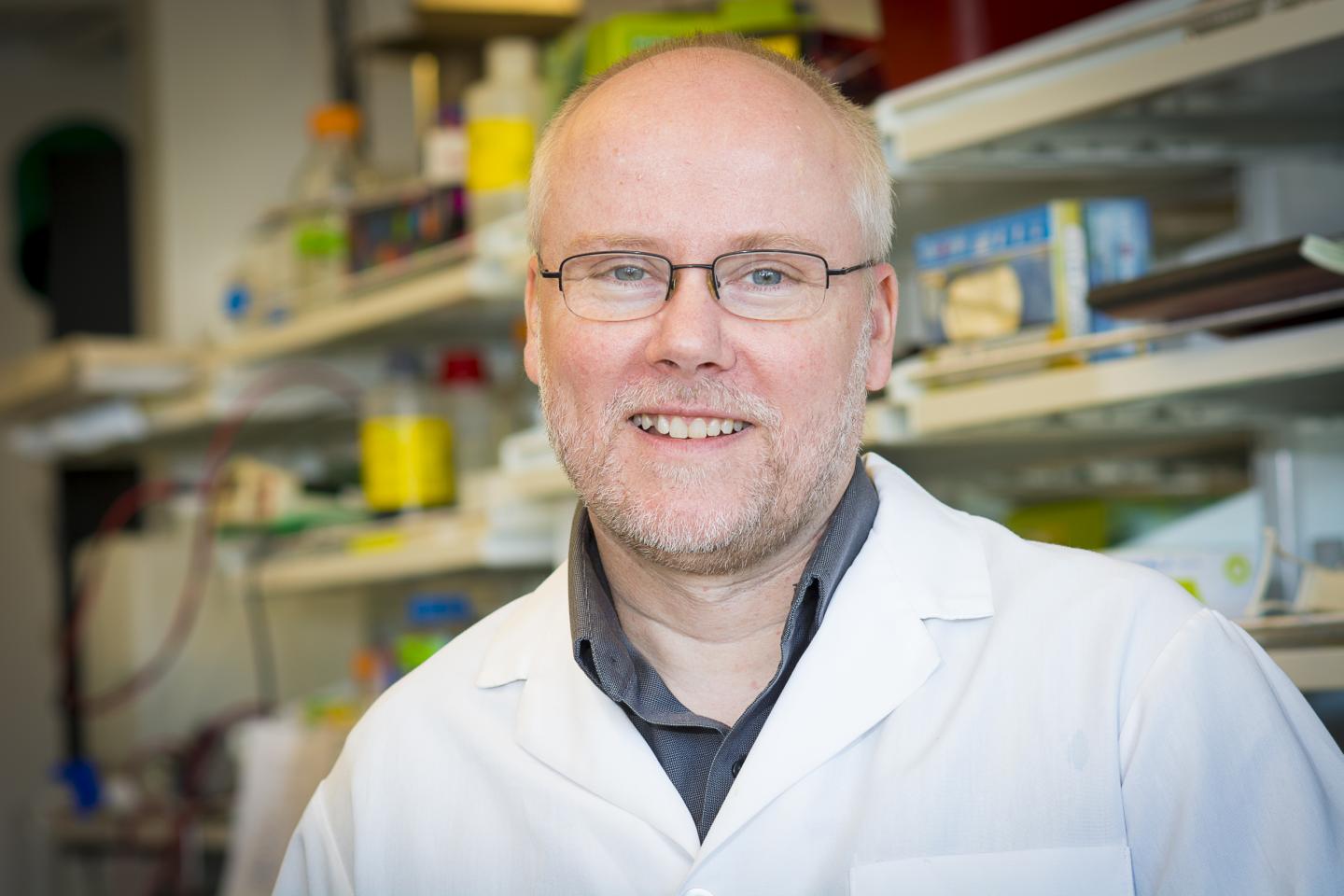
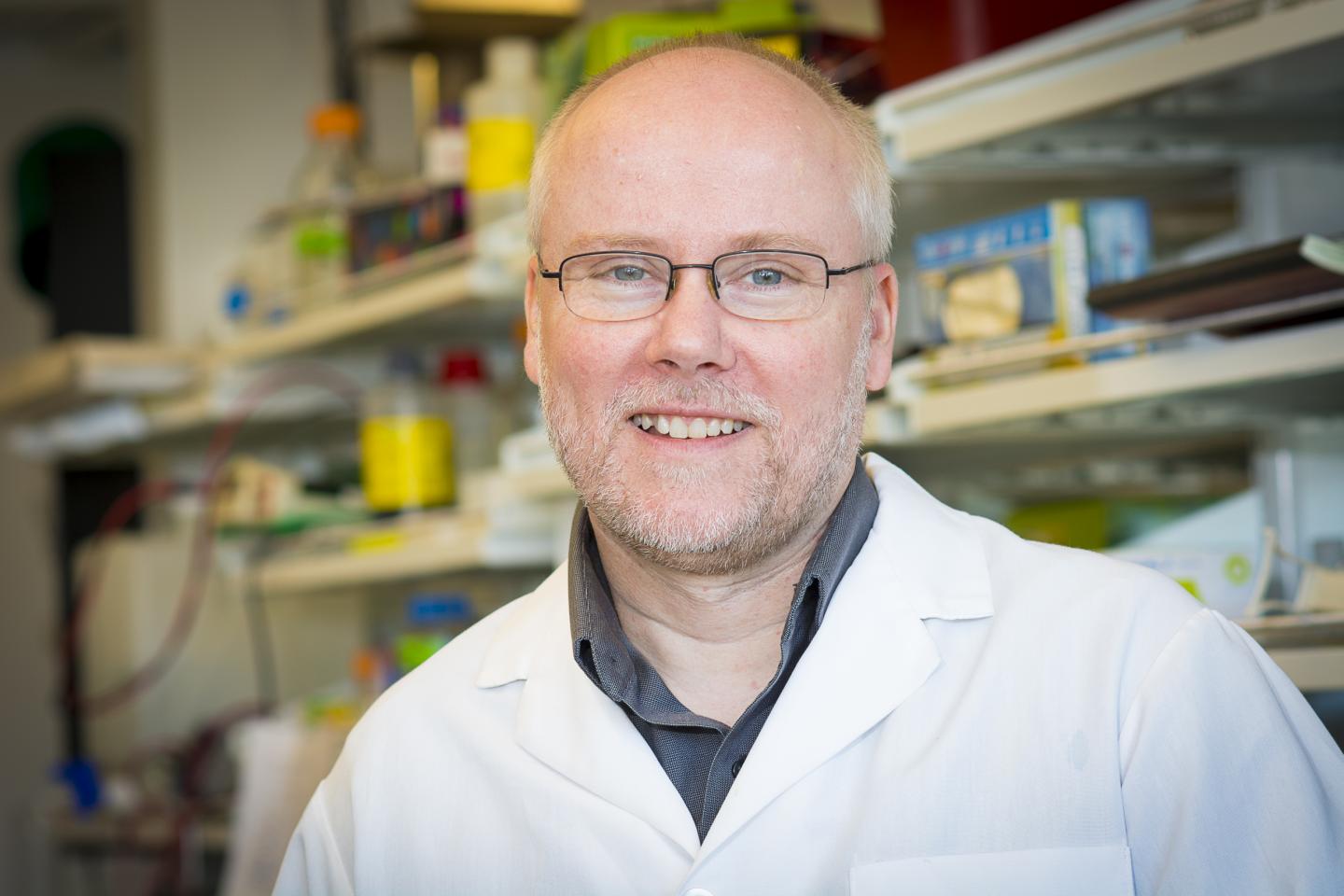
IMAGE

Credit: Washington State University Spokane

SPOKANE, Wash. – A Washington State University researcher has developed a way to reduce the development of cancer cells that are an infrequent but dangerous byproduct of gene therapy.

Grant Trobridge, an associate professor of pharmaceutical sciences, has altered the way a virus carries a beneficial gene to its target cell. The modified viral vectors reduce the risk of cancer and can be used for many blood diseases.

Trobridge and his team report their development in Scientific Reports, an online open-access journal produced by the Nature Publishing Group. The team is translating their findings into a stem cell gene therapy to target a life-threatening immunodeficiency in newborns called SCID-X1, also known as "Boy in the Bubble Syndrome."

Gene therapy holds potential for treating genetic diseases by replacing defective genes with repaired ones. It has shown promise in clinical trials but has also been set back by difficulties delivering genes, getting them to work for a long time and safety issues. A joint French and English trial, for example, successfully treated 17 out of 20 patients with SCID-X1 only to see five of them develop leukemia.

Trobridge and his colleagues are using a vector developed from a foamy retrovirus, so named because it appears to foam in certain situations. Unlike other retroviruses, they don't normally infect humans. They also are less prone to activate nearby genes, including genes that might cause cancer.

Retroviruses are a natural choice for gene therapy because they work by inserting their genes into a host's genome.

With an eye toward making the vector safer, the Trobridge team altered it to change how it interacts with a target stem cell so it would insert itself into safer parts of the genome. They found that it integrated less often near potential cancer-causing genes.

"Our goal is to develop a safe and effective therapy for SCID-X patients and their families," said Trobridge. "We've started to translate this in collaboration with other scientists and medical doctors into the clinic."

He predicted that the therapy could be ready for clinical trials within five years.

###

The work is funded by the National Institutes of Health's National Institute of Allergy and Infectious Diseases. It is in keeping with WSU's Grand Challenges, a suite of research initiatives aimed at large societal problems. The work is particularly relevant to the Sustaining Health challenge of changing the course of disease.

Media Contact

Grant Trobridge
[email protected]
509-368-6564
@WSUNews

Washington State University

Share12Tweet8Share2ShareShareShare2

Related Posts

Nationwide Study Tracks Hepatitis B Reactivation and Liver Dysfunction During Infliximab Treatment

Nationwide Study Tracks Hepatitis B Reactivation and Liver Dysfunction During Infliximab Treatment

August 1, 2026
Imaging Reveals How Brain–Body Interactions Shape Systemic Disease

Imaging Reveals How Brain–Body Interactions Shape Systemic Disease

August 1, 2026

Targeting Vascular–Musculoskeletal Links May Treat Sarcopenia and Osteoporosis

August 1, 2026

Supergene solves evolutionary mystery by controlling mirror-image flower development

August 1, 2026
Please login to join discussion

POPULAR NEWS

  • Dietary Diversity Linked to Frailty and Prefrailty in Japan’s Hisayama Population

    29 shares
    Share 12 Tweet 7
  • Machine Learning Imaging Predicts Parkinson’s Genotype, Mitochondrial-Lysosomal Abnormalities in iPS Neurons

    29 shares
    Share 12 Tweet 7
  • Cognitive and Physical Disabilities Shape Depression Risk, Recovery in Older Chinese Adults

    29 shares
    Share 12 Tweet 7
  • Randomized Trial Tests Losartan and Prednisolone for Post-COVID Syndrome and Cardiac Inflammation

    29 shares
    Share 12 Tweet 7

About

We bring you the latest biotechnology news from best research centers and universities around the world. Check our website.

Follow us

Recent News

Dietary Diversity Linked to Frailty and Prefrailty in Japan’s Hisayama Population

Machine Learning Imaging Predicts Parkinson’s Genotype, Mitochondrial-Lysosomal Abnormalities in iPS Neurons

Cognitive and Physical Disabilities Shape Depression Risk, Recovery in Older Chinese Adults

Subscribe to Blog via Email

Enter your email address to subscribe to this blog and receive notifications of new posts by email.

Join 85 other subscribers
  • Contact Us

Bioengineer.org © Copyright 2023 All Rights Reserved.

Welcome Back!

Login to your account below

Forgotten Password?

Retrieve your password

Please enter your username or email address to reset your password.

Log In
No Result
View All Result
  • Homepages
    • Home Page 1
    • Home Page 2
  • News
  • National
  • Business
  • Health
  • Lifestyle
  • Science

Bioengineer.org © Copyright 2023 All Rights Reserved.