Stroke rehabilitation has long depended on a fundamentally flawed measurement system: a clinician watching a patient move for roughly half an hour, drawing conclusions about recovery from a brief snapshot performed in an artificial clinical setting. A research team led by the University of Massachusetts Amherst now believes it has found a better way. In a study published in Science Translational Medicine, the researchers describe a wearable wrist device paired with a machine-learning algorithm that can continuously track changes in upper-limb motor impairment caused by stroke, potentially transforming how therapists monitor and personalize rehabilitation.
The technology addresses one of the most persistent gaps in post-stroke care. More than 795,000 Americans experience strokes each year, and up to 77 percent of those patients face upper-limb mobility problems immediately afterward. While many recover partial function, roughly 40 percent continue to experience chronic impairments that pose a major limitation to independent living. Physical therapy can help, but without a reliable way to measure progress throughout the rehabilitation process, clinicians are essentially flying blind between the initial assessment and the final evaluation.
“We are the first group to actually show that, using wearable data, we can extract information about patients’ motor severity, which clinicians can actually use to determine whether their intervention is effective or not,” says Sunghoon Ivan Lee, associate professor in the Manning College of Information and Computer Sciences at UMass Amherst and corresponding author on the paper. Lee led the research alongside colleagues from Washington University in St. Louis, the Shirley Ryan AbilityLab, and Harvard Medical School/Mass General Brigham.
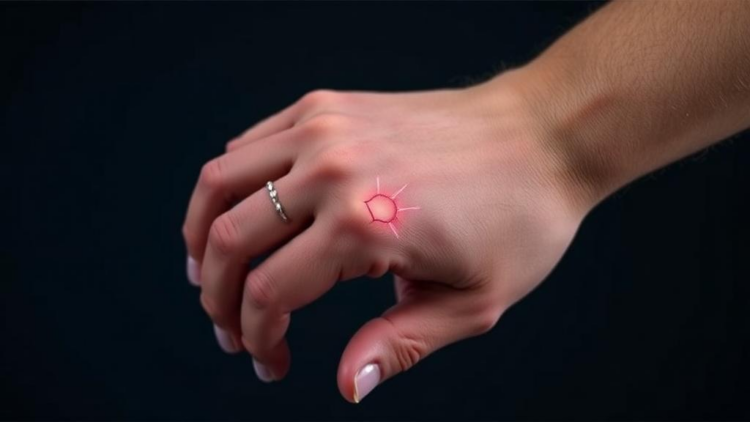
The core of the device is deceptively simple: an accelerometer sensor worn on the wrist that captures upper-limb movement as the patient goes about daily life. The raw motion data is then interpreted by a machine-learning algorithm developed by Lee and his graduate student Ryan Wang, the lead author on the paper. The algorithm’s task is far more difficult than simply counting movements. It must translate patterns of real-world arm activity into a clinically meaningful estimate of motor impairment severity, the same kind of judgment a trained clinician makes during a standardized assessment.
That distinction between movement and impairment is central to the team’s technical contribution. “Movement and impairment severity are related because the less severe you are, the more likely you’re going to move a lot, but they’re not exactly the same,” Lee explains. A patient might increase how often they use an affected arm through behavioral effort, but that increased use does not instantly change the underlying motor severity. “Increasing the use of the limbs—yes, we can encourage the person to make use of the limb more. But patients cannot make instant changes to motor severity through short-term behavior change.” The algorithm therefore had to learn to separate genuine neurological recovery from compensatory behavior changes, a problem that has limited earlier attempts at passive monitoring.
To train the model, the researchers used accelerometer data collected from subacute stroke patients—those between one week and six months after their stroke—paired with clinician assessment scores, along with data from healthy individuals. When the algorithm’s estimates were compared against clinician evaluations, the results were striking: the algorithm was 40 to 50 percent more accurate, meaning it provided a better reflection of the patient’s true condition than the observational judgment of a clinician. That margin matters enormously in a field where treatment decisions hinge on subtle changes in function.
The implications for clinical practice are significant. Under the current standard of care, assessment typically occurs only before and after rehabilitation because the observational evaluation is so time-consuming. “That means during that therapy process, neither the patient nor the therapist has a clear idea of how patients are responding to the treatments that they’re receiving,” says Lee. “Currently, clinicians aren’t able to see if patients are responding to the prescribed exercises, and patients have no way of knowing how they are progressing.” With continuous monitoring, therapists could adjust treatment strategies in near real time, moving away from a one-size-fits-all approach toward genuinely personalized rehabilitation.
Real-world monitoring may also capture something clinic-based assessments cannot. Movement performed in a patient’s home environment, across all times of day, is likely more indicative of true performance than movement artificially produced during a clinical visit. There is a potential psychological benefit as well: patients who can see their own recovery progress may become more engaged in therapy practices and stay motivated over the long course of rehabilitation. Lee is optimistic that this increased transparency will translate into improved therapy outcomes.
The device also demonstrated a powerful application in clinical research itself. When the team recreated a previous study using their digital biomarker instead of clinician observations, they generated statistically significant results with 50 percent fewer participants. “We can get a clear idea of the effectiveness of the intervention using a lower sample size and far fewer resources,” says Lee, noting that this can expedite the research process and reduce costs. Because measurement noise from subjective observation is reduced, smaller trials could detect true treatment effects, accelerating the evaluation of new rehabilitation therapies.
The work was supported by the National Institutes of Health, and the team has filed a provisional patent covering the methods for constructing digital biomarkers of upper-limb motor phenotypes in stroke survivors. Lee is pursuing commercialization through the startup Lumid Health, with support from the UMass Amherst Institute for Applied Life Sciences’ Translational Seed Award, the UMass Office of Technology Commercialization & Ventures’ Technology Development Fund, and participation in the NSF I-Corps Training Program. To further develop the technology, Lee’s research partners are currently recruiting stroke patients for a study at the Spaulding Rehabilitation Hospital in Boston. If those trials confirm the algorithm’s performance, the wrist-worn monitor could become a routine tool in stroke care—turning every ordinary day of a patient’s life into continuous, clinically actionable data on their recovery.
Subject of Research: Wearable accelerometer-based digital biomarker for assessing upper-limb motor recovery after stroke
Article Title: Wearable stroke rehabilitation device gives patients the upper hand
Article References: Wearable stroke rehabilitation device gives patients the upper hand. (n.d.). Original publication
Image Credits: AI Generated
DOI: Not provided
Keywords: stroke rehabilitation, wearable sensor, machine learning, accelerometer, digital biomarker, upper-limb impairment, motor recovery, personalized therapy, physical therapy, Science Translational Medicine, UMass Amherst, clinical assessment
Cite Scienmag News
APA MLA Chicago
Cassandra Pierce. (September 30, 2026). Wrist-Worn Sensor Tracks Stroke Recovery With Machine Learning Precision. Scienmag. https://scienmag.com/wrist-worn-sensor-tracks-stroke-recovery-with-machine-learning-precision/
Cassandra Pierce. “Wrist-Worn Sensor Tracks Stroke Recovery With Machine Learning Precision.” Scienmag, 30 September 2026, https://scienmag.com/wrist-worn-sensor-tracks-stroke-recovery-with-machine-learning-precision/. Accessed 30 September 2026.
Cassandra Pierce. “Wrist-Worn Sensor Tracks Stroke Recovery With Machine Learning Precision.” Scienmag. September 30, 2026. https://scienmag.com/wrist-worn-sensor-tracks-stroke-recovery-with-machine-learning-precision/
Copy citation Download RIS
Tags: accelerometerassessment of post-stroke motor functionclinical applications of wearable sensorsclinical assessmentcontinuous monitoring of upper-limb impairmentdigital biomarkerimproving stroke patient outcomesinnovative stroke rehabilitation toolsMachine learningmachine learning in stroke recoverymotor recoverypersonalized stroke therapypersonalized therapyphysical therapyreal-time stroke recovery trackingremote monitoring in stroke rehabilitationScience Translational Medicinestroke recoverystroke rehabilitationUMass Amherstupper-limb impairmentwearable sensorwearable technology for physical therapywearable wrist sensor for stroke rehabilitation