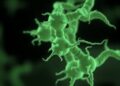
Investigators at Case Western Reserve University School of Medicine and University Hospitals Health System have identified a new molecular pathway that controls lifespan and healthspan in worms and mammals. In a Nature Communications study published today, researchers showed that worms with excess levels of certain proteins lived longer and healthier than normal worms. In addition, mice with excess levels of these proteins demonstrated a delay in blood vessel dysfunction associated with aging. The study has major implications for our understanding of aging and age-associated disorders.
"We find that by artificially increasing or decreasing the levels of a family of proteins called Kruppel-like transcription factors (KLF), we can actually get these small worms (Caenorhabditis elegans) to live for longer or shorter time periods," said first author Nelson Hsieh, MD/PhD fellow at Case Western Reserve University School of Medicine. "Since this same family of proteins also exists in mammals, what is really exciting is that our data suggests the KLFs also have similar effects on aging in mammals, too."
"The observation that KLF levels decrease with age and that sustained levels of KLFs can prevent the age-associated loss of blood vessel function is intriguing given that vascular dysfunction contributes significantly to diverse age-associated conditions such as hypertension, heart disease, and dementia" added senior author Mukesh K. Jain, MD, Professor, Vice-Dean for Medical Sciences at Case Western Reserve University School of Medicine and Chief Scientific Officer, University Hospitals Health System.
Upon further investigation, the researchers discovered that KLF proteins work by controlling autophagy–a recycling process cells use to clear debris, like misfolded proteins or normal molecular byproducts that build up in old age. Loss of this quality control mechanism is a hallmark of aging.
"As cells age, their ability to perform these functions declines," say the authors. "This likely leads to an unsustainable accumulation of toxic protein aggregates, which ultimately present an obstacle to cellular survival." Worms without KLF proteins cannot maintain autophagy and die early.
According to the researchers, the next step will be to study the precise mechanisms underlying how autophagy in cells lining blood vessels contributes to improved blood vessel function. They will also seek strategies to target KLF proteins in humans.
Said Hsieh, "As our population ages, we need to understand what happens to our heart and arteries, as we rely on them to function perfectly later and later on in our lives. Our findings illuminate what can happen during aging, and provide a foundation to designing interventions which slow these processes."
###
The study team was comprised of 18 researchers, including 15 from Case Western Reserve University School of Medicine, and additional collaborators from Kent State University, Oberlin College, and the Cleveland Clinic Lerner Research Institute. The work was performed in the laboratory of Mukesh K. Jain, MD. Nelson Hsieh is completing his MD/PhD under Jain as part of the CWRU Medical Scientist Training Program. In addition to the publication, Hsieh presented this work at the Biology of Aging Gordon Research Conference, held over the summer in Switzerland.
This work was supported, in whole or in part, by National Institutes of Health grants T32GM007250, F30AG054237 (to P.N.H.), K01DK104922 (to D.A.P.), T32HL105338, T32GM007250, T32HL134622(to M.K.J), R01DK111468 (to M.K.J), R01HL119195 (to M.K.J.), R35HL135789 (to M.K.J); Mt. Sinai Healthcare Scholarship from Mt. Sinai Healthcare Foundation (to Z.F.); and generous gifts by Tom F. Peterson (T.F.P. Lab).
For more information about Case Western Reserve University School of Medicine, please visit: case.edu/medicine.
Media Contact
Ansley Gogol
[email protected]
216-368-4452
@cwru
http://www.case.edu
http://casemed.case.edu/cwrumed360/news-releases/release.cfm?news_id=722
Related Journal Article
http://dx.doi.org/10.1038/s41467-017-00899-5