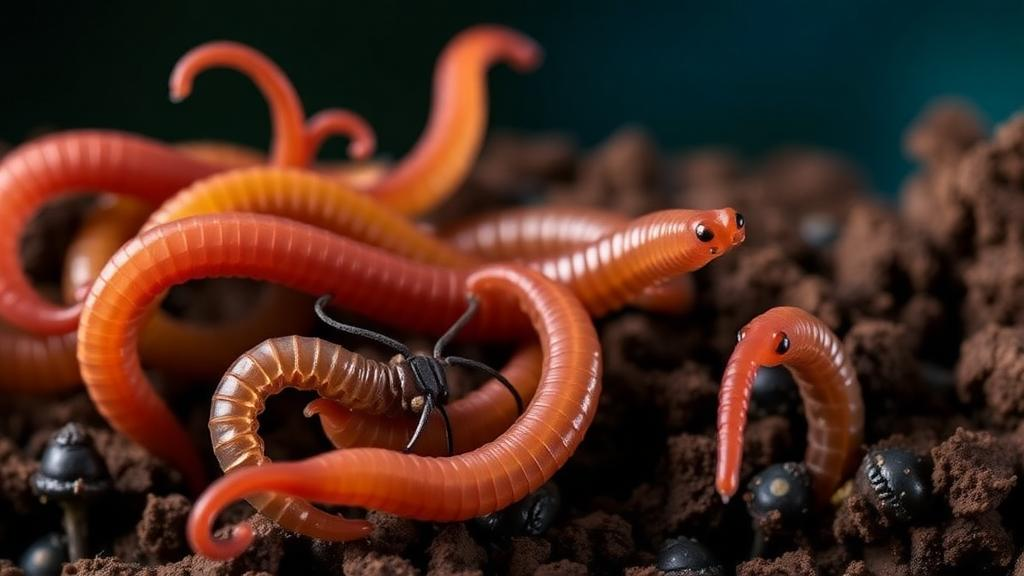
Every year, pharmaceutical companies screen thousands of candidate drugs for toxicity, yet one particularly insidious class of compounds continues to slip through the net. Cationic amphiphilic drugs, or CADs, are a chemically distinctive family of molecules that includes widely prescribed medications such as certain antidepressants, antihistamines, antimalarials and cholesterol-lowering agents. Their defining features, a positively charged nitrogen atom combined with water-repelling regions, allow them to accumulate inside lysosomes, the acidic recycling compartments of the cell. There, they disrupt lipid breakdown and trigger a pathological buildup of phospholipids known as phospholipidosis. In humans, this condition can impair the liver, lungs, heart and immune system, and it has forced the withdrawal or restriction of several drugs over the decades. Now, a team of researchers at the University of Toronto has discovered that a humble soil-dwelling worm, the nematode Caenorhabditis elegans, carries a purpose-built genetic defense system against exactly these molecules, and that the system can be harnessed to predict which human drugs are most likely to cause harm.
The study, published in PLOS Biology, began with a forward genetic screen, a classical technique in which researchers randomly mutate organisms and then hunt for mutants with altered traits. Rather than looking for worms that were sickened by CADs, the team searched for animals in which the worms’ response to these drugs had been switched on or off. That approach, combined with systematic mining of previously published gene expression datasets, revealed a striking pattern: exposure to cationic amphiphilic drugs reliably induces a small set of genes in C. elegans, most prominently the CYP-35B family of cytochrome P450 enzymes and a p-glycoprotein pump called PGP-13. Cytochrome P450s are the workhorses of drug metabolism across the animal kingdom, and p-glycoproteins are membrane transporters that expel foreign chemicals from cells. The discovery that both arms of this classic detoxification machinery are coordinated by CAD exposure suggested the worm was not merely reacting to damage but actively defending itself.
At the heart of this regulatory circuit sit two nuclear receptors, NHR-70 and NHR-107. Nuclear receptors are ligand-activated transcription factors, proteins that bind small molecules directly and, in response, switch specific genes on or off. The researchers showed that in mutants lacking functional NHR-70 or NHR-107, the induction of CYP-35B enzymes and PGP-13 in response to CADs collapses, placing these receptors upstream of the entire defense program. This architecture mirrors xenobiotic response pathways in mammals, where receptors such as PXR and CAR sense foreign chemicals and induce detoxification genes. The finding implies that the capacity to sense and respond to cationic amphiphilic compounds is an ancient feature of animal biology, one that predates the synthetic chemistry of the modern pharmaceutical industry by hundreds of millions of years.
To explore how broadly this response can be triggered, the team engineered a fluorescent reporter strain in which the pgp-13 promoter drives the production of a visible signal. When a worm encounters a compound that activates the defense system, the animal literally glows. Screening this reporter against a large panel of compounds, the researchers identified hundreds of human drugs that up-regulate the CAD defense system in living animals. The list was heavily enriched for molecules with the telltale cationic amphiphilic chemistry, confirming that the reporter responds specifically to this drug class rather than to chemical stress in general. In effect, the worm had become a living biosensor for one of the most troublesome categories of pharmaceutical side effects.
That sensing capability has immediate practical value. Phospholipidosis is notoriously difficult to predict during drug development because it often emerges only after prolonged exposure, and animal models in rodents are expensive and slow. Chemoinformatic analyses performed by the team, which use computational descriptors of molecular structure to correlate chemical features with biological activity, indicated that the pgp-13 reporter could serve as a rapid and inexpensive screen for identifying CADs with pathogenic potential in humans. A compound that lights up the worm’s defense system at low concentrations would be flagged for closer scrutiny before it ever reaches a clinical trial. Because the reporter operates in a whole living organism, it captures absorption, distribution and metabolism effects that cell-based assays frequently miss.
The researchers did not stop at detection; they dissected the biochemistry of the defense itself. Through mutant analyses coupled to metabolomics, the comprehensive measurement of small molecules in the animals, and structural modeling of the enzymes involved, they demonstrated that the CYP-35B cytochrome P450s are both necessary and sufficient for the metabolism of CADs. In other words, removing these enzymes leaves the worms unable to chemically modify the drugs, while their presence alone accounts for the observed metabolic transformations. Structural modeling pinpointed a single amino acid, aspartate 311 in the enzyme CYP-35B2, as the key player. This negatively charged residue sits in the enzyme’s active site and forms electrostatic interactions with the positively charged nitrogen of CADs, anchoring the drug in the correct orientation for oxidation. Mutating this residue disrupts the interaction, illustrating with atomic precision how the worm’s chemistry is tailored to this class of molecules.
Metabolism alone, however, is only half of the defense. Once the CYP-35B enzymes have chemically modified a CAD, the resulting metabolites must be removed from the body. The team showed that this export job falls to PGP-13, the p-glycoprotein pump whose expression is induced alongside the enzymes, and that PGP-14, a related transporter, acts partially redundantly with it. Worms lacking both pumps accumulate CAD metabolites and become markedly more vulnerable to drug-induced pathology. Conversely, animals with an intact defense system, functional receptors, active enzymes and working pumps, resist the lysosomal damage that these drugs would otherwise inflict. The full pathway, from sensing to metabolism to excretion, operates as a coherent physiological unit, and breaking any link in the chain compromises the whole system.
Perhaps the most intriguing question raised by the study is evolutionary: why would a microscopic nematode living in soil possess a defense system tailored to synthetic drugs invented in the twentieth century? The answer, the researchers propose, lies in the worm’s natural ecology. C. elegans feeds on bacteria, and many bacterial species produce small molecules with cationic amphiphilic properties as metabolic weapons or signaling compounds. When the team exposed worms to bacteria that likely cohabitate with C. elegans in nature, the CAD defense system was triggered, providing a plausible explanation for the pathway’s existence. The worm’s pharmaceutical defense, in this view, is not a response to human medicine at all but an ancient adaptation to the chemical warfare of its microbial environment. Modern CADs are, in a sense, accidental mimics of natural products the worm has been battling for millennia.
The implications extend well beyond nematode biology. For toxicologists, the study offers a mechanistically grounded model of phospholipidosis that can be manipulated genetically, something impossible in human tissue. For drug developers, the fluorescent reporter strain provides a cheap, high-throughput early warning system that could be deployed during lead optimization, long before costly animal studies. And for evolutionary biologists, the work adds a vivid example of how the chemical ecology of natural environments shapes the genetic toolkit that organisms later use to cope with anthropogenic chemicals. The same nuclear receptor logic that protects a soil worm from bacterial metabolites may underlie how human livers respond to the drugs in our medicine cabinets.
Future work will likely focus on identifying the natural bacterial molecules that activate NHR-70 and NHR-107, determining whether related receptor-driven CAD defenses exist in other animals, and validating the pgp-13 reporter against pharmaceutical libraries as a predictive toxicology platform. What is already clear is that C. elegans, long a favorite of developmental biologists, has now earned a place in pharmacology as well. A transparent worm with a glowing defense system may prove to be one of the most practical tools yet for keeping dangerous drugs out of the clinic, all thanks to an evolutionary arms race playing out quietly in the soil beneath our feet.
Subject of Research: A cationic amphiphilic drug defense system in Caenorhabditis elegans
Article Title: The nematode Caenorhabditis elegans has a cationic amphiphilic drug (CAD) defense system
Article References: Tokmakjian, L., Han, D., Sihuta, K., Aggarwal, A., Pirhadi, S., Wang, Y., Burns, A. R., Cooke, B., Ren, S., Gavrielatos, M., Liu, J., Krause, H. M., Cummins, C. L., Nodwell, J., Koes, D. R., & Roy, P. J. (2026). The nematode Caenorhabditis elegans has a cationic amphiphilic drug (CAD) defense system. PLOS Biology, 24(9), e3004006. https://doi.org/10.1371/journal.pbio.3004006
Image Credits: AI Generated
DOI: 10.1371/journal.pbio.3004006
Keywords: Caenorhabditis elegans, cationic amphiphilic drugs, phospholipidosis, cytochrome P450, p-glycoprotein, nuclear receptors, lysosome, drug metabolism, chemoinformatics, toxicology, genetic screen, microbiome
News Source: Drew Townsend. (October 10, 2026). Worms Carry a Hidden Defense Against a Troubling Class of Drugs. Scienmag.