• HOME
  • NEWS
  • EXPLORE
    • CAREER
      • Companies
      • Jobs
    • EVENTS
    • iGEM
      • News
      • Team
    • PHOTOS
    • VIDEO
    • WIKI
  • BLOG
  • COMMUNITY
    • FACEBOOK
    • INSTAGRAM
    • TWITTER
Thursday, November 19, 2026
BIOENGINEER.ORG
No Result
View All Result
  • Login
  • HOME
  • NEWS
  • EXPLORE
    • CAREER
      • Companies
      • Jobs
        • Lecturer
        • PhD Studentship
        • Postdoc
        • Research Assistant
    • EVENTS
    • iGEM
      • News
      • Team
    • PHOTOS
    • VIDEO
    • WIKI
  • BLOG
  • COMMUNITY
    • FACEBOOK
    • INSTAGRAM
    • TWITTER
No Result
View All Result
Bioengineer.org
No Result
View All Result
Home NEWS Science News Health

Withdrawing Malaria Interventions Could Increase African Cases by 131 Percent, Model Estimates

by
November 19, 2026
in Health
Reading Time: 2 mins read
0
Withdrawing Malaria Interventions Could Increase African Cases by 131 Percent, Model Estimates

Withdrawing Malaria Interventions Could Increase African Cases by 131 Percent, Model Estimates

Share on FacebookShare on TwitterShare on LinkedinShare on RedditShare on Telegram

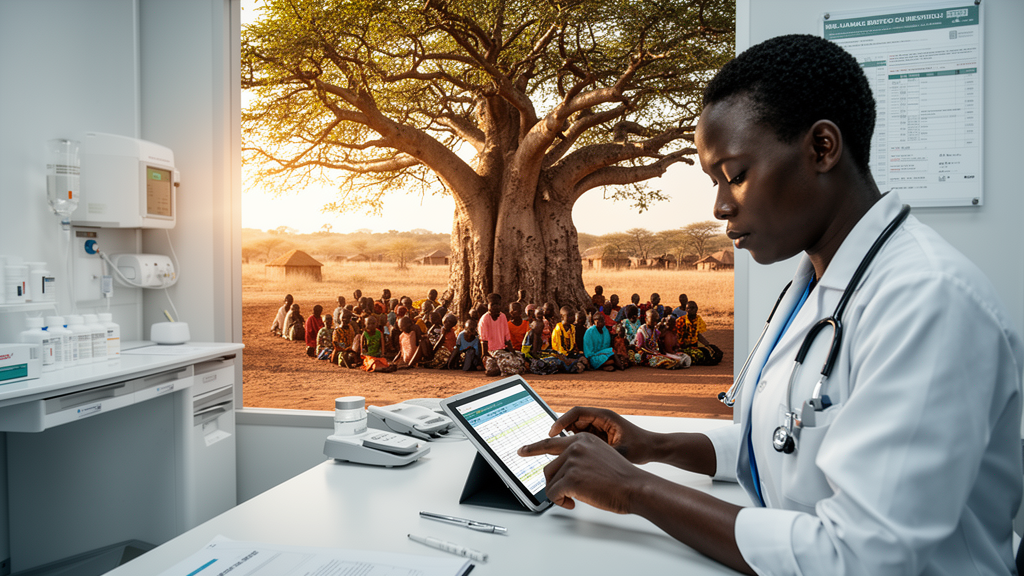
Withdrawing major malaria interventions across sub-Saharan Africa could cause annual cases to surge to an estimated 422 million, representing a 131 percent increase relative to current estimates, according to a modeling study published in Nature Communications by Kaustubh Chakradeo and colleagues. The Bayesian hierarchical model estimates an uncertainty interval ranging from 275 million to 582 million cases annually across the region under a simulated low-intervention scenario.

The research addresses pressing questions regarding how heavily contemporary malaria control depends on sustained program funding and coverage. Malaria remains a leading cause of morbidity and mortality across the globe, with the most severe impact concentrated in sub-Saharan Africa. The authors emphasize that stalled progress in disease reduction alongside ongoing funding constraints have made understanding the fragility and dependence of current health gains increasingly critical.

To evaluate transmission potential in the absence of active control efforts, the investigators modeled a specific low-intervention scenario where major malaria control interventions are withdrawn while broader ecological and demographic conditions remain constant. This experimental design enabled the researchers to determine how heavily current malaria suppression relies on active intervention coverage rather than baseline environmental conditions alone.

To generate the spatial transmission estimates, the researchers developed a contrastive representation-learning framework applied directly to 30-meter Landsat 8 satellite imagery. By integrating these satellite-derived environmental representations within a Bayesian hierarchical model, the authors demonstrated that this approach improved predictive accuracy compared with existing covariate-based malaria mapping methods.

Using contemporary Global Burden of Disease 2024 population estimates alongside these environmental representations, the investigators quantified the structural vulnerability of malaria control gains across sub-Saharan Africa. The authors concluded that their modeled findings reveal specific geographic territories where disruption to existing interventions could cause the greatest increases in malaria burden.

Subject of Research: Estimating malaria burden in sub-Saharan Africa under intervention disruption using satellite imagery and Bayesian modeling

Article Title: Estimating malaria burden in sub-Saharan Africa under intervention disruption using satellite-derived representations

Article References: Chakradeo, K., Katsiferis, A., Scheidwasser, N., Hawryluk, I., Battle, K. E., Mishra, S., Smith, D. L., Flaxman, S., Duchêne, D. A., & Bhatt, S. (2026). Estimating malaria burden in sub-Saharan Africa under intervention disruption using satellite-derived representations. Nature Communications. https://doi.org/10.1038/s41467-026-79054-y

Image Credits: AI Generated

DOI: 10.1038/s41467-026-79054-y

Keywords: Malaria, Sub-Saharan Africa, Intervention Disruption, Disease Transmission Potential, Bayesian Hierarchical Model, Contrastive Representation Learning, Landsat 8 Satellite Imagery, Global Burden of Disease 2024, Malaria Burden Estimation, Epidemiological Modeling, Malaria Control Interventions, Disease Mapping, Environmental Representations, Morbidity and Mortality, Low-Intervention Scenario, Public Health Surveillance, Nature Communications

News Source: Ophelia Keating. (November 19, 2026). Withdrawing Malaria Interventions Could Increase African Cases by 131 Percent, Model Estimates. Scienmag.

Tags: Bayesian hierarchical modelcontrastive representation learningdisease mappingDisease Transmission PotentialEnvironmental Representationsepidemiological modelingGlobal Burden of Disease 2024Intervention DisruptionLandsat 8 Satellite ImageryLow-Intervention ScenariomalariaMalaria Burden EstimationMalaria Control Interventionsmorbidity and mortalityNature Communicationspublic health surveillanceSub-Saharan Africa
Share12Tweet7Share2ShareShareShare1

Related Posts

Delaying Surgery Up to Nine Hours Proves Safe in Complicated Appendicitis

Delaying Surgery Up to Nine Hours Proves Safe in Complicated Appendicitis

November 19, 2026
TGF-Beta Polarized Macrophages Induce Fibrotic Responses in Human Lung Fibroblasts

TGF-Beta Polarized Macrophages Induce Fibrotic Responses in Human Lung Fibroblasts

November 19, 2026

German Consensus Recommends Second-Generation Gene Silencers for Hereditary Transthyretin Polyneuropathy

November 19, 2026

Lower Lip Inclination and Chin Prominence Interact to Shape Facial Aesthetics

November 19, 2026

POPULAR NEWS

  • First-Principles Calculations Reveal High Thermoelectric Efficiency and Half-Metallicity in Co2VPb Alloy

    First-Principles Calculations Reveal High Thermoelectric Efficiency and Half-Metallicity in Co2VPb Alloy

    29 shares
    Share 12 Tweet 7
  • Mobile Bird Hosts Enable Regional Gene Flow in Crater Lake Parasites

    29 shares
    Share 12 Tweet 7
  • Ultrasound Shows Low Diagnostic Accuracy for Sexing Immature Agile Frogs

    29 shares
    Share 12 Tweet 7
  • Lithuanian Forest Foragers Link Solitary Mushroom Gathering to Cross-Border Trade

    29 shares
    Share 12 Tweet 7

About

We bring you the latest biotechnology news from best research centers and universities around the world. Check our website.

Follow us

Recent News

Delaying Surgery Up to Nine Hours Proves Safe in Complicated Appendicitis

Cooling Paradoxically Boosts Cav3.2 Calcium Influx During High-Frequency Neuronal Firing

Synthesis of Connectivity Maps Identifies Priority Areas for Biodiversity and Climate Resilience

Subscribe to Blog via Email

Enter your email address to subscribe to this blog and receive notifications of new posts by email.

Join 88 other subscribers
  • Contact Us

Bioengineer.org © Copyright 2023 All Rights Reserved.

Welcome Back!

Login to your account below

Forgotten Password?

Retrieve your password

Please enter your username or email address to reset your password.

Log In
No Result
View All Result
  • Homepages
    • Home Page 1
    • Home Page 2
  • News
  • National
  • Business
  • Health
  • Lifestyle
  • Science

Bioengineer.org © Copyright 2023 All Rights Reserved.